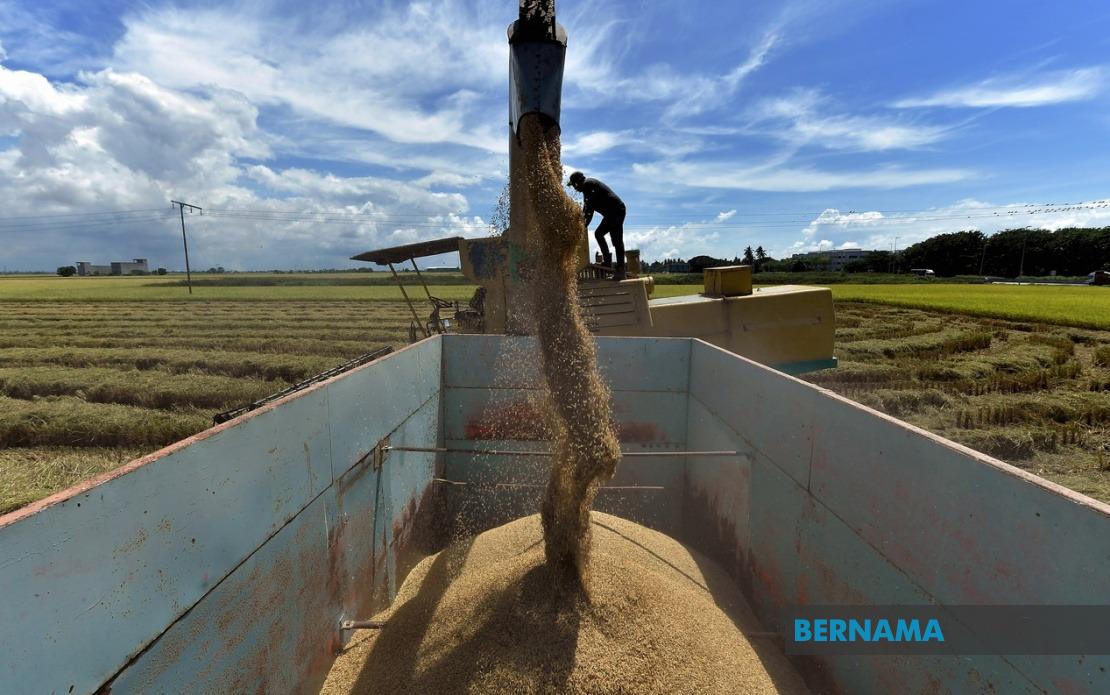
Parliament moved forward on Tuesday with the Control of Padi and Rice Act (Amendment) Bill 2026, a legislative package designed to grant the government substantially stronger tools for managing the nation's critical rice sector. Agriculture and Food Security Minister Datuk Seri Mohamad Sabu introduced the bill for its first reading in the Dewan Rakyat, with the minister signalling that second and third readings would proceed during the current parliamentary session—an accelerated timeline suggesting political priority around food security concerns.
The proposed amendments represent a fundamental restructuring of how Malaysia oversees its domestically grown rice supply, reflecting broader anxieties about food inflation and market stability. The bill introduces five major categories of change to Act 522, each designed to close perceived gaps in regulatory authority and enforcement capacity. For Malaysian consumers already contending with rising food costs, these measures carry direct implications for how rice prices reach supermarket shelves and whether price manipulation by middlemen can be effectively checked.
Perhaps most striking are the penalty escalations, which transform enforcement from a regulatory nuisance into a serious financial threat. Individual offenders—including company directors and officers—currently face maximum fines of RM15,000 for first violations, but the amendment proposes raising this ceiling to RM250,000. Repeat offences would jump from RM25,000 to RM500,000, a twentyfold increase that signals the government's intention to deter systematic non-compliance. This recalibration suggests frustration with existing deterrent levels and a determination to reshape market behaviour through economic consequences.
Corporate entities face even steeper financial exposure. Bodies corporate violating regulations would encounter maximum fines of RM500,000 for initial breaches and RM1 million for subsequent ones, compared with the current caps of RM25,000 and RM50,000 respectively. These figures dwarf typical business violations in most Malaysian regulatory contexts, indicating the government views rice sector violations as posing exceptional systemic risks. For large traders and processors, compliance costs will inevitably factor into operational planning, potentially triggering industry consolidation or market restructuring.
Crucially, Clause 2 grants the director general—subject to ministerial approval—explicit authority to establish both maximum and minimum price bands for padi and rice. This power fills a longstanding interpretive ambiguity in existing legislation and represents a significant centralisation of market control. The mechanism allows rapid response to price volatility without requiring legislative amendment, though it concentrates considerable discretionary authority in the executive. For farmers concerned about price floors and traders worried about price ceilings, this provision introduces new regulatory uncertainty that will likely reshape investment decisions throughout the supply chain.
The companion provision under Clause 4 expands ministerial authority to issue detailed regulations governing rice grading standards, price controls for each grade, and movement restrictions on padi and rice stocks. This granular regulatory capacity enables government intervention at multiple points across the supply chain rather than only at final retail stages. Malaysian rice producers and exporters should anticipate increasingly prescriptive rules around stock management, transport documentation, and quality certification that will require operational adjustments across the sector.
These expanded powers sit uncomfortably with free market principles but reflect a policy consensus that rice—as a staple commodity central to food security and social stability—justifies exceptional government involvement. Regional comparisons underscore this logic; several Southeast Asian neighbours maintain similarly interventionist rice policies given the commodity's political sensitivity. Vietnam, Thailand, and Indonesia all employ state purchasing mechanisms, price floors, or export controls, making Malaysia's approach less anomalous than it might appear in purely liberal economic frameworks.
The bill's provisions regarding new offences and penalties carry implications extending beyond mere price fixing. Clause 4 authorises the minister to designate various acts or omissions as criminal violations subject to fines up to RM15,000 or imprisonment not exceeding six months. This open-ended authority creates flexibility for responsive regulation but also introduces potential for regulatory overreach if future governments interpret the clause expansively. The vagueness inherent in such delegated legislative powers has generated persistent concerns among Malaysian business groups and civil society observers.
Transitional provisions under Clause 5 ensure that investigations or proceedings initiated before the amendment takes effect continue under existing legal frameworks, preventing retroactive application that might otherwise generate constitutional challenges. This pragmatic approach balances regulatory modernisation with legal stability, though it means current investigations proceed under the outdated penalty structure rather than the enhanced one.
For Malaysia's rice farmers, the amendments present a mixed picture. Enhanced enforcement against middlemen exploiting price information asymmetries potentially protects producers from predatory purchasing practices. Conversely, price ceiling powers could limit farmer revenue during supply shortages. Farmer groups will likely scrutinise how ministerial regulations balance price discovery mechanisms against farmer protections, particularly given ongoing concerns about rural incomes in the Muda scheme and other agricultural regions.
The rapid parliamentary progression of this bill reflects government conviction that stronger rice sector regulation serves broader national interests. Food security concerns intensified by global supply chain disruptions and climate variability have elevated rice policy from a primarily agricultural matter to one touching macroeconomic stability and social cohesion. The timing also acknowledges persistent public anxiety about food price inflation, with rice as the most politically charged commodity in that basket.
Implementation will test government administrative capacity. Effective price regulation requires sophisticated market monitoring, rapid data collection, and coordinated enforcement across federal and state jurisdictions. Malaysian bureaucracies have historically struggled with operational complexity in agricultural regulation, suggesting potential delays or inconsistent application as district officials interpret new rules. Success ultimately depends on whether the government invests adequately in monitoring infrastructure and personnel training.
The amendments also carry subtle implications for Malaysia's regional trade positioning. Enhanced state control over rice movement and pricing could complicate cross-border transactions with Thailand, Brunei, and other neighbours accustomed to certain market freedoms. Future trade negotiations might revisit how these regulations interact with bilateral or ASEAN obligations, particularly regarding non-tariff barriers to agricultural trade.

