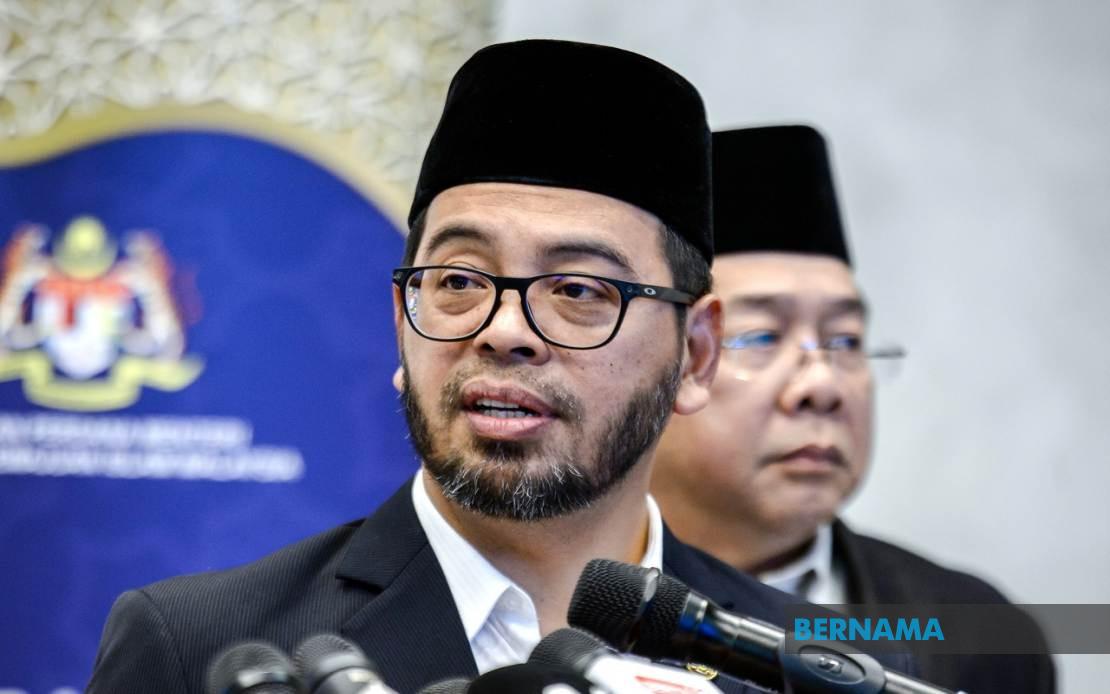
Senator Dr Zulkifli Hasan, the Minister in the Prime Minister's Department (Religious Affairs), has issued a forceful rebuke of the detention of Sheikh Muhammad Hussein, the Grand Mufti of Jerusalem and custodian of Al-Aqsa Mosque, following last Friday's prayers. Although the religious leader was released after the incident, the minister's statement underscores Malaysia's consistent position on the protection of Islamic sacred spaces and the fundamental rights of Muslim clergy to perform their duties without interference or intimidation.
The detention itself represents a serious violation of religious liberty, according to the ministry's assessment. When security forces detain a senior religious figure while he is actively fulfilling his spiritual responsibilities at one of Islam's most revered locations, the action transcends a routine arrest and takes on symbolic significance that extends far beyond the individual involved. The Al-Aqsa Mosque, situated in the heart of Jerusalem's Old City, holds profound spiritual meaning for Muslims worldwide, and any actions that threaten its sanctity or the freedom of those who lead worship there carry implications that resonate throughout the global Muslim community.
Malaysia's response reflects the country's broader diplomatic strategy on Middle Eastern affairs, where it has positioned itself as a vocal advocate for Palestinian causes and religious rights protection. The ministry has appealed directly to major international bodies including the United Nations and the Organisation of Islamic Cooperation to intervene and establish safeguards ensuring that worship rights, the physical security of religious leaders, and the protected status of Al-Aqsa Mosque are maintained in accordance with established international legal frameworks. This approach emphasises multilateral engagement rather than unilateral action, attempting to mobilise international pressure through established institutional channels.
The government's statement reiterates Malaysia's unwavering support for the Palestinian people and commits the nation to backing initiatives aimed at achieving equitable peace settlements. The emphasis on ending oppression in all its manifestations signals that Malaysia views the detention incident within a broader context of what it perceives as systemic challenges to Palestinian rights and dignity. This stance has remained consistent across multiple Malaysian administrations and reflects deep-rooted sentiment within the country's Muslim-majority population regarding Middle Eastern geopolitical dynamics.
Beyond the immediate issue of the Grand Mufti's detention, Minister Zulkifli used the occasion to direct national attention toward another significant moment in the Islamic calendar—the 31st anniversary of the Srebrenica massacre. This tragic episode in Bosnian history, which unfolded across July 1995, resulted in the systematic execution of over 8,000 Bosniak Muslim men and boys by Bosnian Serb forces. The massacre occurred despite the United Nations having formally designated Srebrenica as a protected safe area, a designation that proved meaningless when military forces overran the enclave and perpetrated mass atrocities against a predominantly Muslim civilian population.
The legacy of Srebrenica continues to weigh heavily on collective memory within Malaysia's Muslim communities. More than a thousand victims from the massacre have never been accounted for, and ongoing efforts to identify human remains for proper burial and mourning continue decades after the violence ended. These unresolved cases represent not merely statistics but enduring trauma for surviving families who remain separated from the earthly remains of loved ones, unable to complete traditional mourning rituals or find closure through proper interment.
Malaysia's historical engagement with the Bosnian crisis demonstrates the country's longstanding commitment to championing Muslim causes internationally. Under the leadership of former Prime Minister Tun Dr Mahathir Mohamad and continuing through the tenure of current Prime Minister Datuk Seri Anwar Ibrahim, Malaysia has played active roles in advocating for Bosnian Muslims on the international stage. Additionally, the Muslim Youth Movement of Malaysia (ABIM) pioneered early humanitarian efforts supporting Bosnian communities during and after the conflict, establishing networks of compassion that preceded official government interventions.
Malaysia's practical contributions to Bosnia's recovery and stabilisation extended well beyond diplomatic statements. The country granted sanctuary to Bosnian refugees seeking escape from the violence, provided educational opportunities to Bosnian youth through institutions like the International Islamic University Malaysia (IIUM), and made a substantial military commitment through the deployment of 10,514 Malaysian Armed Forces personnel. These troops served in UN peacekeeping capacities between 1993 and 1998, operating under the Malaysian Battalion (MALBAT) designation and subsequently within the Implementation Force (IFOR), contributing directly to regional security and post-conflict stabilisation efforts.
The minister's call for Malaysians to commemorate the Srebrenica anniversary carries educational significance beyond historical remembrance. By framing the massacre as a cautionary lesson against hatred, divisiveness, and systematic oppression, the government seeks to cultivate awareness among younger generations about the human costs of ethnic and religious conflict. This pedagogical approach attempts to transform historical tragedy into a teaching moment about the importance of tolerance, coexistence, and vigilance against the spread of prejudice that can escalate into violence.
Malaysia's dual focus—on the immediate detention of Jerusalem's Grand Mufti and the historical remembrance of Srebrenica—reflects a comprehensive vision of protecting Muslim interests across geographical and temporal dimensions. The ministry's invocation of prayer for Srebrenica's victims and the blessing of remaining families demonstrates how Malaysia integrates spiritual and diplomatic dimensions in its engagement with Muslim causes. The phrase "Allahimanet Bosna" (May Allah protect Bosnia) encapsulates this fusion of religious devotion and geopolitical concern, signalling to domestic audiences that Malaysia's advocacy extends beyond rhetorical gestures to encompass spiritual solidarity with affected communities.
For Malaysian readers, these statements carry significance beyond symbolic expression. They reinforce Malaysia's self-perception as a defender of Muslim rights on the global stage and validate the nation's diplomatic prioritisation of Palestinian and other Muslim community concerns. The consistent linking of contemporary incidents like the Grand Mufti's detention with historical tragedies like Srebrenica constructs a narrative framework in which Malaysia positions itself as a reliable voice for vulnerable Muslim populations facing what it characterises as existential threats to their religious freedoms, territorial integrity, and communal survival.

