Malaysia confronts a silent health crisis with sudden cardiac arrest claiming lives at alarming rates, yet the majority of victims receive help too late or lack access to potentially life-saving equipment. Survival rates languish between 0.5 per cent and 8.5 per cent—figures that underscore a fundamental gap in emergency preparedness infrastructure across the nation's urban centres. Responding to this challenge, Sunway Medical Centre Velocity has launched an ambitious programme to position automated external defibrillators (AEDs) at strategic locations throughout Kuala Lumpur while simultaneously ramping up public training in cardiopulmonary resuscitation and defibrillator operation.
The urgency becomes evident when examining the physiological reality of cardiac events. Medical experts emphasise that when the heart stops beating effectively, irreversible brain damage can commence within eight to ten minutes without intervention. Each second that passes without CPR dramatically diminishes the victim's prospects of recovery. In Malaysia, this brutal countdown has traditionally favoured the cardiac arrest victim only if they happen to collapse near medical professionals or in locations fortified with emergency equipment. For most Malaysians, the distance between collapse and lifesaving intervention remains dangerously wide, whether measured in metres or minutes.
Dr Wee Tong Ming, the Medical Director and Consultant Emergency Physician at Sunway Medical Centre Velocity, articulates this reality plainly: medical emergencies are not ultimately lost because help fails to exist, but because assistance arrives too slowly or the proper instruments remain unavailable. The distinction matters profoundly. It reframes cardiac emergency response not as a question of whether society possesses the knowledge or technology to save lives, but whether infrastructure and proximity make that technology available when fractions of seconds determine survival. This conceptual shift has driven the hospital's expansion beyond merely acquiring equipment to strategically distributing it where Malaysians congregate daily.
The placement strategy reveals sophisticated thinking about risk geography. Sunway Medical Centre Velocity has identified high-traffic commercial and transportation hubs as priority locations, installing AED units at multiple MRT stations including Tun Razak Exchange (TRX), Bukit Bintang, Ampang Park and Muzium Negara. Beyond the rapid-transit network, the hospital has partnered to position equipment at Aquaria KLCC, Menara Public Bank, Menara Public Bank 2, and the National Heritage Building within the Merdeka 118 Precinct. Each location selection responds to patterns of public congregation—places where vulnerable individuals are statistically more likely to experience cardiac emergencies, and where trained bystanders are most probable.
What distinguishes this initiative from merely installing hardware is the ecosystem constructed around each unit. Every AED comes with a prominently designed standee that maximises visibility and accessibility, allowing bystanders to locate equipment quickly when crisis unfolds. QR codes linking to the hospital's earlier "Save A Number, Save A Life" campaign webpage are attached to standees and also placed in general practitioner clinics throughout the city. This networked approach recognises that equipment without knowledge remains useless, and that public confidence in responding to emergencies requires both informational access and tangible tools.
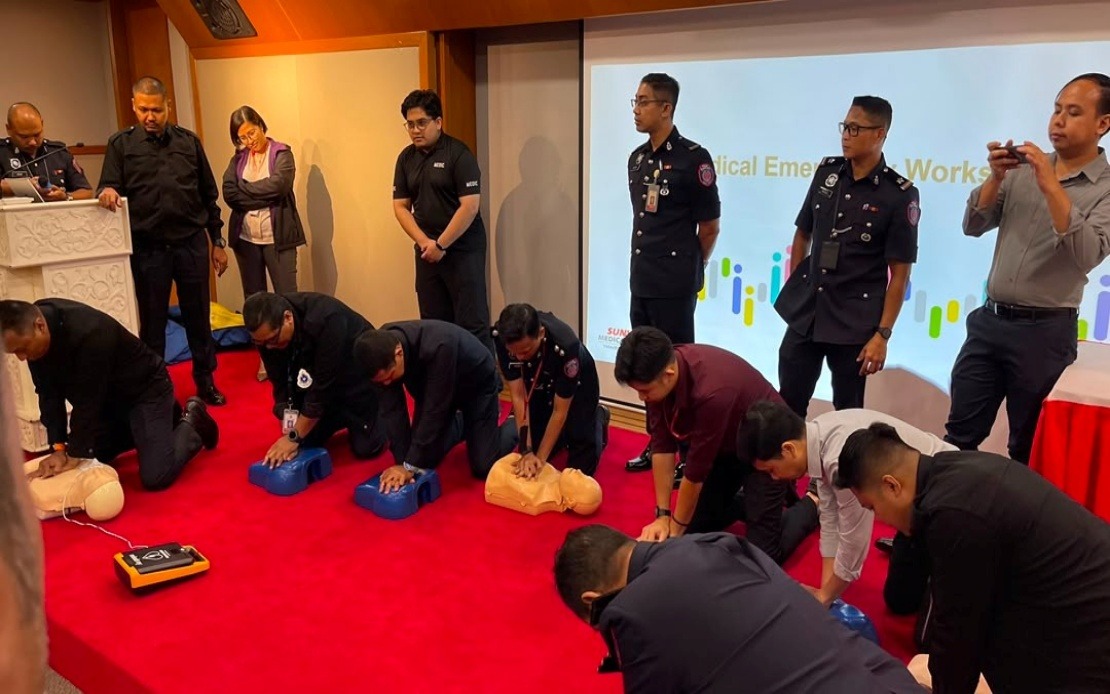
Susan Cheow, the Chief Executive Officer of Sunway Medical Centre Velocity, frames the initiative within a broader philosophy that no one should experience helplessness when facing medical emergencies simply because information or equipment seemed unavailable. This vision extends beyond infrastructure to encompass psychological empowerment—the notion that ordinary Malaysians should feel capable of intervening effectively in moments when seconds determine outcomes. The hospital has therefore complemented AED installation with extensive training sessions and Accident and Emergency awareness talks delivered at various public locations, transmitting practical knowledge about recognising cardiac arrest symptoms, performing CPR correctly, and operating defibrillators safely.
The training component proves critical because equipment divorced from knowledge creates false security. Sunway Medical Centre Velocity has learned through public health experience that distributing AEDs without accompanying education yields marginal benefit. When bystanders lack understanding of proper technique or confidence in responding, installed equipment often goes unused even when available. The hospital addresses this by positioning trained facilitators to conduct on-site sessions and public awareness discussions, ensuring that individuals walking past AED installations have encountered guidance about when and how to activate these devices.
This approach carries particular resonance for Malaysia's emerging middle-income context. As the nation develops economically, urban density increases and shared public spaces proliferate—shopping centres, transit hubs, sports facilities, and commercial precincts where previously isolated populations now congregate daily. These transitions create both vulnerability and opportunity. Vulnerability because cardiac events among larger populations will inevitably increase in absolute numbers, yet opportunity because coordinated infrastructure investment and public education can meaningfully shift survival outcomes across the entire population.
Dr Wee emphasises that AED installation represents merely one dimension of emergency response improvement. The equally vital component involves ensuring widespread knowledge of proper usage when moments of crisis arrive. The hospital recognises that technique, understanding, and confidence operate as prerequisites for equipment effectiveness. Without these elements, AEDs become passive objects rather than active agents of rescue. The training sessions and awareness programmes therefore constitute the strategic centre of the initiative, using the visible placement of equipment as a conversation starter about emergency preparedness.
Susan Cheow articulates a broader aspiration—that medical emergencies should catalyse reflection about how well shared spaces prepare residents for crisis moments. This framing transforms emergency preparedness from an afterthought or specialised concern into a legitimate public planning consideration, equivalent to fire exits, accessibility standards, or security measures. The initiative suggests that in a densely populated urban environment, reducing preventable death from cardiac arrest requires viewing emergency response capacity as infrastructure—something deliberately designed, regularly upgraded, and continuously publicised.
For Southeast Asian observers, Sunway Medical Centre Velocity's programme offers a model adaptable across the region. Nations throughout Southeast Asia grapple with similar cardiac arrest survival rates and confront comparable challenges of distributing emergency equipment in sprawling urban centres. The Malaysian initiative demonstrates that strategic placement combined with aggressive public education can begin shifting outcomes. The programme also illustrates how corporate social responsibility activities can address structural health system gaps, a pattern potentially replicable across private healthcare institutions throughout the region.
As the initiative progresses throughout Kuala Lumpur, Sunway Medical Centre Velocity continues advocating for a recalibration of public thinking about emergency preparedness. The hospital posits that proactive healthcare requires not only treating illnesses after onset but also making rescue capacity visibly available before emergencies occur. This commitment reflects a conviction that Malaysian communities, equipped with proper knowledge and accessible equipment, can improve survival outcomes for cardiac emergencies one installation and one trained responder at a time. The programme ultimately addresses a fundamental question: whether society prepares for medical crises or merely reacts to them.

