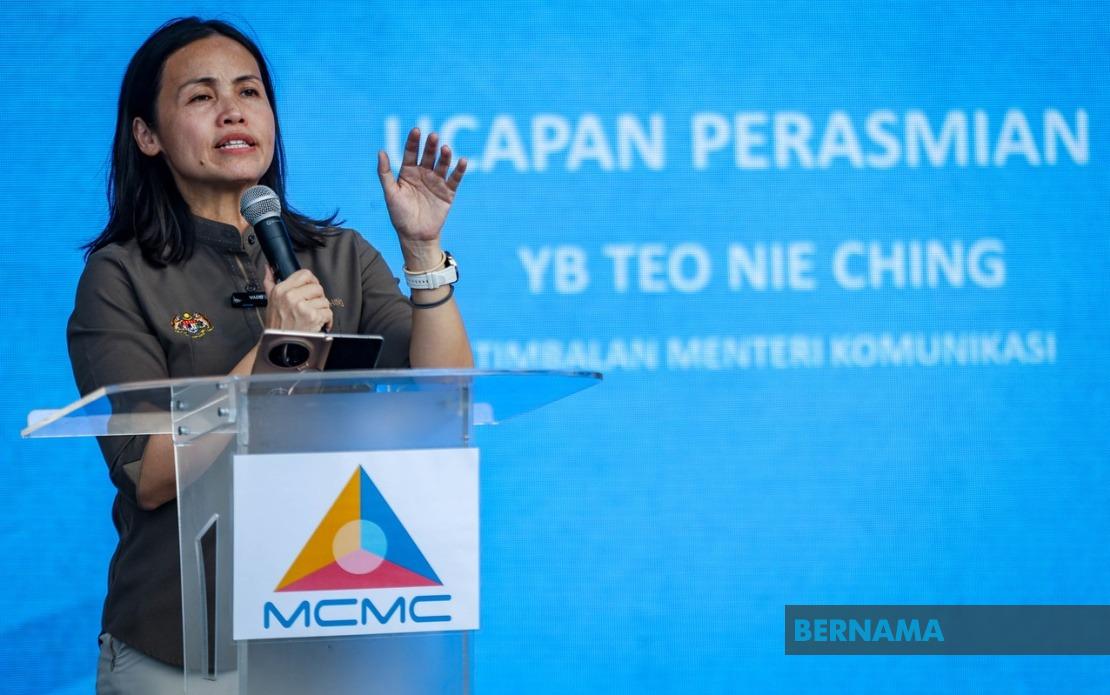
Malaysia's National Scam Response Centre has received 5,944 reports of online fraud through its dedicated 997 hotline during the first four months of 2025, according to Deputy Communications Minister Teo Nie Ching. The revelation underscores a persistent and widening problem affecting Malaysian consumers despite increasing awareness campaigns about digital safety and the availability of official reporting channels. Speaking at the Safe Internet Campaign Community Carnival in Kulai, Johor on August 28, Teo stressed that the mounting volume of complaints signals not merely a rise in vigilance among victims, but a worrying expansion of scam activities across the country's digital ecosystem.
The composition of reported scams paints a picture of fraudsters exploiting multiple vulnerabilities in Malaysia's online economy. Of the 5,944 cases, e-commerce fraud accounted for 2,566 incidents, representing roughly 43 percent of all reports. Telecommunications scams formed the second-largest category with 1,369 cases, or approximately 23 percent of the total. The remaining incidents involved schemes centred on non-existent loans and investment opportunities, categories that have long posed particular danger to individuals seeking quick financial solutions or returns. This distribution reflects the breadth of the scam landscape in Malaysia, where criminals have adapted their methods to exploit the rapid growth of online shopping, mobile financial services, and digital investment platforms.
Teo's comments highlighted a nuanced interpretation of the statistics that goes beyond simple numeric observation. While the 997 hotline's prominence among scam victims suggests successful public education about reporting mechanisms, she cautioned that the absolute number of complaints likely represents only a fraction of actual fraudulent activity occurring nationwide. Many scam victims, particularly those in rural areas or among elderly populations with limited digital literacy, may never report their experiences to authorities. This hidden population of unreported victims underscores the true scale of the problem facing Malaysian society and justifies the government's pivot towards community-wide awareness initiatives rather than school-focused campaigns.
The Safe Internet Campaign, originally established in 2025, concentrated its initial efforts on formal educational institutions, including primary and secondary schools, public and private universities, and teacher training centres such as the Malaysian Institute of Teacher Education. This conventional approach reflected a standard public health model emphasizing early education to shape long-term behaviour. However, Teo's announcement that the programme would expand beyond schools demonstrates recognition that cybercriminals target all demographic groups, and that parents, working professionals, and retirees require equivalent protection through targeted awareness.
Under the revamped strategy, the Safe Internet Campaign is being rolled out across multiple districts in Johor, beginning with Kulai and progressing through Kluang, Muar, Kota Tinggi, Pontian, Segamat, Batu Pahat, Mersing, Tangkak, and Johor Bahru. The phased expansion, scheduled to culminate on December 19, represents one of the government's most ambitious community education initiatives on digital safety. By concentrating resources on Johor, the authorities are targeting a state with significant urban and rural populations, diverse economic activities, and a demographic mix encompassing young digital natives and elderly citizens with varying levels of technological sophistication.
The decision to engage communities rather than institutions reflects lessons learned from earlier campaigns. School-based programmes reach students but often fail to influence family members who may lack formal digital literacy training. Parents and grandparents, frequently targeted by telecommunications scams and investment frauds, require messaging tailored to their vulnerabilities and communication preferences. By hosting community carnivals and events in populated districts, the authorities create accessible forums where residents can learn practical prevention strategies, ask questions in their preferred language, and share experiences with peers facing similar risks.
E-commerce fraud, the dominant category among reported scams, exploits the explosive growth of online shopping in Malaysia and across Southeast Asia. As more consumers conduct transactions through platforms ranging from international marketplaces to local retailers, fraudsters have become increasingly sophisticated in mimicking legitimate sellers, creating fake listings, and intercepting payments or shipments. Malaysian buyers, particularly those unfamiliar with secure purchasing practices or digital payment verification, remain vulnerable to elaborate schemes involving counterfeit products, non-delivery of ordered goods, or theft of personal financial information during transactions.
Telecommunications scams, the second-leading category, represent a distinct threat vector exploiting the ubiquity of mobile phones and messaging services. These schemes typically involve fraudsters impersonating government agencies, banks, or service providers to solicit personal information, authentication codes, or direct payments from unsuspecting victims. The relatively low technical barriers to launching such campaigns, combined with victims' inherent trust in seemingly official communications, make telecommunications fraud particularly lucrative for criminal networks operating across borders.
The investment and loan scam category, while numerically smaller, deserves particular attention given its catastrophic impact on individual victims. Schemes promoting non-existent investment opportunities or promising unrealistic loan approval rates target economically vulnerable populations and those seeking rapid wealth accumulation. Unlike e-commerce fraud, where losses may be measured in hundreds of ringgit, investment scams frequently result in losses exceeding tens of thousands of ringgit, devastating household finances and retirement savings.
For Malaysian policymakers and law enforcement, the challenge extends beyond education to operational capacity. While the 997 hotline's accessibility has clearly encouraged reporting, authorities must ensure that increased complaints translate into meaningful investigations and prosecutions. The involvement of multiple jurisdictions, international criminal networks, and complex financial flows requires coordination among domestic agencies and cross-border cooperation with regional partners and foreign law enforcement bodies. Public awareness without corresponding investigative resources risks creating frustration among victims who report crimes but see minimal accountability.
The government's expansion of community-based awareness represents tacit acknowledgment that digital literacy remains unevenly distributed across Malaysia. Urban professionals with tertiary education may possess adequate knowledge of cybersecurity practices, while rural residents, informal sector workers, and elderly citizens often lack comparable protective knowledge. By bringing the Safe Internet Campaign directly to communities, authorities acknowledge that one-size-fits-all messaging fails to resonate across diverse demographic and socioeconomic segments. Customized messaging addressing the specific concerns and communication preferences of each district increases the likelihood of sustained behavioral change.
Looking forward, the scaling of the Safe Internet Campaign across Johor may serve as a pilot programme for national expansion, potentially reaching other states with high rates of online scam reports and significant vulnerable populations. The December deadline suggests authorities recognize urgency in addressing the growing crisis before year-end, possibly hoping to reduce incoming complaints during the year-end shopping season when e-commerce fraud historically peaks. However, sustainable reduction in scam victimization requires long-term commitment to education, regulatory oversight of online platforms, and prosecutorial resources that extend well beyond carnival events and hotline publicity.

