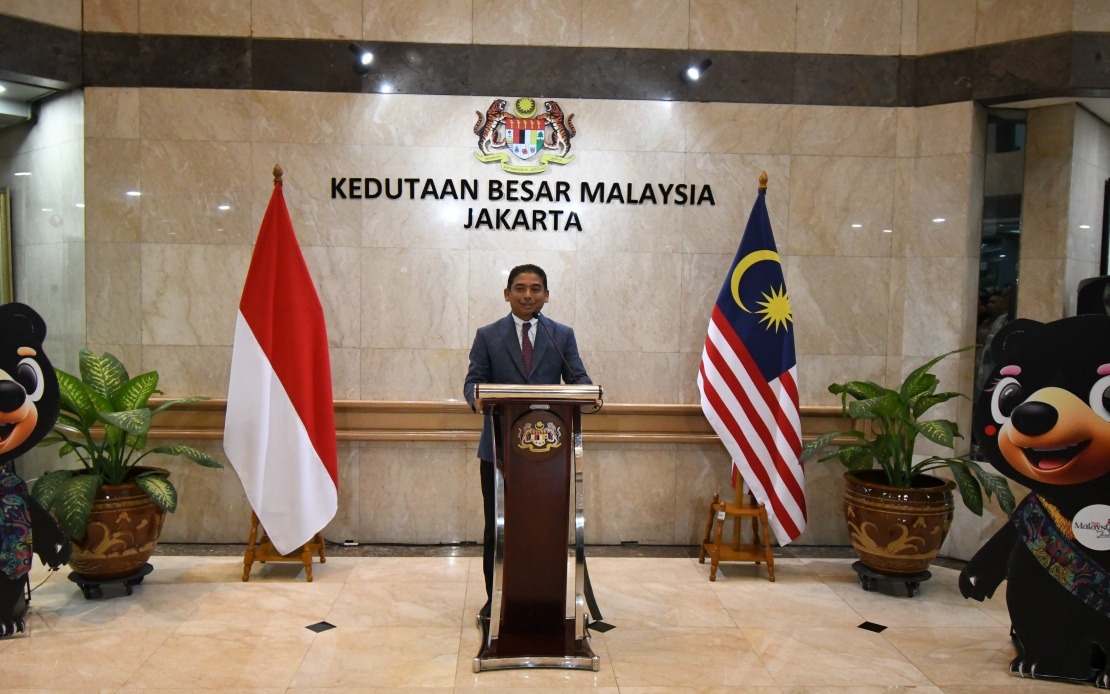
Datuk Muzafar Shah Mustafa has officially commenced his duties as Malaysia's Ambassador to Indonesia, arriving in Jakarta on August 10 following his appointment by Yang di-Pertuan Agong Sultan Ibrahim at Istana Negara on July 14. The diplomatic posting marks a significant transition for the veteran envoy, who departs a successful tenure representing Malaysian interests in South Asia to take on expanded responsibilities in Southeast Asia's largest economy. His arrival underscores the strategic importance both nations place on bilateral relations spanning trade, investment, defence cooperation, and cultural exchange.
Muzafar's appointment to Jakarta represents a natural progression in a distinguished diplomatic career spanning nearly three decades. Having joined the Foreign Ministry in 1995, he brings extensive experience from multiple continents to his new role. His previous assignment as High Commissioner to India lasted close to three years, ending when he departed New Delhi on July 9. The relatively seamless transition between postings demonstrates the structured approach Malaysia's Foreign Ministry employs in managing senior diplomatic appointments and ensuring continuity in key missions abroad.
The ambassador's international experience encompasses substantial exposure to some of the world's most complex diplomatic environments. From 2018 to 2023, Muzafar served as Malaysia's Ambassador to Mexico, simultaneously representing Malaysian interests in several Central American nations including Belize, Costa Rica, El Salvador, Guatemala and Honduras. This multilateral accreditation model allowed him to coordinate Malaysia's diplomatic objectives across a geographically dispersed region, managing relationships with governments at varying stages of development and political orientation.
Prior to his Mexico posting, Muzafar spent two years as Ambassador to Venezuela from 2016 to 2018, gaining experience navigating the complexities of a nation facing significant political and economic turbulence. This assignment would have required sophisticated diplomatic skills and the ability to protect Malaysian interests during challenging circumstances. His earlier European posting in Berlin, where he served as counsellor at the Malaysian Embassy from 2007 to 2011, provided him with experience in developed democracies and engagement with European institutions and stakeholders.
Muzafar's diplomatic journey also includes assignment to one of the world's most volatile regions. His service as second secretary at the Malaysian Embassy in Baghdad from 1999 to 2003 placed him in the Middle East during exceptionally turbulent years, including the aftermath of major regional conflicts. This experience would have deepened his understanding of security challenges, crisis management, and diplomatic resilience under pressure—assets particularly valuable in contemporary international relations.
Indonesia represents one of Malaysia's most crucial bilateral relationships, making the ambassador's posting particularly significant. The two nations share the world's longest maritime border and maintain extensive people-to-people connections. Economic interdependence is substantial, with Indonesian investments in Malaysia and Malaysian investments in Indonesia driving regional supply chains and business ecosystems. The relationship extends to defence cooperation, maritime security coordination, and cultural and religious connections given both nations' Muslim-majority populations. Muzafar's appointment positions Malaysia to advance its strategic objectives across these multifaceted dimensions of bilateral engagement.
The new ambassador's arrival comes at a time when Indonesia's regional influence continues to expand. As chair of the Association of Southeast Asian Nations in 2024 and holder of the G20 presidency, Indonesia's diplomatic importance has reached heightened levels. Malaysia's representation in Jakarta requires an ambassador capable of navigating complex multilateral dynamics while advancing bilateral interests. Muzafar's experience managing relationships across diverse regions and political systems positions him well for these multifaceted responsibilities.
Muzafar's family background reflects the personal dimension of diplomatic service. As the spouse of Datin Najwa Zainal and father of four, his family will contribute to Malaysia's soft power projection through community engagement and cultural representation in Jakarta. Ambassadors' families frequently serve as important ambassadors themselves, participating in cultural events, educational initiatives, and social activities that strengthen people-to-people connections between nations.
The formal commencement of Muzafar's duties, marked by his presence at the embassy on August 10, initiates a transition period for the diplomatic mission. Indonesian officials will likely engage with the new ambassador through courtesy calls and official functions to establish working relationships and identify priority areas for bilateral cooperation. The initial period of any ambassadorial posting typically involves extensive engagement with host government officials, business communities, Malaysian diaspora representatives, and civil society organizations.
Muzafar's appointment reflects Malaysia's commitment to maintaining senior-level diplomatic representation in strategically important markets. His career trajectory demonstrates the Foreign Ministry's emphasis on developing experienced professionals capable of managing complex bilateral relationships and advancing Malaysia's economic and political interests abroad. The posting to Indonesia, following postings across Latin America, South Asia, Europe and the Middle East, suggests recognition of his capabilities in navigating sophisticated diplomatic environments.
The ambassador's mandate likely includes advancing Malaysia's economic interests in Indonesia, supporting Malaysian businesses operating there, facilitating educational and cultural exchange, and ensuring effective coordination on regional security matters. His previous experience managing multiple accreditations simultaneously may inform his approach to coordinating Malaysia's engagement within broader ASEAN frameworks and facilitating multilateral diplomatic initiatives.
Looking forward, Muzafar's tenure in Jakarta will be assessed by his success in deepening Malaysia-Indonesia cooperation and managing bilateral issues constructively. His extensive overseas experience suggests preparedness for the challenges and opportunities inherent in representing Malaysia's interests in one of Asia's most dynamic and strategically significant nations. The ambassador's presence marks another chapter in the enduring diplomatic relationship between two neighbouring nations with substantial shared interests and historical ties.

