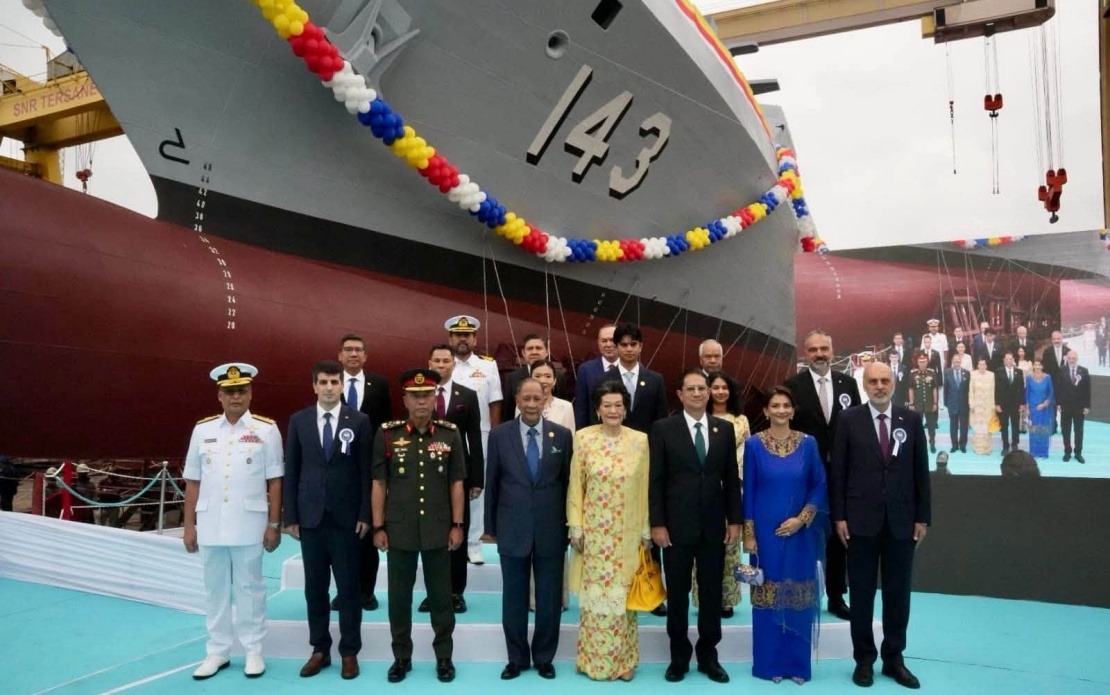
Defence Minister Datuk Seri Mohamed Khaled Nordin has underscored the pressing necessity for the Royal Malaysian Navy to remain at the forefront of maritime capability, stressing that modern and capable vessels are essential to navigate an increasingly volatile regional security landscape. Speaking during the launch of the third Littoral Mission Ship Batch 2 vessel, Mohamed Khaled outlined the government's unwavering commitment to fortifying the RMN's operational capacity and safeguarding Malaysia's sovereignty across its extensive maritime domain.
The launch of the vessel, named Tunku Osman Jewa, represents a significant milestone in the RMN's fleet modernisation strategy. The ship honours the memory of the late General Tan Sri Tunku Osman Tunku Mohammad Jewa, a distinguished figure from the Kedah royal family who previously served as Armed Forces chief. The ceremonial naming and launching event attracted prominent guests, including the Sultan of Kedah, Al Aminul Karim Sultan Sallehuddin Sultan Badlishah, and his consort Sultanah Maliha Tengku Ariff, underscoring the symbolic importance of the occasion within Malaysia's institutional framework.
The completion of the three-vessel construction series marks a watershed moment in Malaysian naval procurement history. The acquisition programme represents the first Government-to-Government partnership between Malaysia and Türkiye for the supply of RMN warships, establishing a precedent for bilateral defence collaboration in the region. This partnership reflects Malaysia's pragmatic approach to sourcing advanced maritime platforms while diversifying supplier relationships beyond traditional partners, thereby enhancing strategic flexibility and reducing dependency on any single procurement source.
The Littoral Mission Ship Batch 2 vessels represent a generational step forward in the RMN's operational capacity. These ships are engineered to address the multifaceted security challenges confronting Malaysian waters, from conventional maritime threats to transnational crimes including piracy and human trafficking. The vessels' design and capabilities reflect contemporary maritime security requirements in Southeast Asia, where nations face an intricate web of territorial disputes, sea lane vulnerabilities, and emerging hybrid threats that transcend traditional military paradigms.
Mohamed Khaled emphasised that the completion of this acquisition cycle represents only one component of a broader transformation initiative. The 15-to-5 Transformation Plan, under which the LMS Batch 2 programme sits, articulates a comprehensive vision for restructuring the RMN's fleet composition and operational doctrine. This strategy seeks to transition the navy from its existing force structure toward a leaner, more technologically advanced and expeditionary-capable force capable of projecting power across Malaysia's claimed maritime zones and beyond.
The delivery timeline carries significant implications for Malaysia's defence posture. All three LMSB2 ships are scheduled for handover to the RMN by the end of 2027, providing a clear horizon for naval capability enhancement. This phased acquisition schedule allows the navy to absorb new platforms progressively, train personnel on advanced systems, and integrate these vessels into existing task force structures without operational disruption. The staggered delivery also distributes financial expenditure across multiple fiscal years, facilitating budgetary planning within Malaysia's defence ministry.
From a regional perspective, Malaysia's naval modernisation sends calibrated signals to neighbouring states and major powers invested in Southeast Asian stability. The acquisition of capable littoral warfare vessels demonstrates Malaysia's determination to maintain freedom of navigation and maritime order in areas of vital national interest. For a nation dependent on sea lanes for commercial prosperity, such investments represent prudent stewardship of national resources and strategic priorities. The vessels' capabilities—optimised for operations in shallow and confined waters characteristic of Southeast Asian archipelagos—directly address geographical realities that shape regional maritime security challenges.
The Turkish partnership dimension warrants particular attention for Malaysian policymakers and regional observers. Türkiye's naval industry has emerged as a capable competitor in the global defence market, offering platforms that balance advanced technology with affordability. This collaboration signals Malaysia's openness to sourcing defence capabilities from non-Western suppliers, a positioning that reflects broader geopolitical trends within ASEAN states seeking to avoid excessive reliance on any single security guarantor. Such diversification strengthens Malaysia's negotiating leverage with traditional partners while accessing innovative solutions adapted to regional operational environments.
The modernisation imperative extends beyond mere vessel acquisition. Operating and sustaining advanced platforms demands complementary investments in naval infrastructure, personnel training, and logistics networks. The RMN's ability to realise the full operational potential of these new ships depends on institutional capacity to manage sophisticated systems, conduct regular maintenance, and deploy personnel capable of executing complex maritime operations. These downstream requirements represent substantial but often underappreciated dimensions of defence modernisation that demand sustained financial and administrative commitment from Malaysian authorities.
Looking forward, the completion of the LMSB2 construction series provides the RMN with breathing space to reassess broader fleet requirements and capability gaps. Strategic planners must consider future acquisitions addressing anti-submarine warfare, air defence, and extended-range power projection capabilities that emerging maritime threats may necessitate. The 15-to-5 Transformation Plan's success ultimately hinges on whether Malaysia can maintain momentum in defence spending and technological integration while addressing competing budgetary pressures across multiple government sectors.
The symbolic significance of honouring General Tunku Osman Tunku Mohammad Jewa through vessel naming reflects Malaysian tradition of commemorating military leadership within institutional structures. This practice reinforces continuity between historical military stewardship and contemporary defence challenges, reminding serving personnel of institutional values and exemplary leadership. Such ceremonial dimensions, often overlooked in defence analysis, contribute meaningfully to organisational cohesion and professional identity within military hierarchies.
Mohamed Khaled's public emphasis on maritime security challenges and naval modernisation reflects broader policy alignment within Malaysia's security establishment. The Defence Minister's advocacy for sustained investment in RMN capabilities carries weight within cabinet discussions and parliamentary budget deliberations, where competing sectoral interests routinely contend for limited financial resources. By publicly articulating the strategic imperative for naval modernisation, the minister reinforces political will necessary to sustain the long-term investments defence transformation demands.

