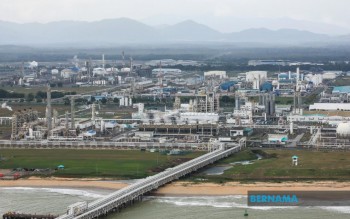
Malaysia is considering the establishment of a national petroleum reserve to shield the country from mounting geopolitical threats to energy supplies, according to Prime Minister Datuk Seri Anwar Ibrahim's recent directive for the government to study the feasibility and strategy of such a stockpile. The timing reflects an increasingly precarious global energy environment where key maritime chokepoints face recurring disruption rather than isolated incidents, a shift that has prompted policymakers across Southeast Asia to reassess their vulnerability to supply shocks.
The Strait of Hormuz remains the world's most critical energy conduit, with approximately 20 million barrels of crude and refined petroleum products flowing through daily—representing roughly one-fifth of global supply. Yet analysts increasingly view this strategic waterway not as a singular geopolitical flashpoint but as a structural vulnerability prone to repeated disruption. The distinction matters significantly for energy planning: whereas isolated crises can be managed through emergency stockpiles and market adjustments, persistent instability demands fundamental changes to how governments approach reserves and diversification.
Stephen Innes, managing partner at SPI Asset Management, emphasises that the pressure on Hormuz and other shipping lanes is unlikely to diminish for years. The underlying causes—geopolitical rivalry, proxy conflicts, and competing regional interests—remain unresolved, and building alternative pipelines and export routes will require substantial time and investment. In the interim, shipping insurance costs have risen, tanker availability has tightened, and a persistent risk premium has embedded itself into global oil prices. This structural shift makes long-term energy planning imperative for import-dependent nations like Malaysia.
Recent military escalations underscore these risks. Yemen-based Houthi forces, reportedly allied with Iran, have conducted attacks on shipping in the Red Sea following American strikes on Iranian military installations. The group has claimed responsibility for assaults on Saudi oil tankers, introducing a second major vulnerability point in the world's energy supply chain. Should disruptions occur simultaneously across both the Hormuz Strait and Red Sea corridor—a scenario that cannot be ruled out given current tensions—the consequences for Southeast Asian nations could be severe: sharply elevated oil prices, increased freight and insurance costs, and prolonged supply delays that ripple through economies highly dependent on imported energy.
Malaysia's particular exposure warrants close attention. Although the country produces approximately 570,000 barrels of oil daily, it remains a net importer of refined fuel products and sourced roughly 69 per cent of its crude oil imports from suppliers linked to the Strait of Hormuz region in 2025. This import dependence means that any prolonged disruption to the waterway directly threatens Malaysia's ability to meet domestic demand and maintain critical industrial operations. Commercial petroleum inventories, while useful for managing normal operational fluctuations, lack the capacity to sustain the economy through extended supply crises. A strategic reserve, properly sized and maintained, could provide crucial buffer time during emergencies.
Analysts distinguish between energy security—the ability to access adequate energy supplies—and energy resilience, which encompasses the capacity to maintain functioning energy systems when normal supply and transport channels are compromised. Innes characterises a national petroleum reserve as emergency insurance that complements rather than replaces commercial stocks. The reserve would need to form part of a comprehensive strategy encompassing diversified suppliers, improved storage capacity, alternative shipping routes, and predetermined protocols for releasing and replenishing reserves during crises. Without these supporting elements, a reserve alone cannot effectively insulate the country from prolonged supply disruptions.
Diversification emerges as a critical parallel initiative. Malaysia must systematically reduce its reliance on Hormuz-sourced crude by expanding relationships with alternative suppliers, including Australian, Indonesian, and other extra-regional sources. Simultaneously, investments in domestic gas production represent another avenue for reducing exposure to maritime vulnerabilities. The country's dry gas output is forecast to reach 82.3 billion cubic metres in 2026, strengthening the domestic supply base and complementing ongoing energy transition efforts through initiatives like the Solar@PETRA programme and the Corporate Renewable Energy Supply Scheme.
The geopolitical calculus also demands regional coordination. Southeast Asian governments face common vulnerabilities and could strengthen collective resilience through improved information sharing, harmonised emergency protocols, and coordinated strategic stockpiling decisions. Innes specifically recommends that ASEAN governments review their fuel inventory levels, align strategies for managing shipping disruptions, and establish frameworks for emergency supply arrangements. Regional cooperation could enhance bargaining power with external suppliers and ensure that a coordinated response to supply crises reduces panic buying and market volatility.
Energy pricing and subsidy structures require parallel attention. Analysts caution that broad fuel subsidies, while politically appealing, become increasingly unsustainable if crude prices remain elevated due to geopolitical risk premiums. Targeted assistance directed toward lower-income households and strategically important industries would prove more durable and fiscally responsible than universal price controls. Such recalibration, combined with strategic reserves and diversified sourcing, creates a more resilient framework than temporary pricing interventions that distort market signals and consume government resources.
BMI's oil and gas analyst Tariro Chiweza notes that Malaysia's national petroleum reserve initiative is strategically well-timed, as commercial inventories are fundamentally designed for routine operational continuity rather than resilience against prolonged external shocks. The case for a reserve grows more compelling when viewed as a component of broader resilience architecture that includes expanded renewable energy capacity, battery storage systems, regional power interconnectors, electrification programmes, and potentially nuclear power development. Malaysia's existing initiatives in renewable energy and biodiesel already support these wider objectives and create complementary momentum for systemic strengthening.
At present, global crude markets reflect mounting geopolitical premiums: Brent crude has risen to approximately US$96.86 per barrel while West Texas Intermediate trades near US$88.76, with these price levels incorporating persistent uncertainty about supply continuity. These elevated prices effectively impose an implicit tax on energy-importing economies, making strategic reserves and diversification not merely prudent but economically necessary. The cost of maintaining reserves is modest relative to the potential economic damage from severe supply disruptions.
The broader implications extend beyond Malaysia's borders. Southeast Asian nations collectively depend on stable energy supplies to maintain industrial competitiveness and economic growth, yet most remain acutely vulnerable to disruptions in distant shipping corridors. Malaysia's move to establish a national petroleum reserve potentially catalyses similar actions across the region, prompting governments to assess their own exposure and develop comprehensive resilience strategies. This cascade effect could strengthen ASEAN's collective energy security posture and reduce the region's susceptibility to external geopolitical shocks.
Moving forward, Malaysia's government must balance the creation of strategic reserves with investments in supply diversification, renewable energy expansion, storage infrastructure improvements, and regional cooperation mechanisms. No single measure—whether reserves, diversification, or renewable investment—can independently guarantee energy security in an increasingly volatile geopolitical environment. Rather, an integrated approach combining multiple resilience levers offers the most durable protection for Malaysia's long-term energy interests and broader economic stability.

