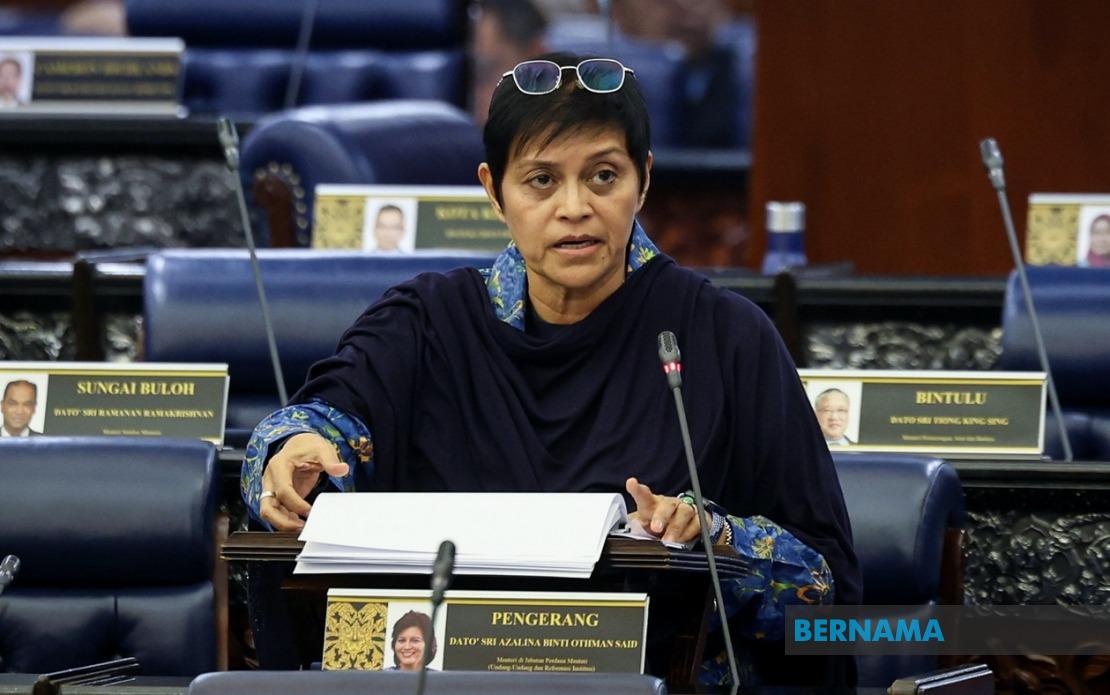
A landmark institutional reform will advance in Malaysia's parliament tomorrow with the presentation of a Special Select Committee report proposing the separation of the Attorney General and Public Prosecutor positions. The move represents a significant step in the MADANI Government's broader agenda to restructure the country's governance framework and reinforce the independence of critical justice institutions. Minister in the Prime Minister's Department (Law and Institutional Reform) Datuk Seri Azalina Othman Said has framed the initiative as essential to restoring public faith in Malaysia's judicial mechanisms, which have faced scrutiny in recent years regarding the concentration of power and perceived conflicts of interest within the office of the Attorney General.
The seven-member committee undertook an intensive review process, convening seven times to develop its recommendations. Rather than merely splitting two positions, the committee's work addresses deeper structural questions about how Malaysia's prosecution authority should function within a democratic framework. The seven key proposals emerging from this deliberation target multiple dimensions of institutional strength: enhancing parliamentary involvement in appointments, establishing clearer tenure arrangements, introducing ethics frameworks, and creating mechanisms for greater accountability. These measures collectively signal a shift toward decentralising prosecutorial authority away from executive concentration, a concern that has periodically dominated Malaysian legal and political discourse.
Central to the reform is a proposed redefinition of how the Public Prosecutor will be appointed. Rather than following a path that grants significant influence to the Prime Minister or Cabinet, the new mechanism would vest the appointment process with the Judicial and Legal Service Commission (SPKP), which would then present its nominee to the Dewan Rakyat Speaker. This parliamentary presentation establishes a crucial checkpoint: a House Select Committee would scrutinise the candidate before returning its recommendation to the SPKP, which would subsequently advise the Yang di-Pertuan Agong. This multi-layered approach creates what institutional designers call a system of mutual accountability, where no single executive office can unilaterally determine who wields prosecutorial power.
The proposed seven-year fixed, non-renewable term for the Public Prosecutor addresses concerns about continuity and insulation from political pressure. Unlike indefinite tenure, which may encourage politicisation as appointments approach renewal, a clearly bounded term provides the office-holder with defined parameters and reduces the incentive for political compliance. This mirrors practices in several Commonwealth democracies where prosecutorial independence correlates with explicit tenure protections. For Malaysian legal professionals and civil society observers, this provision offers assurance that prosecutorial decisions will be grounded in legal merit rather than calculations about extending one's tenure through political favour.
The introduction of a Code of Ethics specifically for Public Prosecutors formalises standards of conduct that have previously remained implicit or scattered across various directives. Such a code would articulate principles governing conflicts of interest, impartiality, fair trial obligations, and public communication. For a jurisdiction where prosecutorial conduct has occasionally become a subject of public controversy, an explicit ethics framework provides a measurable standard against which the institution can evaluate itself and against which the public and oversight bodies can assess performance. This transparency mechanism aligns with international best practices endorsed by bodies like the Commonwealth Law Association.
The proposed constitutional amendment to Clause 18 of Article 145A signals the government's intent to embed these changes in the supreme law, rather than leaving them as mere administrative guidelines susceptible to reversal. Constitutional entrenchment typically requires a two-thirds parliamentary majority, reflecting a commitment to insulate the reforms from casual reversal during future administrations. For Malaysian stakeholders, this represents a genuine attempt to move beyond the cyclical pattern where institutional changes have sometimes been implemented and subsequently dismantled depending on political winds. By seeking constitutional foundation, the government is signalling that separation of prosecutorial authority from the Attorney General's portfolio represents a permanent structural principle rather than a temporary expedient.
Azalina's statement explicitly emphasises the connection between this separation and strengthening public confidence in the justice system. This framing acknowledges a key insight from rule-of-law scholarship: legitimate justice systems require not only substantively fair outcomes but also institutional arrangements that are perceived as fair and independent. In Malaysia, where the Attorney General traditionally served as principal legal advisor to the government whilst simultaneously directing prosecutions, the structural potential for conflicts was evident. Separating these roles removes the appearance that prosecutorial decisions might be influenced by considerations of government legal interests, thereby enhancing the legitimacy of the prosecutorial function itself.
For Malaysia's legal community, civil society organisations, and international observers monitoring the country's democratic institutions, this reform addresses questions that have periodically surfaced regarding the autonomy of prosecutorial decision-making. Cases involving high-profile political figures or government-related matters have occasionally generated debate about whether prosecutorial choices reflected legal judgement or political considerations. While no institutional reform can guarantee that prosecutorial decisions will always command universal agreement, separating the office from the Attorney General's ministry creates structural conditions that make political interference more difficult and more transparent if attempted.
The implementation of these reforms will require careful coordination between multiple institutions. The Judicial and Legal Service Commission will need to establish new procedures for identifying and vetting candidates. The Dewan Rakyat will require capacity to effectively scrutinise nominations through its House Select Committee. The Yang di-Pertuan Agong's constitutional prerogatives must be preserved whilst the new collaborative appointment mechanism functions. These practical considerations will occupy significant attention in the coming months as the government moves from legislative proposal to institutional implementation.
Regionally, Malaysia's institutional reform carries potential significance. Several Southeast Asian democracies grapple with similar tensions between executive authority and prosecutorial independence. Singapore, Indonesia, and the Philippines have each wrestled with defining appropriate relationships between central government and prosecutorial institutions. Malaysia's approach, if successfully implemented, may offer a model demonstrating how Commonwealth constitutional frameworks can accommodate clearer separation between political and legal authority whilst respecting the continuing role of the Crown and maintaining constitutional continuity.
The tabling of this report tomorrow represents not merely a procedural milestone but a substantive moment in Malaysia's ongoing constitutional development. It reflects sustained commitment from the current administration to reshape institutions in ways that prioritise independence, transparency, and accountability over executive convenience. Whether parliament will endorse these recommendations, how effectively they will be implemented once approved, and whether they will ultimately restore public confidence in prosecutorial institutions remain to be seen. Nevertheless, the proposal itself demonstrates that significant structural reform of Malaysia's justice institutions remains possible within democratic and constitutional channels.

