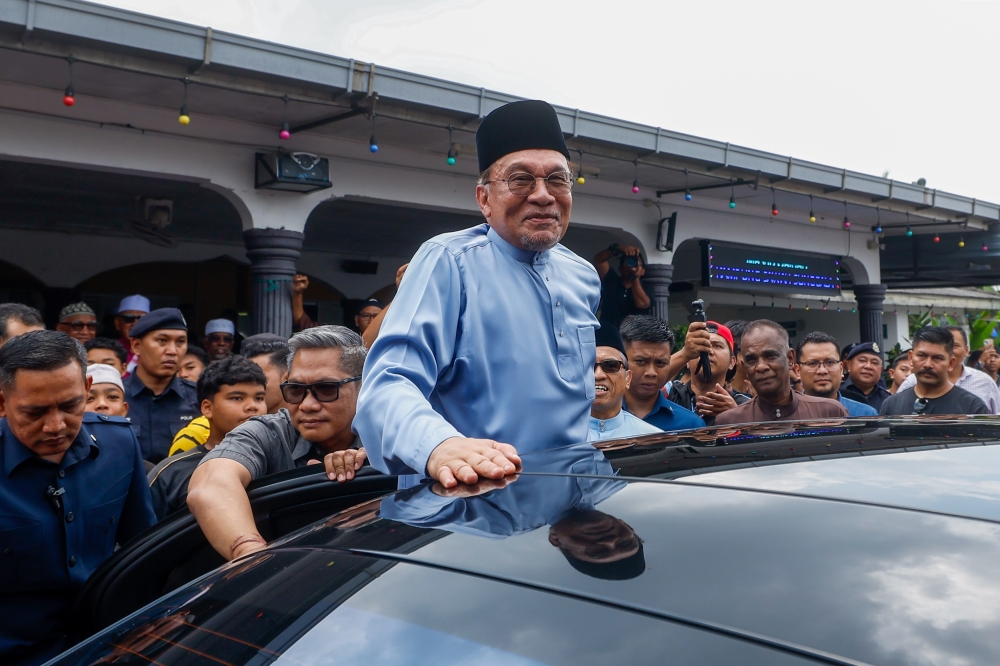
Prime Minister Datuk Seri Anwar Ibrahim has moved to clarify Malaysia's longstanding position on restricting entry to Israeli nationals, drawing a sharp distinction between the government's stance on Israeli state policies and any form of religious discrimination. Speaking in Port Dickson on July 24, Anwar stressed that Kuala Lumpur's decision reflects political objections to what the administration views as patterns of oppression, rather than hostility toward Jewish people or anti-Semitic ideology.
The clarification comes as Malaysia continues to navigate complex diplomatic and moral questions surrounding its Middle East stance. Anwar's intervention signals an attempt to position the country's policy framework as principled opposition to specific governmental actions, a framing that distinguishes between criticism of Israel as a state actor and broader prejudice based on religion or ethnicity. This distinction has become increasingly important in international discourse, where accusations of anti-Semitism can carry significant diplomatic and economic consequences.
Anwar's remarks reflect Malaysia's broader foreign policy orientation under his administration, which has sought to maintain vocal advocacy for Palestinian causes while simultaneously working to preserve economic and diplomatic relationships with Western nations. The Malaysian government has consistently articulated its position as grounded in humanitarian concerns and international law rather than religious animosity. This rhetorical approach attempts to insulate Malaysia from criticism that its policies discriminate based on religion, a charge that could complicate international relations and investment flows.
The Prime Minister's clarification assumes particular significance given Malaysia's history of pro-Palestinian activism and its status as a Muslim-majority nation with significant Jewish diaspora populations and trading partners in Western countries. Distinguishing between state criticism and religious prejudice has become a central diplomatic challenge for several nations, particularly those in the developing world that maintain strong positions on Palestinian rights. Malaysia's articulation seeks to occupy a middle ground, rejecting the notion that principled opposition to Israeli government policies necessarily implies anti-Jewish sentiment.
This positioning also reflects broader regional considerations within Southeast Asia, where Malaysia operates as an important economic hub with diverse trading relationships. Countries throughout the region have demonstrated varying approaches to Middle Eastern conflicts, balancing their own foreign policy interests with commercial imperatives and humanitarian concerns. Malaysia's explicit framing of its restrictions as politically rather than religiously motivated may facilitate its navigation of these competing pressures.
The clarification carries implications for how Malaysia's policies are interpreted internationally and domestically. Internationally, it represents an attempt to preempt criticism from Western governments and international organisations that scrutinise restrictions on travel or commerce based on nationality. Domestically, it reinforces a narrative among Malaysian policymakers and the public that national positions on Palestine emerge from principled stands regarding human rights and self-determination rather than sectarian motivations.
Anwar's intervention suggests awareness that ambiguity surrounding the rationale for such restrictions can invite mischaracterisation and diplomatic friction. By explicitly articulating the distinction between opposing Israeli government policies and practising religious discrimination, the Prime Minister attempts to establish clearer parameters for public and international understanding of Malaysian policy. This approach acknowledges the delicate balance required when maintaining humanitarian positions while managing international relations.
The timing and framing of Anwar's remarks also reflect Malaysia's diplomatic evolution under his leadership. Since assuming office, the Prime Minister has worked to enhance Malaysia's international profile and economic positioning while preserving the country's traditional advocacy positions. Clarifying that restrictions stem from political objections rather than religious prejudice aligns with efforts to present Malaysia as a nation guided by principle rather than bias.
This distinction carries practical importance for Malaysian citizens and companies engaging internationally. When government policies can be portrayed as motivated by religious discrimination rather than political conviction, they risk inviting broader international sanctions, legal challenges, and diplomatic isolation. By framing restrictions as responses to specific government actions, Malaysia attempts to maintain that the policy reflects selective political opposition rather than categorical exclusion based on religion or ethnicity.
The clarification also speaks to broader conversations within Malaysia about how the country balances its Muslim-majority character with its multicultural society and international obligations. Malaysian policymakers have increasingly recognised that explicitly linking policies to religious identity can complicate the nation's efforts to present itself as a stable, rules-based democracy committed to international norms. Separating political objections to government actions from religious or ethnic discrimination represents an attempt to navigate this tension.
Anwar's remarks appear part of a longer-term strategy to intellectually ground Malaysia's Middle East positions in terms that resonate with international law and human rights frameworks rather than religious or sectarian categories. This approach potentially makes Malaysia's policies more defensible within international forums and before trading partners concerned about discriminatory practices. The distinction, while conceptually straightforward, carries significant diplomatic weight in how Malaysia's foreign policy gets received and evaluated globally.
Looking forward, the Prime Minister's clarification may set the template for how Malaysia articulates its positions on contentious Middle Eastern issues. By emphasising that restrictions address government policies rather than religion, Anwar signals that Malaysia's stance derives from what it frames as principled humanitarianism and commitment to international law. Whether this framing ultimately influences Malaysia's policy trajectory or international perception remains to be seen, but it indicates conscious attention to how the country's Middle East engagement gets understood within and beyond Southeast Asia.

