Malaysia's efforts to maintain its ban on Israeli nationals face a practical enforcement challenge rooted in the widespread prevalence of dual citizenship among Israeli nationals, a reality that has become starkly apparent following the Network School controversy in Johor Bahru. The international co-living and co-working tech commune in Forest City, founded by Silicon Valley investor Balaji Srinivasan, inadvertently highlighted how individuals with Israeli connections can navigate Malaysia's borders by presenting alternative national identities. Social media discussions among Malaysians revealed widespread bewilderment about how Israelis could have entered the country at all, with many observers initially attributing the apparent breach to immigration enforcement failures rather than recognizing the structural complications posed by dual nationality.
The Israeli government does not maintain or publish a comprehensive registry documenting which of its citizens hold additional nationalities, making accurate enumeration impossible. However, research-based estimates suggest approximately 10 per cent of Israeli citizens—roughly one million people based on current population figures—possess a second passport. These figures, while not official statistics, represent the most credible approximations available and underscore the scale of the challenge facing immigration authorities attempting to identify Israeli nationals at border checkpoints. The absence of reliable data from Tel Aviv itself compounds the difficulty, as Malaysian immigration officials lack access to definitive lists of dual nationals who might attempt entry.
US citizenship represents the largest single category of second nationality among Israelis, with estimates exceeding 200,000 Israeli-American dual citizens residing in Israel. This figure likely understates the true number, as it excludes Jews born in America or those descended from earlier waves of migration. The historical trajectory of Israeli-American dual nationality reflects both the substantial Jewish emigration to the United States prior to Israel's establishment and ongoing immigration patterns. Beyond American citizenship, academic research by scholar Yossi Harpaz documented approximately 344,000 Israelis holding EU nationality as of 2019, though this figure excluded many other dual nationals outside the European Union.
The geographic distribution of Israeli dual citizenship extends far beyond Western nations. French citizenship remains common, reflecting over a century of immigration flows between the two countries. Russian nationality represents a significant second category, stemming from the substantial wave of immigration from the former Soviet Union beginning in the 1990s, which brought hundreds of thousands of Soviet Jews to Israel. British citizenship, acquired through immigration and descent provisions, constitutes another established pathway. Additionally, Israeli dual nationals hold citizenship in Poland, Romania, Hungary, Portugal, Argentina, South Africa, Australia, and Ethiopia, reflecting the diaspora origins of Israel's diverse immigrant population and the citizenship laws of countries with historical Jewish communities.
Military personnel compound the enforcement challenge considerably. Israeli military data indicates that over 50,000 active duty personnel hold foreign passports, predominantly from the United States, Russia, France, the United Kingdom, and Ukraine. This military dimension introduces security considerations beyond ordinary immigration concerns, as individuals with advanced training and potential intelligence access could theoretically move across borders using non-Israeli travel documents. The concentration of foreign passport holders within the military establishment suggests that enforcement difficulties extend into domains touching on national security interests.
The case of content creator Nusier Yassin, known professionally as Nas Daily, exemplifies how the dual citizenship mechanism operates in practice. The Israeli-Palestinian vlogger reportedly entered Malaysia in 2022 despite the official ban by transiting through Singapore using a Saint Kitts and Nevis passport. His subsequent presence in Malaysia and involvement with the Network School sparked controversy when activist group Malaysia Protest 4 Palestine highlighted the breach. This incident, while high-profile due to his social media prominence, likely represents merely one visible instance of a recurring pattern involving less publicly identifiable individuals using alternative national credentials.
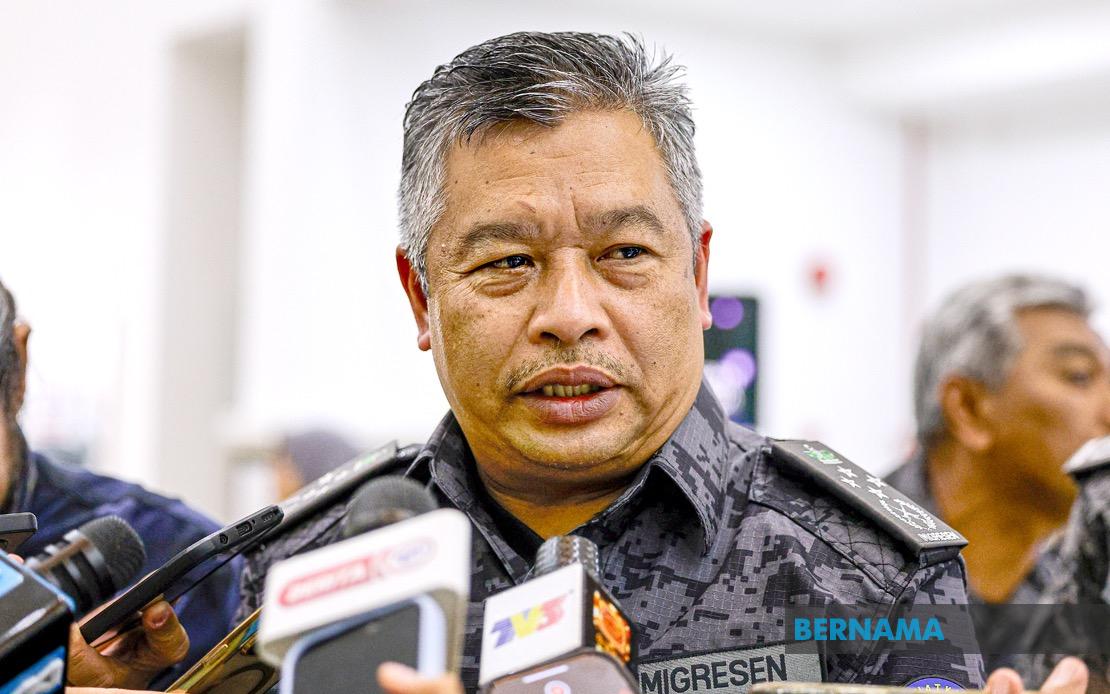
The Network School affair itself prompted investigation by Malaysian authorities. Immigration director-general Datuk Zakaria Shaaban reported that 256 foreigners from 40 countries with social visit passes and ten nomad category professional visit pass holders were inspected in connection with the facility. The nomad visa recipients comprised four US citizens, three Russians, two Australians, and one Indian national. Despite these investigations, authorities stated they had yet to locate definitive evidence of Israeli national presence, though inquiries would continue in cooperation with other agencies. This lack of detected Israeli nationals, however, does not necessarily indicate an absence of Israeli citizens holding alternative passports among the broader population under examination.
Detecting Israeli presence proves extraordinarily difficult due to the absence of publicly accessible registries cross-referencing Israeli citizenship with foreign passport holders. For public figures and celebrities, citizenship status frequently remains private information, undisclosed through official channels or media reporting. A Malaysian who has visited Jerusalem with approval from the Home Ministry and Immigration would have almost certainly encountered Israelis presenting themselves as American passport holders, speaking with American accents, and openly discussing their dual nationality status. The visibility of this phenomenon in Israel itself—evidenced by billboards displaying "JerUSAlem" to emphasize American connections—underscores how normalized and openly acknowledged dual identity has become.
The practical implications for Malaysian immigration enforcement are substantial. Passport control officers cannot reliably distinguish between an American citizen of Israeli origin and any other American national presenting a US passport. Border officials lack access to databases connecting foreign passports to Israeli citizenship status. Intelligence agencies might possess such information, but typical immigration checkpoints operate without such sophisticated cross-referencing capabilities. The expansion of digital nomad visas and professional visitor categories, while economically beneficial to Malaysia, introduces additional pathways for individuals with complex national identities to remain in the country for extended periods.
The Network School controversy presents Malaysia with a balancing act between conflicting policy objectives. The facility's planned RM500 million expansion, now reportedly suspended following the crackdown, represents significant foreign investment and job creation potential. Balaji Srinivasan's subsequent criticism of activist group Malaysia Protest 4 Palestine reflected frustration over the expansion freeze, highlighting tensions between Malaysia's stated position against Israel and its simultaneous eagerness to attract technology sector investment. This dilemma lacks straightforward resolution, as stringent enforcement measures risk deterring the international talent and capital that contribute to economic development.
Malaysia's official position against Israel remains unambiguous and non-negotiable. However, the practical enforcement of policies restricting Israeli national entry has become complicated by factors largely beyond regulatory control. The prevalence of dual citizenship among Israelis creates a structural loophole that no amount of enhanced border vigilance can entirely close, provided individuals possess legitimate alternative passports from countries with which Malaysia maintains normal diplomatic and commercial relations. Addressing this challenge requires either acceptance of the inherent limitations of entry bans in a globalized world of dual nationals, or implementation of more intrusive intelligence-based screening procedures that could prove economically and diplomatically costly.
The broader context involves Malaysia's relationships with Western nations from which most Israeli dual nationals draw their alternative citizenship. Enhanced scrutiny of American, British, French, or Russian passport holders would inevitably affect ordinary citizens of those countries, potentially damaging commercial and diplomatic relationships. Additionally, explicitly targeting individuals based on religious or ethnic background—the practical mechanism for identifying Israelis without Israeli documentation—would contradict Malaysia's own constitutional principles and international obligations regarding non-discrimination. These competing considerations suggest that perfect enforcement of an Israeli entry ban may be structurally impossible within Malaysia's current legal and diplomatic framework.

