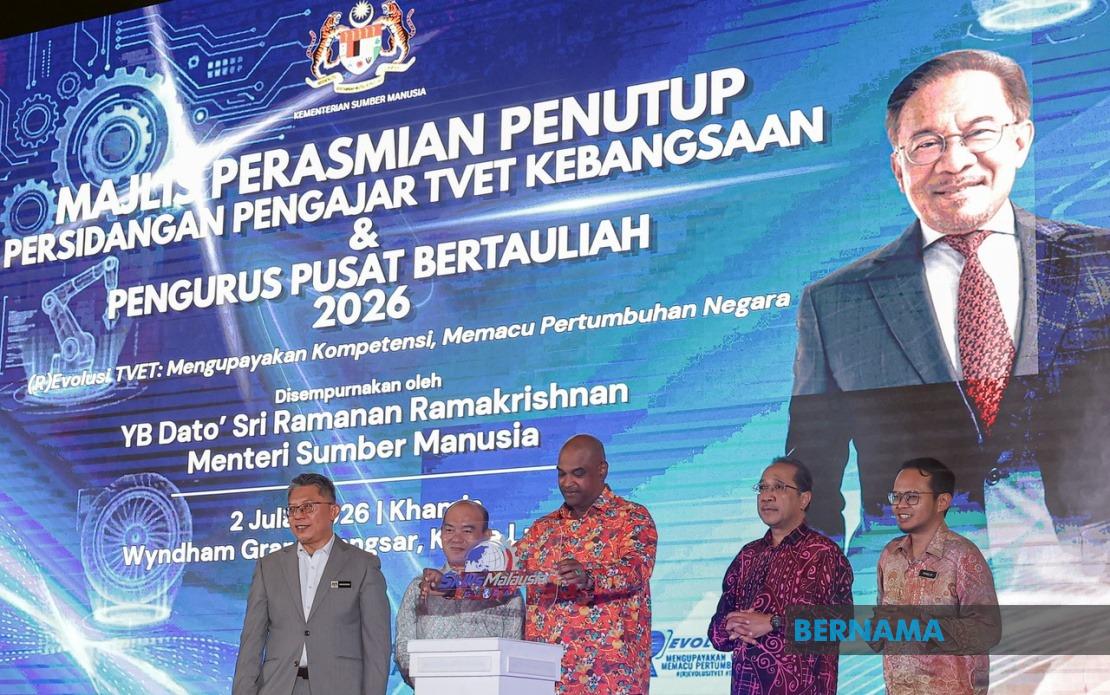
Malaysia's Ministry of Human Resources has initiated a push to fundamentally reshape how it finances vocational training, proposing to convert the Skills Development Fund Corporation (PTPK) financing mechanism from a loan-based system into outright grants. The proposal represents a significant policy shift aimed at removing financial barriers that currently discourage workers from pursuing technical and vocational education, a priority area for the government's broader human capital development agenda. Minister Datuk Seri R. Ramanan announced the initiative during the National TVET Instructors and 2026 Accredited Centre Managers Conference in Kuala Lumpur, signalling that the matter will be escalated to Cabinet for formal consideration and approval.
The underlying rationale for this conversion reflects a practical concern about the real-world circumstances facing skills development participants. Many individuals who enrol in TVET programmes must leave their current employment to pursue full-time training, an arrangement that substantially erodes their household income during the study period. The existing loan framework compounds this financial stress, requiring trainees to simultaneously manage reduced earning capacity while servicing debt obligations. By eliminating loan repayment requirements, the Ministry argues that grants would substantially ease the economic pressure on working-class Malaysians seeking to upgrade their qualifications, thereby encouraging broader participation in vocational pathways and addressing persistent skills shortages across industries.
The RM100 million figure represents the current financing commitment available through the PTPK mechanism. Converting this amount from loans to grants would constitute a meaningful reallocation of public resources toward skills development, though it would require Treasury approval and broader budgetary consideration. The proposal goes beyond merely adjusting interest rates or repayment terms; it represents a fundamental philosophical shift from viewing skills financing as a recoverable investment to treating it as a public good worthy of direct subsidy. This approach aligns with growing international recognition that vocational education systems function most effectively when financial accessibility is maximised.
Minister Ramanan contextualised the PTPK initiative within Malaysia's broader economic transformation strategy, framing TVET as central to the Malaysia MADANI human capital development framework. He articulated a clear economic objective: achieving a Gross National Income per capita of approximately RM77,200 annually. This target reflects recognition that sustained income growth depends critically on workforce skill levels and productivity enhancements. TVET programmes serve as essential mechanisms for preventing skills mismatches within the labour market, ensuring that workers' qualifications align with employer demand and emerging industry requirements.
The strategic importance of vocational training has escalated considerably as Malaysia pursues its vision as a Regional Innovation Hub capable of attracting high-value foreign investment. Multinational corporations making location decisions increasingly prioritise markets with deep pools of skilled technical workers, particularly in advanced manufacturing, digital technologies, and green industries. By expanding access to quality vocational training through grant-based financing, Malaysia seeks to develop the human capital foundation necessary for competing effectively in this landscape and preventing brain drain of qualified workers to neighbouring economies.
Beyond the immediate PTPK conversion proposal, the Ministry unveiled its Internationalisation Action Plan for the Department of Skills Development spanning 2026 to 2030, demonstrating ambitious thinking about TVET's future trajectory. This multi-year strategy rests upon six interconnected pillars, each addressing different dimensions of international competitiveness. Global recognition of Malaysian credentials stands as a fundamental objective, acknowledging that TVET qualifications must command respect and acceptance across international labour markets. The planned upgrading of the Centre for Instructor and Advanced Skill Training (CIAST) to world-class standards reflects recognition that instructor quality fundamentally determines training quality and graduate competitiveness.
A critical technical component involves mapping Malaysia's National Occupational Skills Standards (NOSS) with international benchmarks. This alignment ensures that the Malaysian Skills Certificate (SKM) achieves genuine portability, allowing domestic graduates to pursue employment opportunities abroad and facilitating recognition by foreign professional bodies. The objective of achieving Global Excellence status for the SKM would transform it from a nationally-recognised credential into an internationally-recognised qualification, substantially expanding graduate employment prospects and enhancing Malaysia's attractiveness as a skills development destination.
The internationalisation strategy incorporates sustainability and governance frameworks that increasingly shape investment and employer decisions. Environmental, Social and Governance (ESG) considerations have become mainstream in corporate decision-making, with employers increasingly preferring workforce solutions aligned with their sustainability commitments. Similarly, Diversity, Equity and Inclusion (DEI) principles are becoming non-negotiable elements of competitive talent management. The Ministry's integration of these frameworks into the TVET internationalisation agenda signals understanding that modern skills development must address not merely technical competencies but also the values and practices organisations prioritise.
For Malaysian workers, particularly those from lower-income backgrounds, the PTPK grant conversion carries substantial implications. Removing loan obligations would substantially democratise access to quality skills training, enabling individuals without family wealth to invest in their human capital development without incurring debt. This has particular relevance for rural Malaysians and workers in declining industries facing displacement, groups for whom upskilling represents an essential pathway to sustainable employment and income growth. The policy would effectively subsidise the skill transitions necessary for economic restructuring and inclusive growth.
For businesses and industries, the grant conversion coupled with internationalisation initiatives promises improved access to graduates meeting both domestic and international standards. Employers struggle across Southeast Asia with persistent skills shortages, particularly in technical trades and emerging fields. A more robustly funded, internationally-aligned TVET system would reduce hiring costs and accelerate workforce productivity improvements. For sectors like advanced manufacturing, digital services, and renewable energy, this represents a meaningful competitive advantage relative to regional competitors.
The Cabinet approval process will determine implementation timeline and scope. Resource constraints may necessitate phased implementation, potentially prioritising sectors facing acute skills shortages or supporting workers in economic transition. The Ministry's presentation strategy emphasises TVET's macroeconomic importance and alignment with Malaysia MADANI objectives, framing the grant conversion not as welfare expenditure but as strategic investment in sustained economic competitiveness and inclusive growth. Success in securing approval would position Malaysia as a regional leader in publicly-funded skills development accessibility, potentially influencing regional approaches to vocational financing.

