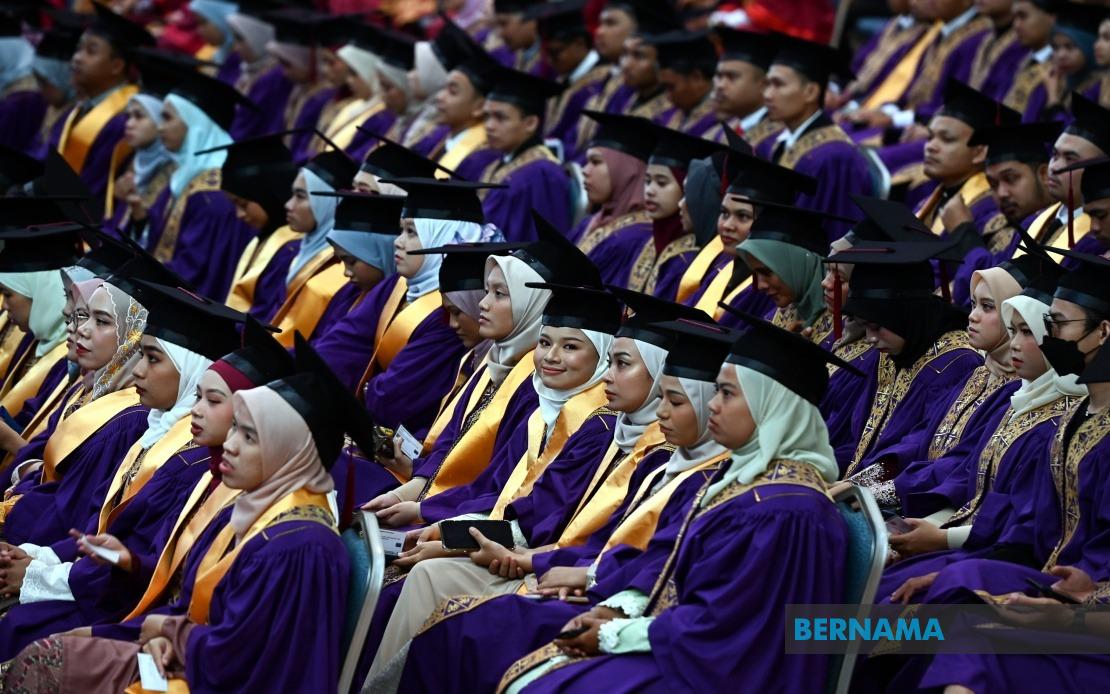
Malaysia's Higher Education Ministry (MoHE) has moved to suspend all ongoing disciplinary proceedings at public universities that involve restrictions on student freedom of speech, expression of views, public criticism, and peaceful assembly, effective immediately. The directive, announced from Putrajaya on August 28, represents a significant shift in how Malaysian universities will handle student activism and political participation, reflecting Prime Minister Datuk Seri Anwar Ibrahim's commitment to liberalising the restrictive legal framework governing campus life.
The government's action stems directly from remarks made by Prime Minister Anwar Ibrahim at the Malaysia MADANI Intellectuals Forum (FIM) Series 13, where he signalled the government's intention to repeal the Universities and University Colleges Act 1971 (Act 30), commonly known as AUKU. This legislation has long been criticised by student activists, civil society organisations, and international human rights bodies for imposing draconian restrictions on campus freedoms. The immediate halt to proceedings indicates that the government is not waiting for the lengthy legislative process to conclude before granting students expanded rights.
MoHE has identified several specific provisions within AUKU and the Student Disciplinary Rules that will be exempted from enforcement under this immediate measure. These exemptions directly address longstanding student grievances and include the right to establish and manage student associations and clubs without excessive bureaucratic oversight, the freedom to organise student activities and events, and the fundamental right to express views and participate in peaceful assemblies on campus. Additionally, students are now granted freedom to utilise various communication platforms and to publish or distribute documents, provisions that were previously heavily restricted under AUKU.
The expansion of student freedoms comes with an important caveat that the ministry has emphasised: while freedoms are being broadened, they must be exercised responsibly and in accordance with the rule of law. The ministry's statement makes clear that acts involving violence, vandalism, property damage, criminal offences, academic misconduct, or breaches of valid disciplinary rules remain subject to existing legal consequences. This distinction is crucial for understanding the balance the government is attempting to strike between enabling legitimate student expression and maintaining order on campuses.
Concurrently, MoHE has initiated a comprehensive review of measures that can be implemented within the existing legal framework to operationalise the Prime Minister's directive. This review process is examining which current restrictions can be suspended, modified, or eliminated without requiring parliamentary legislation. The ministry's approach reflects recognition that wholesale legislative change through formal amendment procedures would take considerable time, potentially delaying reforms that could be implemented through executive action and policy reinterpretation.
The reform effort extends beyond the public universities governed by AUKU to include institutions with distinct legal status. Both the International Islamic University Malaysia (IIUM) and Universiti Teknologi MARA (UiTM), which operate under separate founding charters rather than AUKU, will undergo parallel reviews to examine their student regulations and align them with the reform principles being implemented across the public university sector. This comprehensive approach ensures that the liberalisation of student freedoms is applied consistently across Malaysia's higher education landscape, regardless of institutional governance structure.
For Malaysian students and campus-based civil society organisations, this development represents a watershed moment in decades of advocacy for academic freedom and associational rights. Previous governments have maintained restrictive campus governance regimes that limited student unions, prohibited political activities, and subjected student publications to censorship. Many student activists have faced disciplinary proceedings, suspension, or expulsion for engaging in activities that are routine in democratic university systems elsewhere. The accumulated effect has been a chilling effect on campus political discourse and student civic participation.
The timing of this initiative is significant within the broader context of the Anwar Ibrahim administration's platform, which has emphasised institutional reform, democratic renewal, and the rollback of authoritarian measures from previous decades. The Prime Minister's intervention on AUKU reflects his personal conviction that universities should function as open intellectual spaces rather than controlled environments. However, the government must navigate carefully between satisfying student expectations for meaningful freedom and addressing concerns from conservative quarters, including some Islamic organisations and traditionalist political factions, who view restrictions on campus activism as necessary for maintaining order and values.
MoHE's commitment to developing an open, structured, and inclusive higher education governance framework signals intention to engage stakeholders—including student organisations, university administrators, faculty unions, and civil society—in designing the new legislative architecture. This consultative approach differs markedly from the top-down imposition of AUKU during the Mahathir era. The stated objective is establishing a quality higher education ecosystem that balances freedoms with institutional integrity, potentially positioning Malaysia as a regional model for progressive university governance.
The broader legislative reform process remains underway, with MoHE and relevant parliamentary committees working on a comprehensive replacement for AUKU. Prime Minister Anwar specifically acknowledged that developing a new legal framework requires time, but insisted that substantive improvements to student freedoms need not await the completion of that formal process. This pragmatic two-track approach—immediate executive measures coupled with longer-term legislative reform—reflects understanding that student expectations for change are immediate, while the legislative process inevitably moves slowly.
Southeast Asian observers, particularly from countries wrestling with restrictions on university freedoms and student activism, may view Malaysia's evolving approach as instructive. The region has numerous examples of highly regulated campus environments where student organising is tightly constrained. Malaysia's willingness to experiment with expanded freedoms while maintaining accountability mechanisms could inform regional debates about balancing educational excellence, social stability, and democratic participation in university settings.

