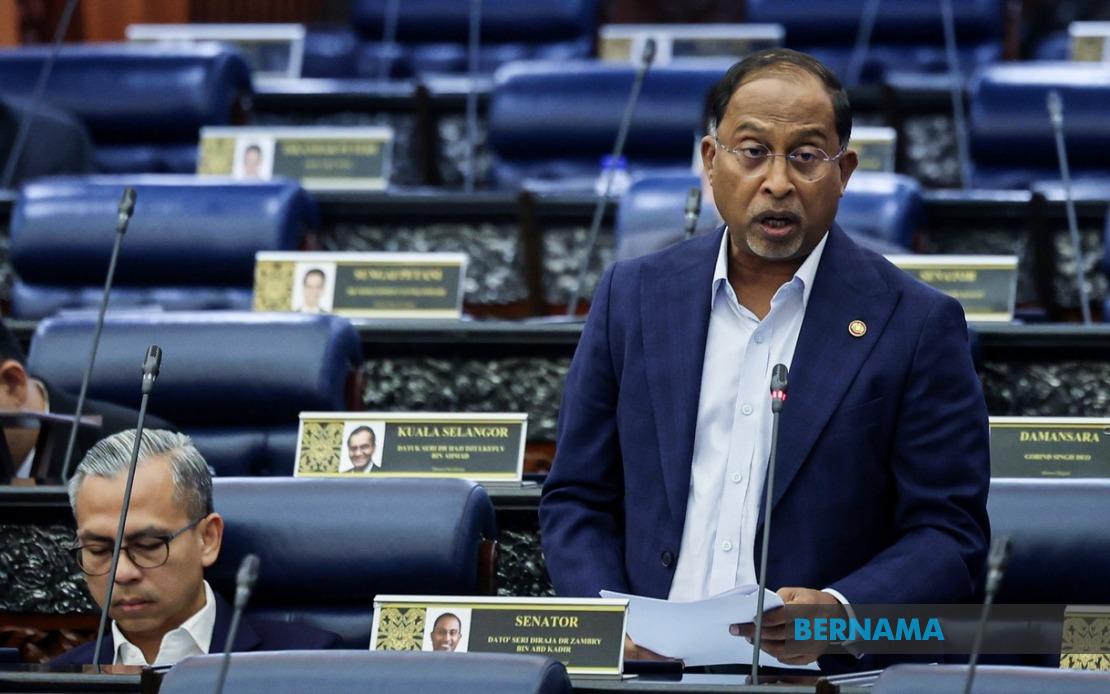
The Ministry of Higher Education has signalled its willingness to consider fresh academic offerings across Sabah's tertiary institutions, marking a strategic move to bolster the state's higher education landscape. During parliamentary proceedings on July 7, Higher Education Minister Datuk Seri Dr Zambry Abdul Kadir announced that Universiti Malaysia Sabah (UMS), polytechnics and community colleges in the state could submit applications for new programmes designed to broaden the range of qualifications available to students in the East Malaysian state. The announcement addresses long-standing concerns that Sabah's limited local offerings have forced capable students to pursue tertiary education across the South China Sea in Peninsular Malaysia, creating logistical and financial burdens for families.
The ministry's approach to evaluating such applications reflects a structured, evidence-based methodology rather than blanket approval. Dr Zambry outlined that each proposal would undergo rigorous assessment against multiple benchmarks, encompassing the applying institution's proven academic track record, alignment with Sabah's industrial requirements, the institution's capacity to deliver quality instruction, demonstrated market demand among prospective learners and ultimately the employment prospects awaiting graduates. Critically, the evaluation framework also incorporates mechanisms to prevent unnecessary programme duplication across Sabah's public higher education sector, ensuring that taxpayer investment generates distinct educational pathways rather than redundant offerings that fragment enrolments and dilute quality.
This measured strategy reflects broader government thinking about optimising higher education's contribution to regional development. Dr Zambry characterised the philosophy as one prioritising quality, relevance and strategic alignment with Sabah's economic trajectory, whilst simultaneously making efficient use of institutional capabilities and financial resources. The minister's parliamentary response came following an inquiry from Mohd Kurniawan Naim Moktar, the Kinabatangan MP from the Barisan Nasional coalition, who had raised concerns about Sabah's capacity to retain talented students within the state's education system. For many Sabahan families, particularly those in rural or semi-urban areas, the prospect of accessing accredited degree programmes without interstate relocation represents a meaningful quality-of-life improvement.
Sabah's current higher education infrastructure, whilst expanding, remains modest relative to Peninsular Malaysia's concentrated university ecosystem. As at June 30, the state hosted sixteen registered public higher education institutions encompassing branch campuses, disaggregated as four full universities, three polytechnics and nine community colleges. This distribution reflects deliberate government investment in accessibility, yet the quantity masks significant programme limitations. The existing institutional network collectively offers a reasonable breadth of study options, but prospective students seeking specialisation in emerging or niche fields frequently encounter local shortfalls, necessitating either relocation or online study through distant providers of variable quality assurance.
UMS, positioned as Sabah's primary research-intensive university, has been strategically developing postgraduate and specialist programmes leveraging the institution's distinctive competitive advantages. The university is concentrating curriculum development around research capabilities that capitalise on Borneo's extraordinary environmental and biological characteristics, including marine science and aquaculture initiatives, tropical biotechnology research, medical sciences pathways, heritage and cultural studies, alongside ecotourism and business-focused qualifications. This niche-based approach avoids attempting to replicate the comprehensive portfolio available at established Peninsular Malaysian research universities, instead positioning UMS as a destination institution for students pursuing Borneo-specific expertise unavailable or irrelevant elsewhere. Meanwhile, UiTM's Sabah campus has carved out distinct programming centred on tourism, hospitality, business and administrative sciences, reflecting regional economic priorities around visitor economy development and state administration.
The financial commitment underpinning these ambitions is substantial. The ministry has allocated RM1.05 billion across twenty-one development projects scheduled for implementation in Sabah, with RM160.6 million specifically committed during the initial rolling plan phase of the 13th Malaysia Plan extending through 2026. This investment trajectory signals sustained government resolve to transform Sabah's higher education capacity beyond rhetorical commitments, though the disbursement timeline warrants monitoring given Malaysia's occasionally protracted project execution in East Malaysia. The funding architecture encompasses both infrastructure development and programme expansion, addressing simultaneous constraints in physical facilities and curricular offerings that have historically constrained institutional growth.
When pressed on whether the government might establish specific targets guaranteeing particular percentages of programme offerings remain within Sabah rather than flowing to Peninsular Malaysia, Dr Zambry articulated pragmatic reasoning. The minister acknowledged that setting arbitrary placement quotas would prove counterproductive, given that many specialised qualifications logically concentrate where demand, expertise and economies of scale justify establishment. Some academic disciplines inherently benefit from geographic clustering, and attempting to artificially decentralise all offerings would likely compromise quality without expanding genuine choice. However, the minister identified specific fields where Sabah and Sarawak possess distinctive policy imperatives, particularly law programmes, where regional legal frameworks and professional requirements create genuine local demand justifying localised course delivery.
The government's funding mechanisms for supporting institutional research activities operate through coordinated structures spanning the Higher Education Ministry and the Ministry of Science, Technology and Innovation. These funding pathways have generated measurable outcomes through initiatives such as the Research, Development, Innovation, Commercialisation and Economy Programme, abbreviated as RDICE, which deliberately targets research projects demonstrating commercial application potential rather than purely theoretical advancement. For Sabah's universities, access to such funding opens pathways toward generating revenue-generating intellectual property and establishing research-industry partnerships that can enhance institutional sustainability beyond government grants.
The practical implications of MOHE's openness toward new programme applications extend beyond mere administrative procedure. For prospective Sabahan students, expanded local options could translate into reduced family expenses, maintaining professional and personal networks within their home state and reducing psychological adjustment costs associated with interstate relocation during formative tertiary years. For Sabah's employers, locally-educated graduates familiar with regional contexts, networks and business practices represent potential advantages over imported talent. The policy also creates competitive dynamics encouraging existing institutions to rationalise underperforming offerings and strategically develop distinctive programmes that justify continued enrolment and investment.
However, the announcement's practical success hinges critically on implementation fidelity. The assessment criteria, whilst sensible in principle, require robust institutional capacity to evaluate applications fairly and timeously. Sabah's institutional actors—university leadership, polytechnic directors, community college administrators—will require clarity regarding expected application formats, decision timelines and feedback mechanisms. Additionally, the commitment to evaluate submissions fairly assumes budget availability to support approved new programmes, a prerequisite that may face pressure if government revenues tighten or competing priorities elsewhere in the education portfolio demand resources.
The broader strategic context frames this initiative within Malaysia's competition for talent and regional positioning. As East Asian economies increasingly compete for skilled workers, higher education quality and accessibility become demographic retention factors. States enabling talented citizens to develop qualifications without costly relocation gain competitive advantages in retaining human capital. Sabah's geographic remoteness from federal education hubs has historically disadvantaged the state in talent retention; addressing this through expanded local educational opportunity constitutes enlightened policy.
Looking forward, the effectiveness of this initiative will depend substantially on subsequent institutional responsiveness and government follow-through on funding commitments. The RM1.05 billion allocated across development projects requires timely disbursement and efficient project management. UMS, the polytechnics and community colleges must translate the ministry's openness into concrete, high-quality programme proposals that genuine student demand justifies. For Malaysian policymakers and Sabahans themselves, this announcement represents meaningful acknowledgment that geographic location should not constrain access to quality tertiary education—a principle increasingly critical as Malaysia positions itself for knowledge-economy participation in an increasingly competitive regional context.

