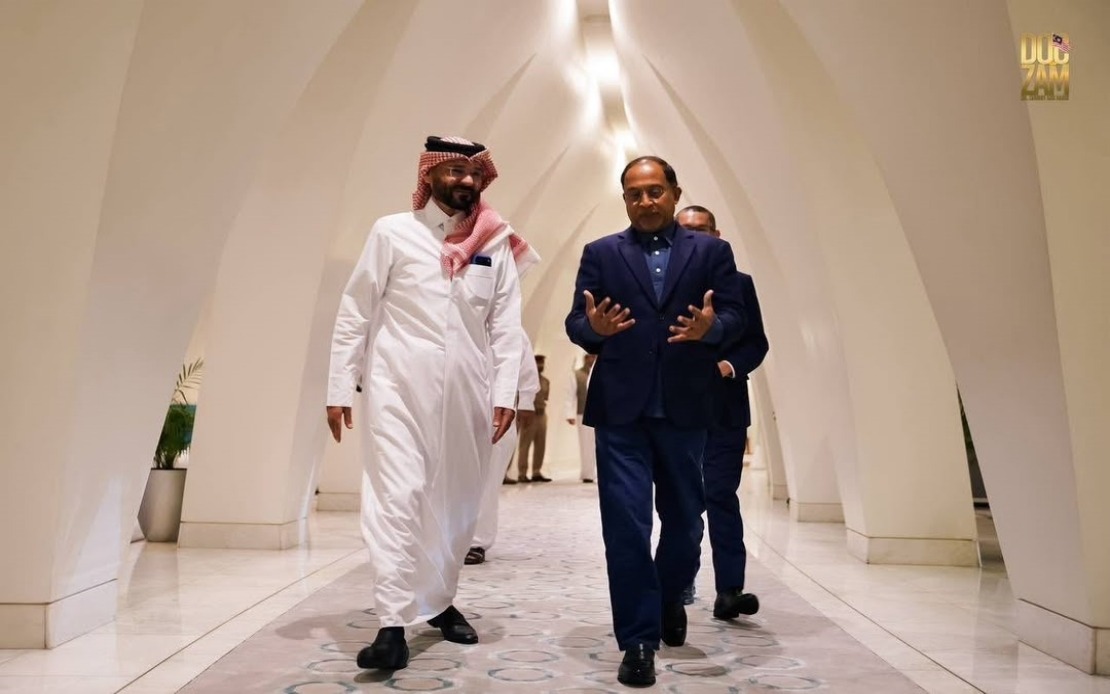
Malaysia has dispatched its Higher Education Minister, Datuk Seri Dr Zambry Abd Kadir, to Qatar as an official representative to honour the late Father Amir of Qatar, Sheikh Hamad bin Khalifa Al Thani. Zambry arrived in Doha early on Tuesday morning and is scheduled to meet with the current Amir, Sheikh Tamim bin Hamad Al Thani, at Lusail Palace during the formal mourning period. This diplomatic gesture underscores the longstanding bilateral relationship between Malaysia and Qatar, particularly at a time when both nations maintain significant economic and cultural ties across the Gulf region.
Sheikh Hamad bin Khalifa Al Thani, who passed away on Sunday morning at the age of 74, commanded respect throughout the Arab world as a transformative leader who shaped Qatar's modern trajectory. His nearly two-decade tenure as Amir, from 1995 to 2013, witnessed the nation's extraordinary development into a global energy powerhouse and a hub for regional diplomacy. During his leadership, Qatar underwent unprecedented infrastructure development, establishing itself as a major player in international affairs despite its relatively small population and geographic constraints.
The decision to transfer power to his son, Sheikh Tamim bin Hamad Al Thani, in 2013 represented a significant moment in the Gulf monarchy's institutional continuity. This succession marked a rare transition of power in the region that occurred smoothly without major internal friction, reflecting the strong institutional foundations Sheikh Hamad had established. Sheikh Tamim has since continued his father's vision of positioning Qatar as an influential diplomatic and economic actor, most notably by hosting the FIFA World Cup in 2022 and maintaining Qatar's role as a mediator in regional conflicts.
Qatar's government has declared a four-day period of official mourning beginning Sunday, July 12, in recognition of Sheikh Hamad's passing. During this mourning period, all government ministries, public institutions, and government entities across the country remain closed. This comprehensive shutdown reflects the deep reverence in which the late Father Amir is held within Qatari society, acknowledging his foundational role in building the modern state and his continued influence even after stepping down from executive power.
Zambry's attendance at the funeral ceremonies carries diplomatic significance beyond the immediate act of paying respects. Malaysia, as a predominantly Muslim Southeast Asian nation with its own constitutional monarchy, shares institutional and cultural touchstones with Gulf monarchies that facilitate meaningful bilateral engagement. The presence of a senior Malaysian cabinet minister signals Malaysia's recognition of Qatar's importance as a regional and global player, particularly given shared interests in Islamic finance, energy cooperation, and regional stability.
The relationship between Malaysia and Qatar has strengthened considerably in recent years through various channels. Both nations collaborate within the framework of the Organisation of the Islamic Cooperation and maintain active trade relationships. Malaysian companies have invested in Qatari infrastructure projects, while Qatari sovereign wealth funds have shown interest in Malaysian assets. Educational exchanges have also expanded, with many Malaysian students pursuing higher education at Qatari universities, making the attendance of Malaysia's Higher Education Minister particularly appropriate for this occasion.
Sheikh Hamad's legacy extends beyond Qatar's borders, influencing how smaller Gulf states approach governance and international relations. His willingness to engage in pragmatic diplomacy while maintaining strong Islamic principles offered a model that other regional players observed closely. Malaysia, navigating its own challenges as a Muslim-majority democracy in a complex geopolitical environment, has often drawn parallels with Qatar's approach to balancing modernisation with cultural preservation.
The timing of Sheikh Hamad's passing and the subsequent mourning period also occurred during a broader moment of regional reflection within the Gulf Cooperation Council. The Abraham Accords and subsequent normalisation agreements have reshaped the diplomatic landscape, and Qatar, under Sheikh Tamim's continued leadership, has played an active role in these evolving dynamics. Malaysia's diplomatic representation through Zambry demonstrates awareness of Qatar's ongoing centrality to Gulf affairs and Southeast Asia's stake in regional stability.
Government-to-government expressions of condolence, particularly through ministerial attendance at funeral rites, constitute an important dimension of bilateral relations that extends beyond formal statements. Such gestures communicate respect, acknowledgment of shared values, and commitment to maintaining strong relationships. For Malaysia, maintaining robust connections with Gulf states remains strategically important given energy dependencies, financial relationships, and shared Islamic heritage that bind the two regions together across the Indian Ocean.
The passing of Sheikh Hamad also prompts reflection on the continuity of leadership in Gulf monarchies and the challenges of succession planning in absolute monarchies. His smooth transition to Sheikh Tamim provided a stabilising precedent during a period when other regional transitions proved more turbulent. Malaysia, as a constitutional monarchy itself, observes such transitions with particular interest, as questions of institutional stability and orderly succession remain relevant across the Muslim world.
Zambry's mission to Doha represents one thread in the broader tapestry of Malaysia-Qatar relations, but it carries weight as a moment when two Muslim-majority nations acknowledge shared loss and reaffirm mutual respect. While Sheikh Hamad's direct influence on state affairs ended with his retirement a decade ago, his imprint on Qatar's institutions, strategic orientation, and international standing remains indelible. Malaysia's formal acknowledgment of this passing through high-level representation reinforces bonds that will likely remain important as both nations navigate future regional and global challenges.

