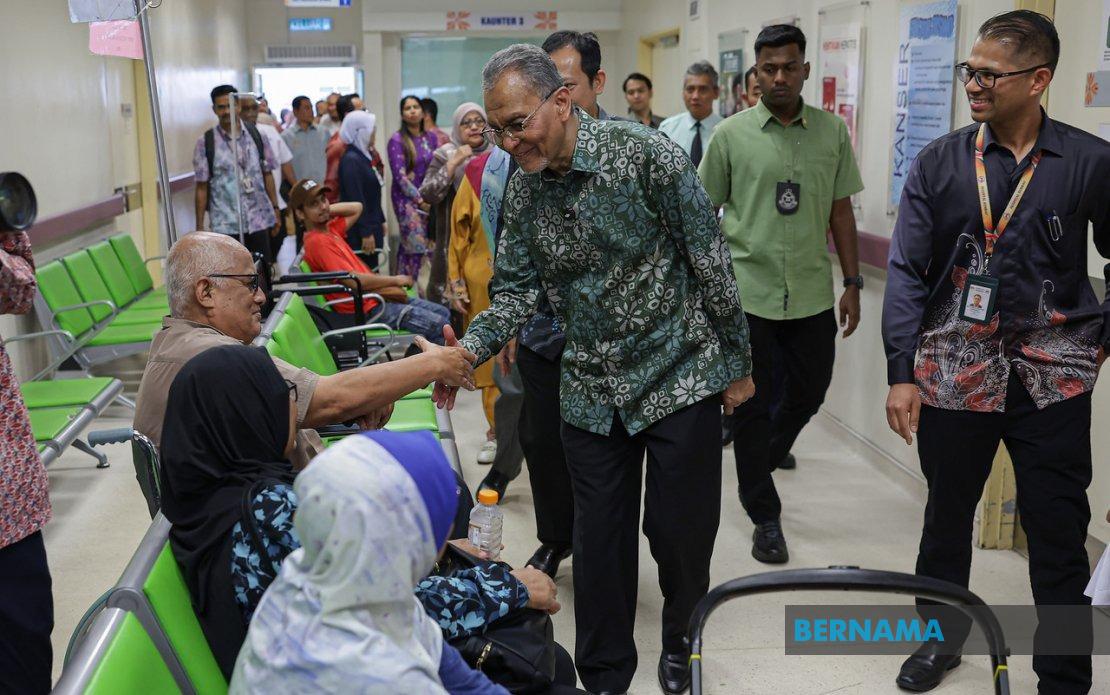
The Malaysian Ministry of Health is moving forward with developing a comprehensive workplace mental health policy, with Health Minister Datuk Seri Dr Dzulkefly Ahmad announcing that the framework should be finalised within the next few months. Speaking at the ministry's Merdeka celebration programme in Negeri Sembilan, Dzulkefly indicated that completion is targeted for September or October, pending the conclusion of consultation meetings with key stakeholders across government and the private sector.
The policy development process involves extensive collaboration among multiple institutions critical to workplace standards and employee welfare. The Ministry of Human Resources, the Department of Occupational Safety and Health, the Malaysian Employers Federation, and the Malaysian Trades Union Congress are all expected to participate in shaping the final guidelines. This multi-stakeholder approach signals recognition that mental health in the workplace cannot be addressed through health policy alone, but requires coordination across human resources management, occupational safety frameworks, and labour relations.
The proposed timeline reflects the ministry's commitment to ensuring thoroughness rather than rushing implementation. Dzulkefly emphasised that the engagement sessions require adequate time to gather input, analyse recommendations, and draft workable guidelines that reflect the needs and capacities of Malaysian workplaces. This measured pace stands in contrast to the growing urgency of mental health concerns in the regional workforce, where burnout and stress-related illnesses are increasingly affecting productivity and employee retention across sectors.
Beyond basic counselling provision, the policy is expected to encompass broader dimensions of worker wellbeing. Dzulkefly indicated that the framework will address work-life balance considerations and establish support mechanisms designed to sustain employee mental health over the long term. This holistic approach acknowledges that mental health challenges stem not merely from individual vulnerabilities but from workplace structures, management practices, and organisational cultures that either mitigate or amplify psychological stress.
The focus on reducing burnout and managing excessive workload reflects growing recognition that Malaysian employers face concrete costs from mental health neglect. Workers struggling with psychological distress typically exhibit lower productivity, higher absenteeism, and reduced engagement. By investing in preventive workplace policies, the ministry and participating agencies are attempting to shift from reactive crisis management toward systematic, upstream interventions that benefit both employees and organisations.
The ministry's alignment with the Sustainable Development Goals reflects Malaysia's broader commitment to integrating health considerations into economic and social policy frameworks. SDG 3, which addresses good health and wellbeing, explicitly includes mental health components, making workplace mental health policy a natural extension of Malaysia's development agenda. This international framing also provides a benchmark for comparing Malaysian standards with those in other nations at similar development stages.
Simultaneously, Dzulkefly announced an accompanying initiative to strengthen hospital services nationwide through a cluster hospital model. Under this approach, specialist expertise from leading hospitals extends outward to smaller, non-specialist facilities, enabling secondary care provision without necessarily constructing new buildings or facilities. This strategy addresses geographic disparities in access to specialised care while optimising existing infrastructure and human resources.
The cluster hospital concept involves phased upgrades of non-specialist institutions to provide selected specialist services based on demonstrated local need and demand. Rather than attempting universal specialisation at every facility, the ministry is implementing a pragmatic model that matches service capacity to population requirements. This approach has particular relevance for Malaysian states with dispersed populations and limited financial resources for healthcare infrastructure expansion.
Specialist disciplines targeted for strengthening include paediatrics, obstetrics and gynaecology, ophthalmology, and otolaryngology services. These specialties address high-volume conditions affecting significant population segments, from maternal and child health to vision and hearing preservation. By securing adequate specialist capacity in these fields across the healthcare system, the ministry aims to reduce referral burdens on tertiary centres and improve patient access to timely, appropriate care.
The ministry emphasises that service improvements do not depend solely on capital-intensive expansion projects. Instead, enhancements focus on increasing specialist service capacity, strengthening discipline expertise, and reinforcing primary healthcare foundations that direct patients appropriately through the system. This efficiency-focused approach appeals to policymakers and taxpayers concerned about healthcare cost escalation while acknowledging that quality improvements require sustained investment in workforce development and systems integration.
For Malaysian employers and workers, the emerging workplace mental health policy represents a potential shift in how organisations approach employee welfare and occupational health standards. As mental health awareness spreads across the region, companies that proactively implement supportive workplace practices may gain competitive advantages in attracting and retaining talent. The policy development process itself signals government commitment to establishing baseline standards, which could influence private sector practices even before formal regulations are announced.
The dual focus on workplace mental health and hospital service strengthening reveals integrated thinking about health system priorities. Workers cannot maintain mental wellbeing if they lack confidence in accessing timely mental health services, just as hospital systems cannot function optimally if staff are themselves experiencing untreated psychological distress. By advancing both initiatives concurrently, the ministry is attempting to address systemic barriers to mental health in Malaysia comprehensively.

