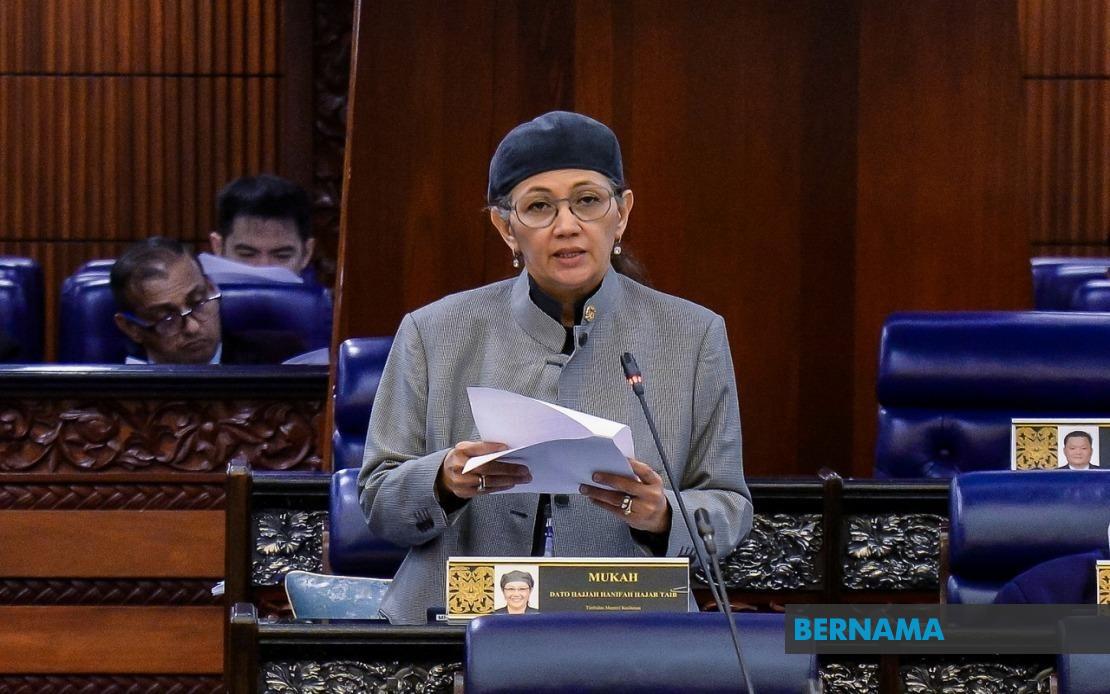
Sabah's persistent shortage of medical professionals will receive a substantial boost when the Ministry of Health deploys 560 permanent postings to the state beginning in October this year, Deputy Health Minister Datuk Hanifah Hajar Taib announced in Parliament. The recruitment drive represents the second phase of a nationwide initiative to fill 4,500 permanent medical officer vacancies across Malaysia's public health system, with Sabah receiving nearly 13 per cent of these new positions despite hosting only a fraction of the nation's population.
The announcement comes at a critical moment for Sabah's healthcare infrastructure, which has struggled for years with insufficient physician capacity. Deputy Minister Hanifah Hajar acknowledged the practical challenge that frequently undermines such recruitment efforts: historically, only around 50 per cent of offered positions result in actual placements. Using this baseline, she cautiously projected that approximately 280 of the 560 designated officers might actually report for duty in Sabah. While this figure would represent meaningful progress, it still leaves a gap of at least 256 medical officers against the state's identified shortfall, indicating that even with the new postings, Sabah will continue operating below optimal staffing levels.
The broader context reveals systemic workforce imbalances across Sabah's healthcare system. The state currently maintains 2,803 established medical officer positions. Of these, roughly two-thirds are actively filled, while approximately 13 per cent are on study leave—a temporary but significant drain on available resources. The remaining 20 per cent remain vacant entirely, creating substantial service delivery challenges. To compensate for this structural deficit, the Ministry has deployed 680 contract doctors to Sabah, a costly and administratively complex solution that provides short-term relief but lacks the stability of permanent appointments.
Sabah's physician-to-population ratio lags behind the national average, placing it among eight states identified in the 2024 Health Indicators report as underperforming in healthcare workforce distribution. However, the trajectory has shifted positively in recent years. Between 2020 and 2023, Sabah achieved a 25.1 per cent improvement in its doctor-to-population ratio, suggesting that targeted intervention can produce measurable results. This progress underscores why the Ministry's new posting initiative matters: sustained investment in physician recruitment could accelerate improvements and eventually bring Sabah closer to national benchmarks.
The structural barriers to attracting medical professionals to Sabah remain formidable and deserve scrutiny. Rural postings, geographic isolation, limited specialisation opportunities, and career advancement concerns frequently discourage qualified doctors from accepting positions in East Malaysia. The previous phase of recruitment illustrates this challenge starkly. Of 39 permanent positions offered to Sabah in the first placement round earlier this year, only 20 doctors reported for duty while 19 flatly rejected their assignments. This 51 per cent acceptance rate, while roughly in line with historical patterns, demonstrates the persistent difficulty of persuading physicians to take up positions in the state.
To address recruitment resistance, the Ministry has introduced mechanisms designed to broaden participation in Sabah placements. Starting in 2025, the newly implemented e-Placement system includes a requirement that contract medical officers transitioning to permanent status must accept at least one position in Sabah, Sarawak, or Labuan. This mandatory provision effectively expands the recruitment pool beyond voluntary applicants and represents a more coercive—though not unprecedented—approach to managing healthcare workforce distribution. The measure acknowledges that leaving placement decisions entirely to individual preference has proven insufficient to meet East Malaysia's physician needs.
The scale of the nationwide recruitment effort underscores how acute the medical staffing crisis has become across Malaysia. The 4,500 permanent positions being filled in two phases represent a substantial investment in healthcare infrastructure, yet they respond to vacancies and study-leave gaps that have accumulated over years of underinvestment in medical education and recruitment. The first phase, completed in June 2026, resulted in 328 appointments nationwide. The second phase, commencing in October 2026, encompasses 4,172 positions, with Sabah receiving 560 of these placements.
Sabah and Sarawak collectively account for 42.7 per cent of the nationwide placement quota through the e-Placement system, receiving 650 and 310 posts respectively against a national total of 2,248. This proportional allocation acknowledges the particular acute shortages in Malaysia's East Malaysian states, where geographic challenges and economic factors create distinct workforce dynamics compared to Peninsular Malaysia. However, the quota system also reveals a fundamental tension: if nearly half of permanent placements are earmarked for two states representing a much smaller share of Malaysia's total population, then Peninsular Malaysia's health system will continue grappling with its own recruitment pressures.
The implications for Malaysian healthcare access are significant, particularly for rural and remote Sabahan communities that depend on public health facilities. Physician shortages directly correlate with reduced service hours, longer patient wait times, and increased pressure on remaining medical staff. The 256-officer shortfall that will persist even after successful deployment of all 560 new postings means that entire sub-districts may continue operating with minimal physician presence. This reality underscores that recruitment initiatives, while necessary, must be accompanied by complementary strategies including physician retention programmes, career development pathways, and infrastructure investments that make postings in Sabah more attractive.
Deputy Minister Hanifah Hajar's Parliamentary response indicates acknowledgment of Sabah's healthcare challenges while articulating confidence in the systematic approach being implemented. Yet the gap between assigned positions and likely placements, combined with the structural vacancy that will remain even after successful recruitment, suggests that Sabah's health system faces a medium-term rather than immediate resolution of its workforce crisis. The commitment to place 560 permanent officers represents genuine effort to address documented shortages, but Malaysian policymakers should concurrently develop retention strategies and alternative service delivery models to bridge the gap between target placements and actual capacity.
Looking forward, the success of the October 2026 deployment phase will provide crucial data on whether the e-Placement system's mandatory placement requirements materially improve acceptance rates compared to voluntary recruitment. If the improved mechanisms result in placement rates exceeding historical 50 per cent baselines, the Ministry will have identified a replicable approach for managing healthcare workforce distribution across geographically dispersed and economically varied regions. Conversely, if acceptance rates remain depressed despite mandatory requirements, policymakers will need to confront more fundamental questions about physician compensation, career incentives, and regional equity that cannot be resolved through administrative mechanisms alone.

