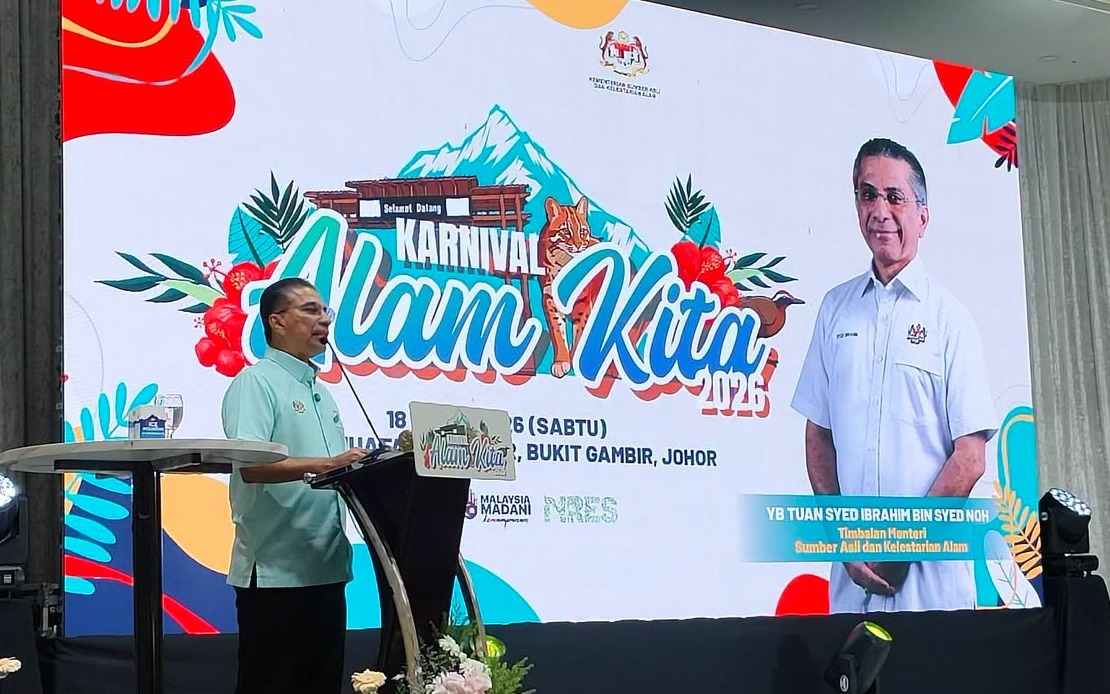
The Karnival Alam Kita 2026, a major environmental engagement initiative directed by the Ministry of Natural Resources and Environment, has intensified its presence in Johor with a mission to embed sustainable practices into the fabric of everyday life. Launched officially at the Dewan Muafakat Bukit Gambir, the carnival represents a shift in how Malaysia communicates its environmental agenda, moving beyond policy announcements to create direct, tangible experiences for citizens.
Deputy Minister Syed Ibrahim Syed Noh articulated a deliberate strategy during the launch ceremony: rather than overwhelming communities with abstract environmental concepts, the carnival brings practical demonstrations, emerging technologies, and concrete opportunities directly to neighbourhoods. This ground-level approach acknowledges a fundamental communication gap—that sustainability messaging often fails to resonate because it feels disconnected from household realities. By showcasing how environmental stewardship translates into morning routines, workplace practices, and family decisions, the ministry aims to catalyse genuine behavioural change.
Central to this year's carnival is the recognition that environmental responsibility cannot remain siloed within government departments. Syed Ibrahim emphasised that sustainability is fundamentally a shared obligation, demanding commitment across multiple spheres: domestic households must integrate green practices into their routines, schools must instil environmental values in curriculum and campus operations, employers must embed sustainability into workplace protocols, and neighbourhoods must collectively embrace conservation. This distributing of responsibility reflects a mature understanding that top-down mandates, however well-intentioned, rarely achieve lasting transformation without grassroots buy-in.
The carnival addresses what the ministry identifies as a persistent perception gap. When citizens hear terms like rare earth elements, electronic waste, or carbon neutrality, these concepts feel abstract and remote from daily experience. Yet, as the deputy minister articulated, these issues profoundly affect how families purchase products, manage household waste, and consume energy. The challenge lies in translating technical environmental language into vernacular that communities recognise as relevant to their own circumstances. This reframing is crucial for Malaysia's aspirations, particularly the commitment to achieve net zero carbon emissions by 2050.
A flagship component unveiled alongside the carnival is the Young Environmental Ambassador Programme, designed to cultivate environmental leadership among secondary school students. Rather than treating youth as passive recipients of sustainability education, the programme positions teenagers as active agents capable of mentoring their own families and communities. This peer-to-peer approach often proves more persuasive than institutional messaging, as young ambassadors can translate environmental principles into language and examples their peers and parents find accessible. The programme's emphasis on developing youth leaders also addresses Malaysia's demographic reality, where younger generations will inherit the consequences of today's environmental decisions.
Practical demonstration formed the centrepiece of the Johor launch through the KUDAH clean-up initiative, a waste collection drive executed by the NRES Lestari Squad in partnership with Bateriku (M) Sdn Bhd. Over the course of the event, participants gathered 37 kilogrammes of waste, including 17.3 kilogrammes of plastic bottles. While the volume may seem modest, the environmental mathematics proves instructive: the collected materials prevented approximately 43.2 kilogrammes of carbon dioxide equivalent from entering the atmosphere, equivalent to the emissions produced by a petrol vehicle travelling roughly 100 kilometres. This quantification serves a psychological purpose—it translates abstract environmental benefit into concrete, relatable measurements that participants can grasp and discuss.
The carnival's programming extends across multiple thematic areas, including targeted campaigns for electronic waste recycling and used cooking oil collection, exhibitions highlighting Malaysia's biodiversity, and retail opportunities for environmentally certified products. This multifaceted approach recognises that different community segments engage with sustainability through different entry points. Elderly residents may connect through traditional conservation of cooking oil, younger families through e-waste reduction, and entrepreneurs through green product markets. By creating multiple pathways, the carnival maximises the likelihood of meaningful engagement across demographic lines.
For Malaysian policymakers, the carnival represents an evolution in environmental communication strategy. Rather than issuing directives from Kuala Lumpur, the ministry has chosen to establish presence in regional centres like Johor, acknowledging that sustainability challenges and opportunities manifest differently across Malaysia's diverse geography and demographic landscape. Johor's position as a major economic and population centre makes it a strategic location for testing community engagement models that could later inform national-scale efforts.
The initiative's timing aligns with accelerating international pressure on developing economies to demonstrate concrete progress toward climate commitments. Malaysia's 2050 net zero target, while ambitious, requires sustained behavioural shifts at the household level. Initiatives like Karnival Alam Kita 2026 function as both awareness-raising and barometer for public receptiveness to sustainability messaging. The carnival's success in Johor will likely inform how comprehensively such programmes expand to other states.
Looking forward, the carnival's emphasis on translating sustainability into household practice addresses a critical gap in Malaysia's environmental governance. While regulatory frameworks and corporate sustainability standards play essential roles, lasting transformation requires millions of individual decisions made daily. By positioning the Ministry of Natural Resources as a facilitator of practical green living rather than merely an enforcer of regulations, Karnival Alam Kita 2026 attempts to build the cultural foundation necessary for Malaysia's long-term environmental objectives.

