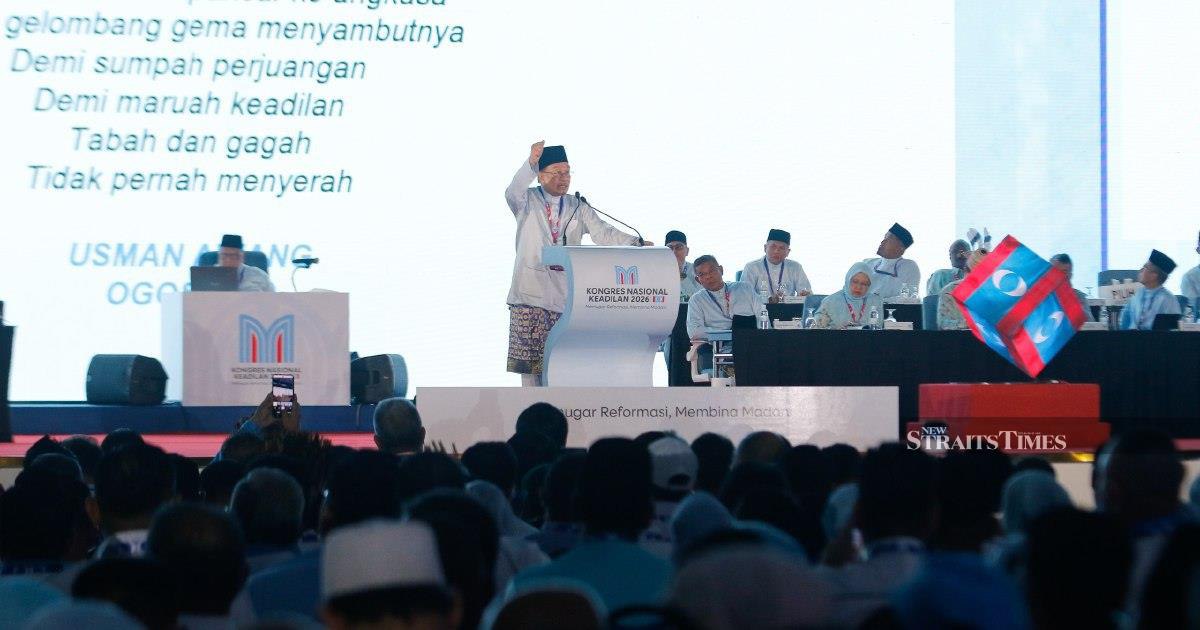
PKR president Datuk Seri Anwar Ibrahim has announced that the government will intensify its efforts to advance a comprehensive reform programme, marking what appears to be a strategic shift in the administration's approach to driving systemic change across the nation. Speaking in Ayer Keroh, Anwar indicated that the pace of transformation initiatives would accelerate, suggesting the coalition government is moving beyond the preliminary phases of institutional and governance overhauls that have defined its tenure so far.
The declaration represents an important signal about government priorities as Malaysia navigates complex domestic challenges ranging from economic restructuring to institutional accountability. By publicly committing to a more aggressive reform stance, Anwar appears to be setting expectations for concrete policy implementation rather than extended planning phases. This messaging carries particular weight given the interconnected nature of Malaysia's economic, political, and social structures, where comprehensive reform frequently requires coordination across multiple government agencies and political factions within the ruling coalition.
For Malaysian stakeholders monitoring government direction, the timing of such announcements often indicates shifting political calculations or responses to perceived momentum opportunities. The emphasis on acceleration suggests that internal coalition dynamics may have created conditions favourable for pushing through measures that encounter bureaucratic resistance or face political opposition. Reform initiatives typically encounter friction from entrenched interests, institutional inertia, and competing priorities, making explicit government commitment crucial for implementation success.
The reform agenda likely encompasses several interconnected policy areas that the government has previously identified as priorities. These typically include strengthening institutional independence, enhancing transparency in governance structures, rationalising government expenditure, and improving delivery mechanisms for public services. Each category presents distinct implementation challenges, requiring different combinations of legislative action, administrative restructuring, and inter-agency coordination. Anwar's statement suggests the government believes it now possesses sufficient political capital and coalition stability to tackle these areas with renewed vigour.
For Malaysian businesses and investors, accelerated government reform carries both opportunities and risks that warrant careful monitoring. Governance improvements and enhanced transparency can attract domestic and foreign investment by reducing perception of corruption and institutional unpredictability. Conversely, reform processes sometimes create transitional uncertainties as new regulations take effect and administrative procedures adjust to reformed frameworks. Companies operating across multiple sectors should prepare for potential regulatory changes that might accompany broader systemic reform.
The international dimension of Malaysia's reform trajectory also merits consideration. Regional economic partners and foreign investors assess Malaysia's governance quality when making investment and trade decisions. Demonstrating genuine commitment to institutional reform strengthens Malaysia's positioning within regional economic frameworks and can enhance the country's appeal as a destination for long-term capital deployment. This external validation mechanism sometimes serves as additional motivation for governments pursuing reform agendas.
Within the ruling coalition structure, this announcement may reflect compromise positions or newly achieved consensus among different political parties regarding reform priorities and implementation sequencing. Coalition governments frequently face internal tensions regarding the pace and scope of institutional changes, as different constituent parties answer to distinct constituencies with varying reform preferences. Public statements about acceleration typically emerge only after internal deliberations have produced sufficient alignment to sustain policy implementation without threatening coalition cohesion.
Citizen expectations regarding reform delivery carry significant weight for government legitimacy and performance evaluation. Many Malaysians have expressed frustration with slow progress on accountability measures and institutional strengthening initiatives, creating public appetite for visible, tangible reforms. Government announcements emphasising acceleration attempt to address this expectation gap by promising more rapid translation of reform commitments into practical outcomes. The credibility of such promises ultimately depends on subsequent concrete actions and measurable results.
Regional observers, particularly in other Southeast Asian nations pursuing comparable institutional modernisation, often monitor Malaysia's reform progress as a reference point for their own transformation initiatives. Malaysia's experience with implementing complex governance changes provides lessons applicable across the region, where similar institutional challenges persist. The government's demonstrated commitment to accelerated reform can influence how neighbouring countries calibrate their own reform ambitions and strategies.
Implementation mechanisms will determine whether this announcement translates into substantive change or represents primarily rhetorical positioning. Successful reform execution typically requires dedicated institutional capacity, clear performance metrics, and sustained leadership attention across administration cycles. The government's ability to maintain focus on reform objectives while simultaneously managing routine governance responsibilities and responding to emergent crises will test the sincerity of this commitment. Malaysian stakeholders should track subsequent policy announcements and budget allocations for concrete evidence of reform acceleration beyond declarative statements.
Moving forward, the effectiveness of intensified reform efforts will likely influence voter perceptions of government competence heading into future electoral cycles. Citizens assess government performance not merely through policy announcements but through observable improvements in institutional functioning, service delivery quality, and corruption metrics. Anwar's emphasis on aggressive reform implementation thus carries both immediate governance implications and longer-term political consequences for the ruling coalition's electoral prospects.

