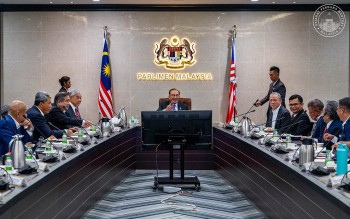
Prime Minister Datuk Seri Anwar Ibrahim has moved to shield Malaysia's manufacturing sector from the escalating impact of global supply chain disruptions by directing two key government ministries to establish direct engagement with industry stakeholders. The initiative signals heightened government concern about cost pressures rippling through production networks that underpin several strategically important sectors of the Malaysian economy.
Anwar, who holds the concurrent portfolio of finance minister, issued the directive following a meeting of the National Economic Action Council (MTEN) held on July 13. The council's deliberations centred on identifying measures that would strengthen the underlying resilience of the country's manufacturing base during a period of considerable external economic uncertainty. The prime minister communicated his decision through a social media post, indicating the government's intent to signal policy responsiveness on an urgent matter affecting business confidence.
The Ministry of Investment, Trade and Industry (MITI) and the Ministry of Economy have been tasked with conducting substantive consultations with affected manufacturers to develop targeted policy responses. These discussions are intended to yield concrete solutions capable of alleviating the cost burdens currently weighing on production operations, while simultaneously securing the long-term competitive viability of Malaysia's manufacturing ecosystem.
The plastics industry has emerged as a particular focal point for government attention, a designation that reflects its critical role as a supplier to multiple downstream sectors. The industry supplies essential inputs to food packaging operations, electrical and electronics (E&E) manufacturing, automotive production, and the medical devices sector—collectively representing some of Malaysia's highest-value export industries. This interconnected dependency structure means that pressure on plastics producers inevitably transmits through to their customers, potentially constraining output across a broad industrial spectrum.
Economy Minister Akmal Nasrullah Mohd Nasir provided specific data on the scale of the plastics industry within Malaysia's manufacturing landscape. The sector generated sales valued at RM62.69 billion during 2025, marking a decline from RM64.78 billion recorded in the preceding year. This contraction underscores the real challenges facing producers even as global demand normalises following pandemic-related disruptions. The composition of demand reveals the industry's strategic importance: packaging applications account for approximately 45 per cent of market activity, while the E&E sector constitutes a further 29 per cent, with the remaining customer base distributed across automotive, construction, agriculture and other manufacturing subsectors.
The cascading nature of supply chain stress within Malaysia's manufacturing environment carries profound implications for export competitiveness. When the plastics industry experiences cost inflation or supply constraints, the effects propagate downstream to food packaging producers, E&E manufacturers, automotive component suppliers, medical device makers, construction material producers, and agricultural enterprises. This interconnectedness means that addressing stress at the plastics level effectively becomes a whole-of-economy concern rather than an isolated sectoral issue.
For Malaysian businesses competing in export markets, supply chain resilience has become a fundamental competitive prerequisite. Many multinational corporations with regional production footprints evaluate locations based on the reliability and cost-efficiency of local supply ecosystems. Disruptions in critical input supply can prompt relocation decisions that would prove difficult to reverse, making early government intervention aimed at stabilising costs a strategically sound investment in retaining manufacturing capacity within Malaysia.
The government's engagement strategy acknowledges that market-level solutions alone may prove insufficient during periods of sustained global supply disruption. By facilitating dialogue between MITI, the Economy Ministry, and industry representatives, the administration can identify whether policy levers—ranging from import tariff adjustments to targeted financial support programmes—might prove effective in managing cost pressures. Such interventions must be calibrated carefully to avoid distorting market mechanisms while still providing meaningful relief to struggling producers.
The timing of this initiative reflects growing awareness within the government that Malaysia's manufacturing sector faces structural challenges extending beyond temporary pandemic-related disruptions. Global supply chain fragmentation, geopolitical tensions affecting shipping routes and trade relationships, and persistent inflation in raw material and energy costs represent enduring headwinds rather than transitory phenomena. Manufacturers require both confidence that government is monitoring their situation attentively and practical support mechanisms that can cushion against volatility.
For Southeast Asian observers, Malaysia's approach offers a case study in how governments can respond to supply chain pressures whilst respecting market dynamics. The emphasis on consultation and collaborative solution-development contrasts with more interventionist approaches that might attempt to mandate specific outcomes. This methodology potentially offers lessons applicable across the region as other economies confront comparable manufacturing sector challenges.
The broader context suggests that Malaysia's government recognises manufacturing as central to the nation's development trajectory and employment generation. Protecting the sector's viability during external stress periods represents both an economic necessity and a political imperative. The outcome of the MITI and Economy Ministry consultations will likely establish benchmarks for how effectively Malaysian policymaking can address supply-side challenges whilst maintaining an open trade orientation.
Looking ahead, the success of this engagement initiative will depend substantially on the creativity and practicality of solutions emerging from government-industry dialogue. Whether the measures ultimately adopted prove sufficient to meaningfully alleviate cost pressures will determine whether this represents the beginning of sustained government support for manufacturing resilience or merely a preliminary response to an evolving challenge.

