Malaysia's higher education sector is gaining stronger footing in managing generative artificial intelligence after the Ministry of Higher Education rolled out comprehensive guidelines in 2024, according to Deputy Minister Adam Adli Abdul Halim. Speaking at an awards ceremony in Melaka, he outlined how the framework has equipped universities with mechanisms to balance technological innovation against the pressing need to safeguard academic integrity—a growing concern across Southeast Asia as AI tools become increasingly accessible to students.
The guidelines represent a deliberate policy approach aimed at providing clarity rather than imposing blanket restrictions. By offering universities a structured foundation, MOHE enabled individual institutions to develop contextualised procedures aligned with their specific academic cultures and disciplinary requirements. This devolved approach acknowledges that one-size-fits-all regulations often fail to address the nuanced realities of campus life, where students encounter AI tools in diverse settings ranging from research to coursework completion. Each university has since crafted its own standard operating procedures and response mechanisms, demonstrating an institutional commitment to navigating the technology thoughtfully.
Adam Adli stressed that despite the framework's implementation, instances of misuse persist—a reality reflecting the broader challenge facing educational systems worldwide. However, the guidelines have transformed how universities respond to these incidents. Rather than operating ad hoc, institutions now follow systematic procedures that establish clear expectations, transparency requirements, and proportionate consequences. This standardisation reduces arbitrary outcomes and helps create predictable disciplinary processes that students and educators understand in advance.
A cornerstone of the framework is the mandatory disclosure requirement. Students must explicitly declare their use of generative AI when submitting academic assignments, a transparency measure designed to enable educators to assess the extent and appropriateness of such reliance. This declaration mechanism serves multiple purposes: it encourages honest engagement between students and lecturers, provides data for understanding AI usage patterns across campuses, and creates an audit trail for investigations into suspected breaches. The requirement reframes AI use from a hidden practice to an open academic choice, fundamentally changing institutional conversation around the technology.
The guidelines reinforce that using AI to generate entire assignments—essays, journals, research papers—without attribution or without maintaining rigorous academic standards constitutes a breach of academic integrity. This distinction is crucial: the prohibition is not against AI use itself, but against using AI as a substitute for scholarly thinking and proper methodology. Students remain obligated to apply sound research practices, cite sources correctly, and ensure their own intellectual contribution remains central to their work. The guidance clarifies that academic discipline cannot be outsourced to machines, regardless of their sophistication.
Adam Adli articulated a vision of technology as an ancillary tool rather than a replacement for human learning. This framing offers practical guidance to universities developing assignments and assessment criteria. It suggests that educators should consider where AI genuinely enhances learning—such as helping students brainstorm, refine arguments, or understand complex concepts—versus where it undermines the educational objective. Different disciplines may draw these lines differently; a computer science student learning about AI might appropriately use generative tools as part of their study, while a literature student analysing a novel would not. The framework permits this flexibility while maintaining core principles.
Breach consequences extend beyond academic penalties. MOHE's guidance indicates that serious or repeated violations could result in the revocation of academic qualifications, a severe sanction that signals the seriousness with which universities must treat academic integrity. This escalation from warnings to degree revocation creates meaningful deterrents while preserving proportionate responses for minor infractions. For Malaysian universities competing internationally, maintaining academic credential reputation is paramount; employers and peer institutions abroad scrutinise the robustness of degree-granting processes.
The timing of these guidelines reflects Malaysia's broader positioning in the AI age. As regional economies rapidly integrate artificial intelligence across sectors, higher education must prepare graduates who understand both AI's capabilities and its ethical constraints. The guidelines acknowledge that digital literacy now includes competent, responsible AI use—not avoidance of the technology. Students completing degrees in 2024 and beyond will enter workplaces where generative AI is routine; universities preparing them must teach discernment alongside technical skill.
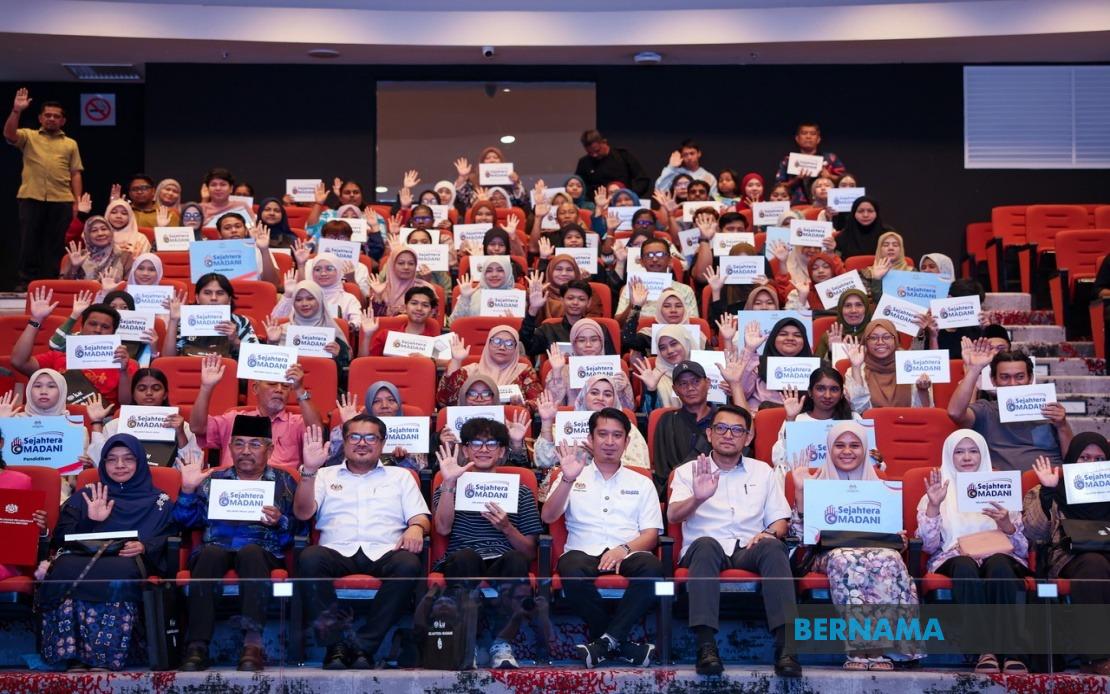
Beyond policy frameworks, MOHE demonstrated commitment to student support through concurrent initiatives announced at the same ceremony. The distribution of laptops to outstanding SPM students and tablets to 100 university students, funded through the Sejahtera MADANI initiative, addresses digital equity concerns that intersect with AI adoption. Students from lower-income households cannot benefit from generative AI guidelines if they lack reliable device access. By pairing policy oversight with infrastructure investment, MOHE acknowledges that managing technology responsibly requires attending to access disparities.
The guidelines also reflect recognition that effective higher education governance requires flexibility and iteration. MOHE did not attempt to codify every scenario into rigid rules; instead, it provided a framework permitting universities to refine procedures as institutional experience accumulates. This adaptive governance model enables learning across the sector—best practices from one campus can inform others, and emerging misuse patterns can prompt procedure adjustments. Such responsiveness matters in a landscape where AI capabilities and adoption patterns evolve rapidly.
For Malaysian employers and professional bodies, these guidelines signal that graduates from MOHE-regulated institutions have studied under standardised academic integrity frameworks, mitigating concerns about credential devaluation. The consistency across universities also simplifies credential evaluation for employers assessing job candidates' qualifications. In a region increasingly integrated through trade agreements and labour mobility, such standardisation supports regional labour market development.
Looking forward, the sustainability of these guidelines depends on implementation fidelity across campuses of varying sizes and resources. Large research universities may develop sophisticated AI-detection systems and extensive faculty training programmes, while smaller institutions might struggle with compliance costs. MOHE's continued support—whether through funding, training provision, or policy refinement—will determine whether the guidelines genuinely democratise ethical AI use across Malaysian higher education or inadvertently widen gaps between well-resourced and under-resourced institutions. The coming years will reveal whether this framework proves sufficiently robust to guide universities through an era of accelerating technological change.

