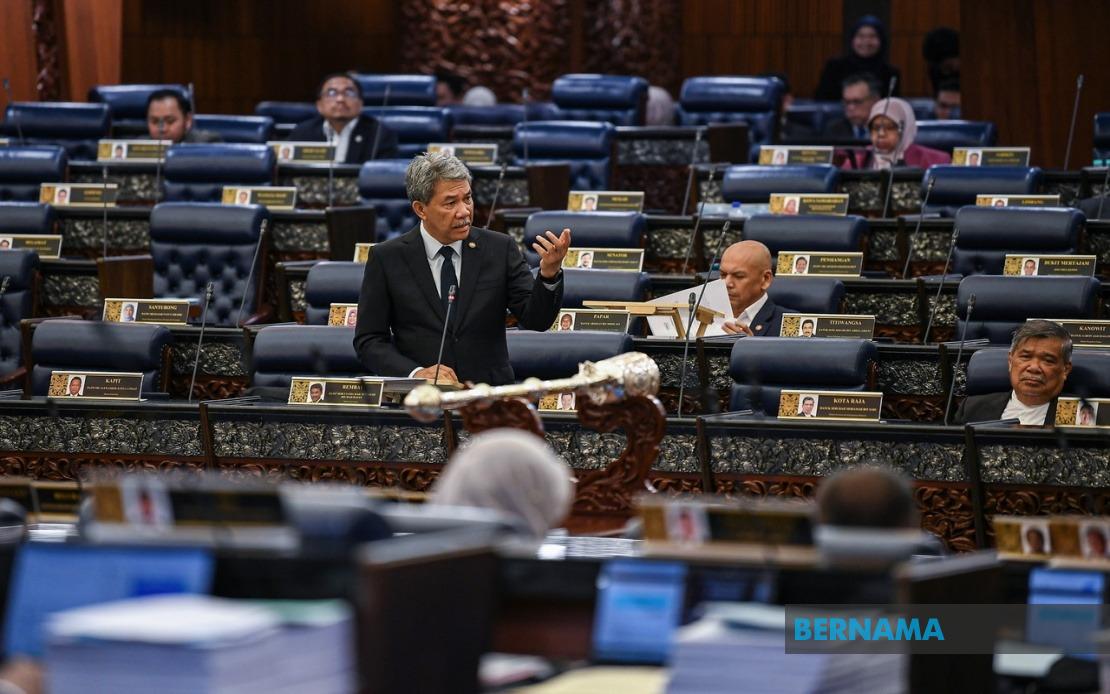
Foreign Minister Datuk Seri Mohamad Hasan has moved to dispel concerns about the management of Malaysia's Humanitarian Trust Fund for the People of Palestine (AAKRP), insisting that the fund operates under comprehensive government supervision and remains subject to rigorous oversight mechanisms. Speaking in Parliament on June 23, Mohamad clarified that allegations questioning how the fund is administered are unfounded, emphasising that the AAKRP functions as a formally managed government trust account rather than an independently operated entity controlled by any single organisation outside official channels.
The emphasis on accountability reflects broader sensitivities surrounding humanitarian financing in Malaysia, where public confidence in aid distribution mechanisms remains paramount. Mohamad underscored that the Foreign Ministry has implemented multiple layers of control to ensure resources reach vulnerable populations. These safeguards include mandatory audits conducted by the Auditor-General and consistent reporting obligations to the Cabinet, creating a transparent chain of command and responsibility. Such mechanisms are essential for maintaining donor confidence and demonstrating to Malaysian taxpayers that their contributions serve genuine humanitarian purposes.
To ensure aid reaches intended beneficiaries, Malaysia channels assistance through established international and regional organisations with proven track records in humanitarian operations. The UNRWA, a UN agency specialising in Palestinian refugee support, serves as a primary delivery partner, alongside the Jordan Hashemite Charity Organisation (JHCO), the Palestine Red Crescent Society, and King Hussein Hospital. This approach leverages the expertise and established networks of institutions with decades of operational experience in conflict zones, reducing administrative friction and maximising the proportion of funds reaching those in need.
Recent months have witnessed tangible progress in delivering humanitarian supplies to Gaza following the reopening of overland routes. Malaysia has successfully dispatched food aid, medical supplies, and health equipment to the territory, with coordination from the Egyptian government facilitating passage through land borders. Some consignments that had experienced earlier delays were able to proceed once these routes became operational, demonstrating that despite logistical constraints inherent in conflict situations, Malaysia's commitment to delivering aid remains active and results-oriented.
The humanitarian crisis unfolding in Gaza presents a staggering scale of suffering that demands coordinated international response. Gaza's infrastructure—hospitals, schools, religious buildings, and residential areas—has sustained severe damage throughout the ongoing conflict, leaving civilian populations facing acute shortages of medical care, education access, and shelter. This context underscores why transparent fund management matters critically; Malaysian contributions form part of the broader international effort to stabilise conditions and prevent catastrophic health and welfare outcomes among Gaza's civilian population.
Mohamad's parliamentary statement also served to counter misinformation circulating through social media platforms regarding the AAKRP's administration. Digital networks frequently become vectors for unsubstantiated claims about aid distribution, particularly when geopolitical sensitivity surrounds the intended recipients. The minister urged the public to disregard inaccurate narratives and instead rely on official communications. By explicitly addressing the credibility gap between unverified social media speculation and documented government procedures, Mohamad sought to strengthen public confidence in Malaysia's humanitarian credentials.
For Malaysian policymakers, managing humanitarian aid to Palestine carries additional significance given Malaysia's position as a Muslim-majority nation with strong historical commitment to Palestinian causes. This dual role—serving as both a concerned regional actor and a responsible international donor—requires demonstrating that principle does not compromise professional standards. The emphasis on audit trails, Cabinet reporting, and partnerships with internationally recognised agencies reflects an understanding that legitimacy in humanitarian work rests on rigorous governance rather than solely on stated intentions.
The response to Ahmad Tarmizi Sulaiman's parliamentary question highlights ongoing scrutiny of government spending on international assistance. Opposition and government members alike have begun demanding greater clarity on how Malaysia allocates resources for overseas causes, particularly when domestic needs remain substantial. By providing detailed information about oversight mechanisms and delivery channels, Mohamad addressed this broader accountability agenda, signalling that decisions to aid Palestinians do not proceed without systematic checks and balances.
Looking forward, Malaysia's humanitarian efforts in Gaza will likely remain subject to public and parliamentary interest, particularly as the humanitarian crisis persists. The government's commitment to transparent fund management and regular reporting represents a framework designed to withstand scrutiny and maintain legitimacy. For regional observers and international partners, Malaysia's approach to Palestine aid offers a model of how countries can balance principled foreign policy with professional governance standards. Whether the AAKRP continues to expand its contributions may depend partly on how effectively the Foreign Ministry maintains public confidence through continued transparency and demonstrated delivery outcomes in Gaza.