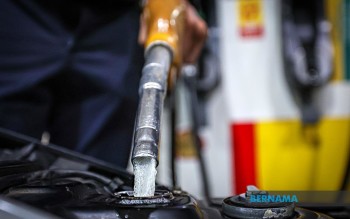
Malaysia's fuel subsidy commitments could balloon to approximately RM3.5 billion each month should crude oil prices persist at around US$90 per barrel, according to projections outlined by Deputy Finance Minister Liew Chin Tong in parliament this week. The breakdown shows RON95 petrol subsidies consuming roughly RM2 billion monthly, with diesel support accounting for an additional RM1.5 billion, reflecting the substantial strain that elevated global oil prices place on the government's budget.
These figures underscore a critical fiscal challenge for the Malaysian government, which has maintained fuel price controls as a cornerstone of its cost-of-living strategy. Unlike some regional peers that have moved toward market-based pricing mechanisms, Malaysia continues to absorb the gap between actual global petroleum costs and the subsidized rates consumers pay at the pump. The sustainability of this approach hinges directly on global crude markets, making Malaysia's fiscal planning increasingly vulnerable to external energy price shocks beyond domestic policymakers' control.
Yet Liew sought to reassure parliament that despite these mounting subsidy pressures, the government's overall fiscal position remains resilient. He emphasized that Malaysia's fiscal deficit targets remain on track and that current economic projections have not shifted materially. This confidence rests partly on a critical offsetting mechanism: the petroleum revenue stream flowing into government coffers from Malaysia's own oil and gas production and taxation. For every US$1 increase in the barrel price, Liew indicated, the federal government can expect to harvest approximately RM300 million in additional petroleum-related income.
This revenue offset mechanism illustrates why Malaysia's fuel subsidy dilemma differs markedly from that of countries dependent on energy imports. As an ASEAN oil and gas producer, Malaysia benefits from higher crude prices through royalties, taxation, and state-owned enterprise dividends. When petroleum costs surge, subsidies may escalate simultaneously, but so does government oil revenue, creating a natural hedge that import-dependent economies cannot access. Understanding this dual dynamic is essential for assessing whether Malaysia's subsidy model is truly unsustainable or merely politically contentious.
The timing of Liew's parliamentary remarks carries particular significance given Malaysia's approaching budget cycle. Prime Minister Datuk Seri Anwar Ibrahim is scheduled to present the 2027 Budget in October, at which point the government will unveil comprehensive fiscal projections reflecting real-time economic conditions. Should oil prices remain elevated or climb further by autumn, those projections may trigger difficult decisions about either accepting larger deficits, adjusting subsidy structures, or shifting toward targeted rather than universal fuel support mechanisms. The October announcement will therefore offer critical signals about the government's medium-term fiscal philosophy.
Parliamentary scrutiny of subsidy spending reflects broader regional anxiety about inflation and household purchasing power. Several senators raised questions about whether current subsidy mechanisms adequately serve all communities, particularly those in East Malaysia. The question posed regarding BUDI Diesel quota expansion for Sabah and Sarawak speaks to equity concerns, as rural and agricultural communities in these states depend heavily on diesel for transportation and farm operations. Fuel availability and affordability directly affect productivity and competitiveness in these regions, making subsidy design a matter of regional development policy, not merely fiscal management.
In response to suggestions for expanded BUDI Diesel allocations, Liew indicated the government's willingness to evaluate targeted quota increases for specific groups facing documented hardship. He cited pickup truck owners as an example, noting that additional 100-litre monthly quotas had already been extended through streamlined application procedures. This approach reflects an emerging policy direction: rather than universalizing subsidies indefinitely, the government may incrementally shift toward means-tested or activity-based support for sectors where fuel costs materially impact productivity or essential services.
The evolution of Malaysia's subsidy framework will likely become a defining fiscal issue throughout Anwar Ibrahim's administration. Unlike previous approaches that treated fuel subsidies as politically untouchable, current policymakers appear prepared to contemplate restructuring rather than wholesale removal. This incremental adjustment strategy potentially offers a middle path between maintaining universal price controls and implementing abrupt market liberalization that could trigger public backlash and inflationary pressure across supply chains.
Regional observers watching Malaysia's subsidy management closely include neighboring countries grappling with similar dilemmas. Indonesia, the Philippines, and Thailand have each experimented with different subsidy reform models, each facing distinct political constraints. Malaysia's approach—maintaining controls while simultaneously exploring targeted expansion and accepting larger fiscal deficits when oil prices surge—offers a cautionary lesson about the long-term costs of postponing structural reform. However, Malaysia's petroleum production revenue advantage provides breathing room that purely import-dependent regional neighbors lack.
Looking ahead, the sustainability calculus for Malaysian fuel subsidies depends on several interconnected variables: global crude trajectories, domestic production levels and export revenue, fiscal deficit tolerance, and political willingness to implement unpopular reforms. The government's current stance—confident but monitoring closely—reflects uncertainty about whether current oil price levels prove temporary or represent a new price floor for the commodity market. Should crude stabilize meaningfully above US$100 per barrel, the monthly subsidy burden could easily exceed RM4 billion, forcing more dramatic policy adjustments regardless of fiscal offset mechanisms.

