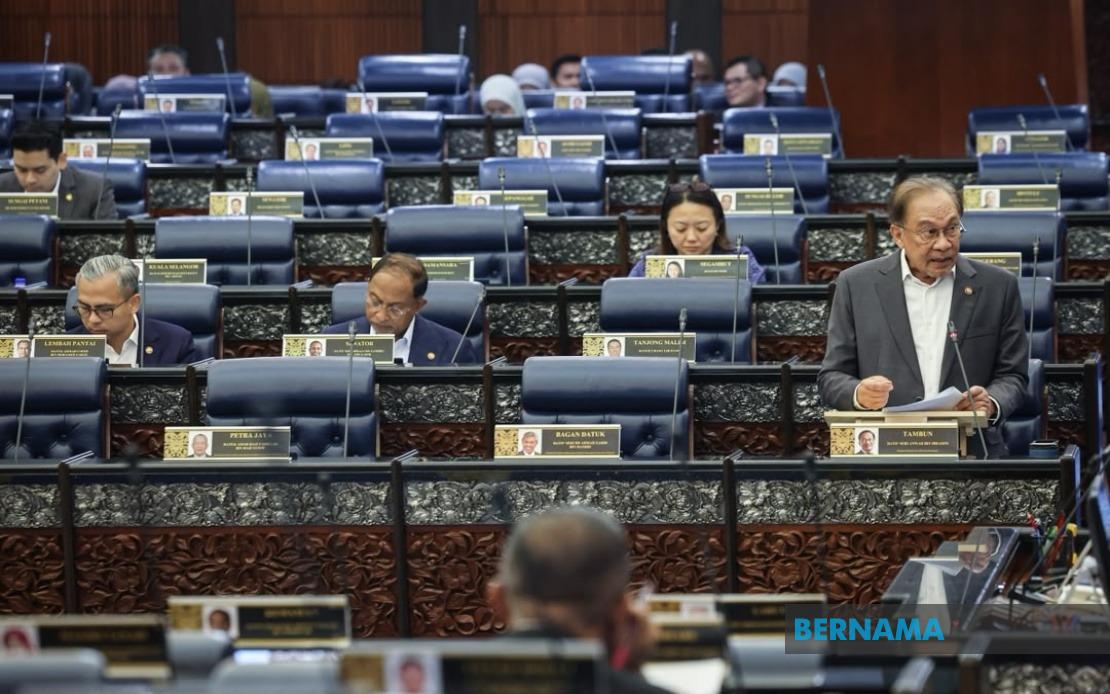
Prime Minister Datuk Seri Anwar Ibrahim has moved to counter criticism over Malaysia's fuel pricing strategy by pointing to international comparisons, arguing that domestic petrol costs remain among the most competitive in the region and globally. Speaking in Parliament on July 14, Anwar emphasised that Malaysia's subsidised RON95 petrol price of RM1.99 per litre under the BUDI MADANI initiative is substantially lower than prices now prevailing in oil-rich Gulf states, challenging the narrative that Malaysia no longer offers consumers a favourable deal at the pump.
The Prime Minister's remarks were prompted by supplementary questions from Datuk Rosol Wahid (PN-Hulu Terengganu), who sought clarification on how current fuel prices compare with those during Datuk Seri Najib Razak's administration and whether Anwar's earlier opposition pledges to reduce petrol to RM1.50 per litre had been adequately fulfilled. Rather than defending the current price level directly, Anwar shifted the discourse toward regional and global benchmarking, a tactic that allows the government to claim vindication while sidestepping domestic comparisons.
According to Anwar's parliamentary statement, Saudi Arabia's retail fuel price has climbed above RM2.40 per litre, representing a substantial differential of over 40 sen compared with Malaysia's subsidised rate. This gap underscores a key advantage of Malaysia's fuel subsidy framework: by maintaining price caps, the government shields consumers from international market volatility that has driven petrol costs upward across the Gulf region even for nations with abundant hydrocarbon reserves. The comparison is particularly striking given that Saudi Arabia, as OPEC's largest producer and a dominant force in global energy markets, might logically offer the world's cheapest fuel—yet Malaysian consumers actually benefit from lower prices.
Beyond Saudi Arabia, Anwar highlighted that both Qatar and the United Arab Emirates have fuel prices exceeding those available in Malaysia. The UAE, despite its status as a major oil exporter, recently increased fuel prices approximately two months prior to his statement, further illustrating how even petro-states have struggled to maintain price competitiveness. This context is crucial for Malaysian policymakers and observers to understand: the global energy environment has shifted substantially, and even producing nations are finding it economically difficult to sustain heavily subsidised retail prices.
The BUDI MADANI subsidy scheme, which anchors RON95 at RM1.99, represents a continuation of the government's commitment to affordable fuel for ordinary Malaysians. However, this policy carries significant fiscal implications. The gap between domestic pricing and international rates represents a cost borne by the federal budget, with subsidies effectively transferring wealth from the national treasury to fuel consumers. As global oil prices fluctuate, maintaining this price floor becomes increasingly expensive, yet the political imperative to protect household and business costs from market shocks remains strong across Malaysia's diverse economy.
Anwar's invocation of his earlier opposition-era pledge to reduce fuel to RM1.50 per litre reveals a subtle but important political repositioning. By contextualising that promise within the international environment prevailing at the time, when Saudi fuel was approximately 50 sen per litre, he implies that the pledge was neither unrealistic nor has been betrayed—rather, circumstances have transformed. The global energy crisis, geopolitical tensions affecting supply, and post-pandemic demand recovery have all redrawn the landscape for fuel pricing. What seemed achievable years ago may no longer reflect economic feasibility without imposing unsustainable fiscal burdens.
For Malaysian consumers accustomed to relatively affordable petrol, these comparisons offer reassurance that their domestic costs remain reasonable by international standards. However, the debate also masks underlying tensions within Malaysia's fuel subsidy framework. The programme, while protecting purchasing power, also suppresses price signals that might encourage conservation or investment in alternative energy sources. Additionally, because subsidies are applied universally rather than targeted to lower-income groups, they represent an inefficient use of public resources from a distributional equity perspective.
The political backdrop to this parliamentary exchange reflects broader anxieties about the government's economic management and cost-of-living pressures facing Malaysian households. Opposition members, represented by Rosol Wahid from Perikatan Nasional, seek to highlight any perceived gap between campaign promises and implementation, a common tactic during parliamentary scrutiny. By deploying international comparisons, Anwar has effectively reframed the conversation from domestic accountability to global context—a rhetorical move that may satisfy supporters but does not directly address concerns about whether the government is fulfilling its specific electoral commitments.
The sustainability of Malaysia's fuel subsidy regime remains an open question. Global oil price volatility, currency fluctuations affecting import costs, and competing demands on the federal budget all constrain policymakers' flexibility. While maintaining affordable fuel offers clear political advantages and protects vulnerable populations from energy poverty, the long-term economic model requires careful calibration. International experience suggests that heavily subsidised fuel markets often suffer from inefficiencies, black-market distortions, and eventual unsustainable fiscal pressures that force abrupt adjustments.
For Southeast Asian observers, Malaysia's approach offers both a model and a cautionary tale. The region's energy-rich economies—including Brunei and Indonesia—wrestle with similar subsidy dilemmas, balancing populist pressure against fiscal sustainability and long-term economic modernisation. Malaysia's choice to maintain meaningful subsidies, supported by parliamentary argument about international competitiveness, reflects a particular political economy where fuel affordability remains a touchstone of social contract legitimacy.
Looking forward, the sustainability of fuel pricing policy will likely depend on multiple factors: petroleum production levels, global market conditions, exchange rates, and political tolerance for adjustment. Anwar's parliamentary defence articulates a credible case for current pricing within the global context, yet it does not resolve the fundamental question of how Malaysia can maintain affordability indefinitely. The comparison with Saudi Arabia and Qatar, while factually accurate, perhaps inadvertently highlights the exceptional nature of Malaysia's subsidy regime—few nations globally sustain such artificially suppressed fuel prices without encountering mounting fiscal strain.

