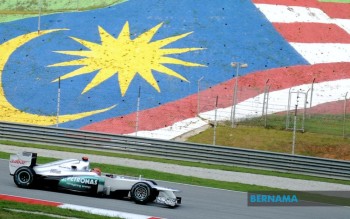
Malaysia's return to the Formula 1 calendar has been confirmed for October 2026, when the Sepang International Circuit will host the Bahrain Grand Prix. The announcement, made jointly by Formula 1 and motorsport's international governing body, represents a significant opportunity for the nation's tourism and hospitality sectors, nearly nine years after the championship last visited Malaysian soil in 2017. The three-day event, scheduled for October 2-4, 2026, will occupy a prime position in the global F1 calendar, nestled between the Azerbaijan Grand Prix and the Singapore Grand Prix—a scheduling advantage that industry observers believe could enhance visitor flows throughout Southeast Asia.
Industry veterans view this opportunity through a pragmatic lens, emphasizing that the event serves multiple purposes beyond the immediate economic returns. According to Datuk Razlan Razali, former chief executive of Sepang International Circuit, the arrangement makes considerable financial sense for Malaysia. He highlighted that compared to alternative venues being considered—including Portugal's Portimao circuit—Sepang offers the most cost-effective operational model. This cost efficiency stems from Malaysia's existing world-class facility, which is homologated to the highest FIM standards and requires minimal infrastructure overhaul for a one-off international event. The circuit's readiness to accommodate Formula 1 operations without substantial expenditure differentiates Malaysia's proposition from competing bids, placing minimal financial burden on the national interest.
Crucially, this arrangement transfers the commercial and financial responsibility to Bahrain, fundamentally altering the risk calculus for Malaysia. Rather than bearing the substantial costs associated with hosting a Formula 1 championship—expenses that ultimately contributed to Malaysia's withdrawal from the calendar—the nation functions essentially as a venue provider. Tan Sri Mokhzani Mahathir, president of the Motorsports Association of Malaysia, articulated this advantage explicitly, noting that Malaysia's return on investment becomes disproportionately favorable when another party assumes primary financial obligations. This model represents a significant shift from Malaysia's previous hosting arrangements, where government and private sector entities carried substantial budgetary exposure.
The tourism implications extend beyond headline visitor numbers. Malaysia's positioning just one week before the Singapore Grand Prix creates a natural geographic and commercial advantage for the region. Industry analysts anticipate that spectators planning Southeast Asian trips will gravitate toward Malaysia's lower cost structure compared to Singapore, while the proximity enables visitors to experience both events sequentially. Mokhzani emphasized this regional synergy, suggesting that many international F1 enthusiasts will elect to base themselves in Malaysia, benefiting the hospitality, airline, and food and beverage sectors. Historical data indicates that approximately 30 percent of Formula 1 attendees originate from overseas markets, representing a substantial influx of high-value tourists during the three-day period.
Logistical readiness presents minimal concern, according to Malaysian motorsport leaders. The nation's existing infrastructure—including five-star hotel capacity in Kuala Lumpur and Putrajaya, established ground transportation networks, and proven experience hosting international-scale events—eliminates the extended preparation timelines typically required for new venues. Razlan emphasized that Sepang operates continuously to the highest international standards, with the track's homologation and management protocols ensuring seamless integration with Formula 1's technical requirements. While FIA inspections will precede the event, no fundamental structural modifications are anticipated. The compressed timeline from announcement to execution, while challenging, aligns with Malaysia's demonstrated capacity for rapid event mobilization.
However, the compressed timeframe does carry tourism implications distinct from operational concerns. The abbreviated marketing window—approximately 15 months from announcement to execution—disadvantages international spectators who typically commit to F1 travel six months or more in advance. This shortened planning horizon will necessarily suppress overseas attendance compared to traditional grand prix venues with extended promotional periods. Nevertheless, dedicated Formula 1 enthusiasts with established travel patterns and disposable resources should overcome this constraint, ensuring a meaningful international presence. The combination of Malaysia's motorsport heritage, Sepang's reputation among the global F1 community, and the region's accessibility suggest that core international audiences will prioritize attendance.
Local economic opportunities extend into multiple supply chains and service sectors. The event will generate employment across event management, security, catering, transportation, and hospitality operations. Razlan highlighted that Bahrain's operator will likely engage Malaysian contractors, suppliers, and local workforce for the weekend's execution, creating direct income opportunities. Food and beverage operators, accommodation providers, and transportation services will experience concentrated demand during the three-day period. Small and medium enterprises in service sectors, retail, and entertainment will capture ancillary spending from the estimated visitor influx. These distributed economic benefits, while temporary, represent meaningful revenue concentration for affected business categories.
Beyond the immediate economic calculus, industry stakeholders view this event as a diagnostic mechanism for assessing Formula 1's longer-term viability in Malaysia. The one-off race functions as a genuine "litmus test" of contemporary demand, operational feasibility, and commercial appeal. Prime Minister Datuk Seri Anwar Ibrahim retains discretionary authority to explore permanent F1 reinstatement based on this event's performance metrics and public reception. Razlan, however, cautioned that the prospects for permanent championship status remain remote, given the historical cost burdens that precipitated Malaysia's 2017 exit. Nevertheless, a successful 2026 execution could demonstrate that restructured hosting models—where international operators assume financial responsibility—create viable pathways for Malaysia's sustained participation in the global motorsports calendar.
Former Formula 1 driver Alex Yoong articulated a broader strategic perspective, urging stakeholders to extend their analytical framework beyond the single race weekend. He emphasized that Formula 1's return should catalyze comprehensive ecosystem development, including grassroots motorsport investment, driver development programs, and technical infrastructure supporting broader motorsports participation. Yoong's perspective reflects growing recognition that international motorsport events generate maximum national value when integrated into coordinated development strategies. The championship's presence should amplify Malaysia's regional motorsport leadership, attracting investment in training facilities, technical expertise development, and competitive pathways for emerging talents. This expanded vision positions the 2026 event as a potential inflection point for motorsport culture and industry development across Southeast Asia.
The Motorsports Association of Malaysia will assume regulatory oversight responsibility, ensuring compliance with FIA safety standards, circuit readiness specifications, and manpower requirements. This institutional role, while administrative, carries significance for event credibility and international confidence in Malaysian execution capability. The association's gatekeeping function ensures that international standards permeate every operational layer, from participant safety through spectator security protocols. This regulatory rigor simultaneously demonstrates Malaysia's institutional capacity for managing complex international events and protects the nation's reputation for professional event delivery.
From a regional competitive perspective, Formula 1's return to Southeast Asia specifically through Malaysia represents strategic positioning within the Asian motorsports landscape. The event reinforces Sepang's standing as a premier international facility and maintains Malaysia's relevance in global motorsport hierarchies. Singapore's established Grand Prix receives international prestige and economic benefits partly through association with Formula 1's elite global circuit. Malaysia's 2026 hosting, while temporary, reestablishes the nation's position as a serious motorsports destination, potentially influencing future international event allocation decisions across motorsport disciplines. This reputational dimension, while intangible, carries substantial strategic weight for nations competing for premium international sporting events.
Ultimately, Malaysia's 2026 Formula 1 hosting represents a carefully calibrated opportunity where financial risk remains constrained while economic and reputational benefits materialize. The event's success hinges not on extraordinary infrastructure investment or government subsidization, but rather on execution excellence within existing Malaysian capabilities. If properly managed, the October 2026 grand prix could demonstrate that alternative hosting models—where international promoters bear primary costs—enable sustained Malaysian participation in elite global motorsport without repeating the fiscal pressures that previously proved unsustainable. For Malaysian stakeholders, this event functions simultaneously as immediate economic opportunity, genuine test of permanent championship viability, and potential catalyst for broader regional motorsport development.

