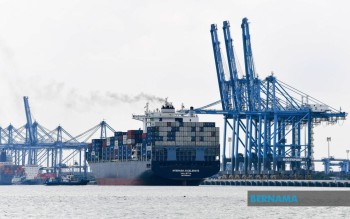
Malaysia's economic outlook has brightened considerably, with major investment banks significantly revising upward their export growth projections for 2026 on the back of unexpectedly robust trade performance. RHB Investment Bank has lifted its forecast for Malaysia's export expansion to 21.7 per cent, a marked increase from its earlier estimate of 15.3 per cent, signalling growing confidence in the region's trade trajectory as the technology sector continues its expansion.
The more optimistic assessment reflects the strength already evident in Malaysia's trade data through the middle of 2026. Export performance has outpaced expectations, expanding by 27.5 per cent on a year-to-date basis, suggesting that the momentum underlying the revised projections is grounded in tangible market activity rather than speculative forecasting. This kind of early-year performance typically provides a solid foundation for annual growth estimates, particularly when the gains are broadly distributed across the economy's key export drivers.
At the heart of this positive outlook lies Malaysia's electrical and electronics sector, which continues to benefit from a global technology upcycle that shows no immediate signs of abating. The semiconductor industry, in particular, is experiencing sustained demand driven by the proliferation of artificial intelligence applications, the buildout of cloud computing infrastructure, and the expansion of data centre capacity worldwide. These structural shifts in how computing is deployed globally have created a persistent tailwind for manufacturers throughout Southeast Asia, with Malaysia positioned as a crucial node in these supply chains.
The trade surplus position provides further evidence of economic health. In the second quarter of 2026, Malaysia's trade surplus reached RM83.9 billion, a dramatic improvement from the RM15.3 billion recorded in the corresponding period of 2025. This substantial swing reflects not merely a temporary boost but rather a sustained enhancement in the country's competitive position. Such surpluses, when they feed into the national accounts, provide upward pressure on gross domestic product growth calculations and signal an economy generating foreign exchange at a healthy rate.
RHB Investment Bank's analysis emphasises Malaysia's structural advantages in navigating an increasingly complex global trading environment. The economy's diversified production base, encompassing not only electronics but also petrochemicals, palm oil products, and an expanding range of services, insulates the nation from over-dependence on any single sector or destination market. Moreover, Malaysia's deep integration into regional manufacturing networks, particularly across Southeast Asia and with Japan, South Korea, and China, positions the country to benefit from ongoing supply chain reconfiguration as multinational corporations seek to reduce concentration risk.
A second perspective from MBSB Investment Bank projects export growth of 18.9 per cent for 2026, a robust figure that, while slightly more conservative than RHB's assessment, nonetheless reflects confidence in Malaysia's trade prospects. MBSB attributes this growth potential to the same technology-led demand dynamics, while also highlighting the contribution of commodity-related products, particularly petroleum products and liquefied natural gas. This diversification across both manufactured goods and natural resource exports provides a hedge against sector-specific downturns.
Yet both institutions acknowledge that optimism must be tempered by genuine risks lurking in the international environment. Geopolitical tensions, whether in the Middle East, Eastern Europe, or the Taiwan Strait region, could disrupt supply chains or elevate shipping costs at any moment. Persistent crude oil price premiums driven by supply concerns could feed through to broader inflation, ultimately dampening consumer demand in key markets and reducing purchases of discretionary goods where Malaysia has developed competitive advantages. For an economy where manufacturing exports represent a substantial share of total output, such external shocks carry real consequences.
Trade policy uncertainty represents another dimension of vulnerability. The investment banks specifically flag the potential for more restrictive trade rules emanating from the United States, a concern that has particular salience given ongoing discussions about tariff policy and supply chain nationalisation in American political debates. Should protectionist measures gain traction, Malaysia's exporters could face higher barriers to entry into what remains the world's largest consumer market, despite the nation's efforts to diversify export destinations across Europe, Asia, and other regions.
June 2026 trade data released by the Department of Statistics Malaysia provides the most recent snapshot of this positive momentum. Total trade expanded 44.7 per cent to RM340.9 billion compared with the same month in 2025, a striking year-on-year acceleration. Exports grew 45.4 per cent to RM177.9 billion whilst imports rose 43.9 per cent to RM163 billion, indicating that domestic economic activity remains sufficiently robust to drive import growth. The trade surplus expanded even more dramatically, rising 64.9 per cent to RM14.9 billion, underscoring the strength of Malaysia's competitive position.
This synchronised growth in both exports and imports deserves particular attention, as it suggests an economy firing on multiple cylinders simultaneously. Whilst export growth captures Malaysia's ability to sell goods abroad, parallel import growth indicates that businesses and consumers at home possess the purchasing power to acquire foreign goods and capital equipment. This combination typically precedes sustained periods of domestic economic expansion, as companies investing in imported machinery and technology tend to boost productivity and employment over subsequent quarters.
Looking beyond the headline growth numbers, Malaysia's position within global semiconductor supply chains appears to be strengthening rather than softening. The ongoing transition to more advanced computing paradigms—where artificial intelligence, edge computing, and sophisticated data processing are increasingly distributed across networks rather than concentrated in traditional data centres—requires the kinds of specialised components and assembly capabilities that Malaysia has spent decades developing. As technology companies worldwide execute their expansion plans, Malaysia stands to capture a disproportionate share of the resulting demand.
The investment banks' analyses also implicitly highlight how Malaysia has managed to sustain export competitiveness despite rising labour costs and increasing competition from other Southeast Asian nations. The nation's ability to attract technology-intensive manufacturing, rather than competing primarily on low-cost labour, reflects investments in education, infrastructure, and business environment improvements made over previous decades. Sustaining this trajectory requires continued focus on these foundational capabilities, particularly as regional competitors also upgrade their capabilities.
For Malaysian policymakers, the challenge ahead lies in consolidating these gains whilst managing the risks. Supporting further diversification of export markets beyond the United States and Europe, investing in worker retraining as automation advances, and maintaining the regulatory environment that attracts foreign direct investment in high-value-added sectors will prove critical. The current export outlook, though encouraging, is far from guaranteed and depends on sustained execution across multiple policy domains.

