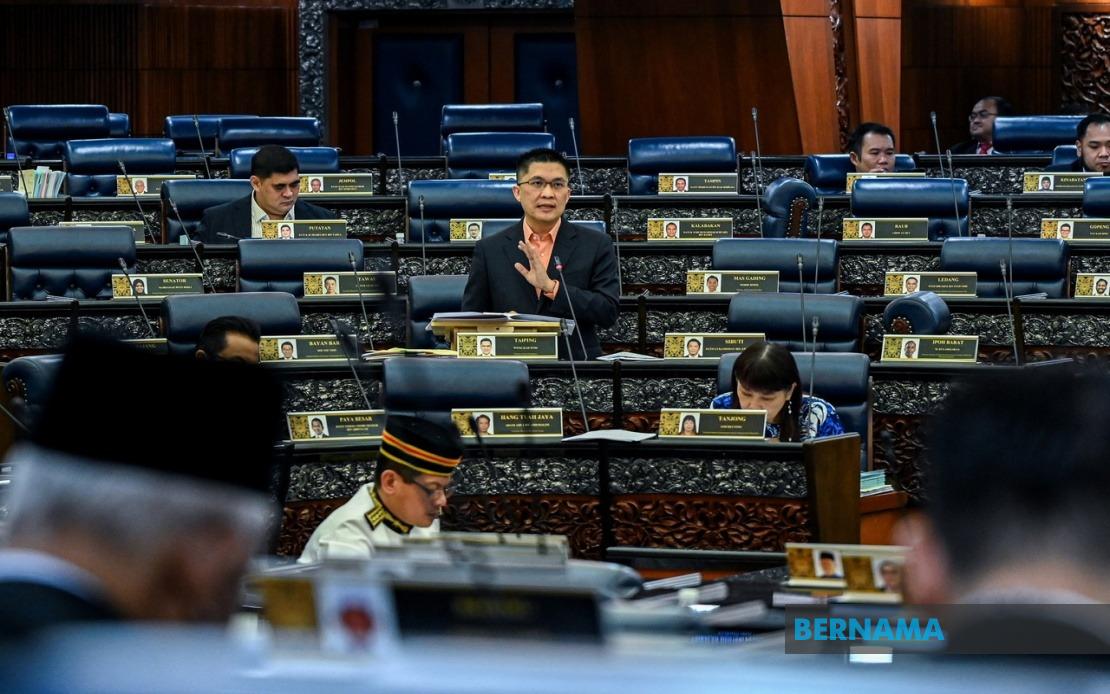
The Ministry of Education has reaffirmed its commitment to eliminating technological inequalities across Malaysia's school system, announcing comprehensive measures under the Malaysia Education Blueprint (RPM) 2026-2035 that will prioritise bringing digital infrastructure to even the most remote educational institutions. Deputy Education Minister Wong Kah Woh unveiled the ambitious initiative during parliamentary proceedings in Kuala Lumpur, signalling a decisive government effort to ensure no student falls behind due to geographical location or economic circumstances.
At the heart of the ministry's strategy lies a fundamental principle: that internet connectivity and digital tools should be equally available to schoolchildren whether they attend institutions in Kuala Lumpur's commercial centres or in Sabah's interior villages. Wong outlined that all Malaysian schools are now targets for comprehensive high-speed internet deployment, with the ministry carefully selecting technologies and infrastructure approaches suited to each location's unique geographical and demographic characteristics. This tailored methodology reflects growing recognition that a one-size-fits-all approach to rural digital expansion often fails in the Southeast Asian context, where terrain, population density, and existing infrastructure vary dramatically across regions.
The Digital Educational Learning Initiative Malaysia (DELIMa) platform forms the technological backbone of this initiative, serving as a centralised repository where teachers and students can access curated digital learning materials regardless of their school's location or resource constraints. By consolidating educational content into a single accessible platform, the ministry aims to standardise the quality of teaching resources available across socioeconomic divides. Wong emphasised that all digital materials and inputs have already been uploaded to DELIMa, creating an immediate advantage: teachers in rural schools can now supplement their lessons with the same multimedia resources, interactive tools, and supplementary content as their urban counterparts.
Complementing this technological infrastructure is the Digital Education Policy, a comprehensive framework that establishes benchmarks for digital competency across the student population. Rather than leaving digital skills development to chance, the ministry has instituted measurable targets requiring all students to attain at least an intermediate level of digital competency as assessed through the Digital Competency Score. This metrics-driven approach ensures accountability and enables educators to identify students requiring additional support in developing essential technology skills.
Wong's parliamentary remarks also acknowledged the substantial progress already achieved through the previous Malaysian Education Development Plan (PPPM) 2013-2025, which established foundational improvements in educational equity. The data presented reveals significant narrowing of achievement gaps: urban-rural disparities in average grade scores for the 2024 Sijil Pelajaran Malaysia (SPM) examination contracted by 26.23 per cent, demonstrating that targeted interventions can materially improve outcomes. Perhaps more significantly, gender-based gaps in SPM certificate attainment declined by 52.78 per cent, and socioeconomic status-related disparities shrank by 57.75 per cent, indicating that Malaysia's education system has become progressively more equitable.
These improvements provide both momentum and evidence for the RPM 2026-2035 initiative. By demonstrating that systematic, well-funded efforts produce measurable reductions in educational inequality, the government has created political and operational justification for continuing and intensifying such programmes. The new blueprint explicitly builds upon this foundation while expanding the scope of intervention beyond traditional academic metrics to encompass digital capabilities increasingly essential for workforce participation in the modern economy.
The ministry's commitment extends to ensuring equitable distribution of physical digital devices and educational resources across all schools, particularly addressing the persistent access gap separating urban and rural institutions. This represents recognition that infrastructure alone proves insufficient; schools also require actual hardware—computers, tablets, and interactive displays—to translate digital ambitions into classroom reality. The emphasis on fair and equitable distribution suggests the ministry is moving beyond aspirational policy statements toward concrete procurement and allocation mechanisms.
Alongside digital infrastructure development, Wong highlighted the ministry's sustained focus on teacher welfare, acknowledging that educational transformation ultimately depends on the professionals delivering instruction. Since 2023, the ministry has introduced seven specific measures aimed at reducing teachers' workload and administrative burden, including elimination of redundant and overlapping record-keeping requirements. This recognition that teacher satisfaction and manageable workloads contribute to quality education reflects contemporary understanding that infrastructure and policy changes generate benefits only when classroom practitioners can effectively implement them without overwhelming additional demands.
The expansion of infrastructure development and systematic upgrading of dilapidated school facilities, guided by local community needs assessments, addresses a critical but often overlooked prerequisite for effective digital learning. Schools with failing roofs, inadequate electricity supply, or deteriorating classrooms cannot effectively utilise digital platforms, meaning infrastructure investments must accompany technological deployment. Wong's emphasis on ensuring quality education access nationwide through prioritised infrastructure upgrades acknowledges this interdependency.
For Malaysian stakeholders—particularly families in underserved regions—these commitments carry significant implications. The digital divide has become not merely an educational equity issue but an economic one; students lacking digital competency face substantially diminished prospects in knowledge economy employment. By establishing measurable digital competency benchmarks and deploying infrastructure to support them, the ministry addresses a structural disadvantage that has historically determined post-secondary educational and employment trajectories. The RPM 2026-2035 essentially represents an investment in generating equal opportunity across geographic and socioeconomic boundaries.
The regional context further illuminates the significance of Malaysia's initiative. As Southeast Asian economies increasingly compete in digital sectors, nations that successfully develop human capital with robust digital skills gain competitive advantages. Malaysia's systematic approach to digital competency development, coupled with infrastructure investment, positions the country to develop a workforce capable of participating in advanced digital economy sectors rather than remaining concentrated in lower-skilled service roles.
Implementation challenges nevertheless remain substantial. Sustaining high-speed internet connectivity in remote regions requires ongoing investment and technical support; teacher training in effectively leveraging digital platforms demands continuous professional development; and ensuring that platforms like DELIMa remain current and relevant necessitates regular content updates and educator feedback mechanisms. The ministry's success ultimately depends not on announcing ambitious targets but on consistent funding, technical troubleshooting capacity, and genuine commitment from political leadership across election cycles.

