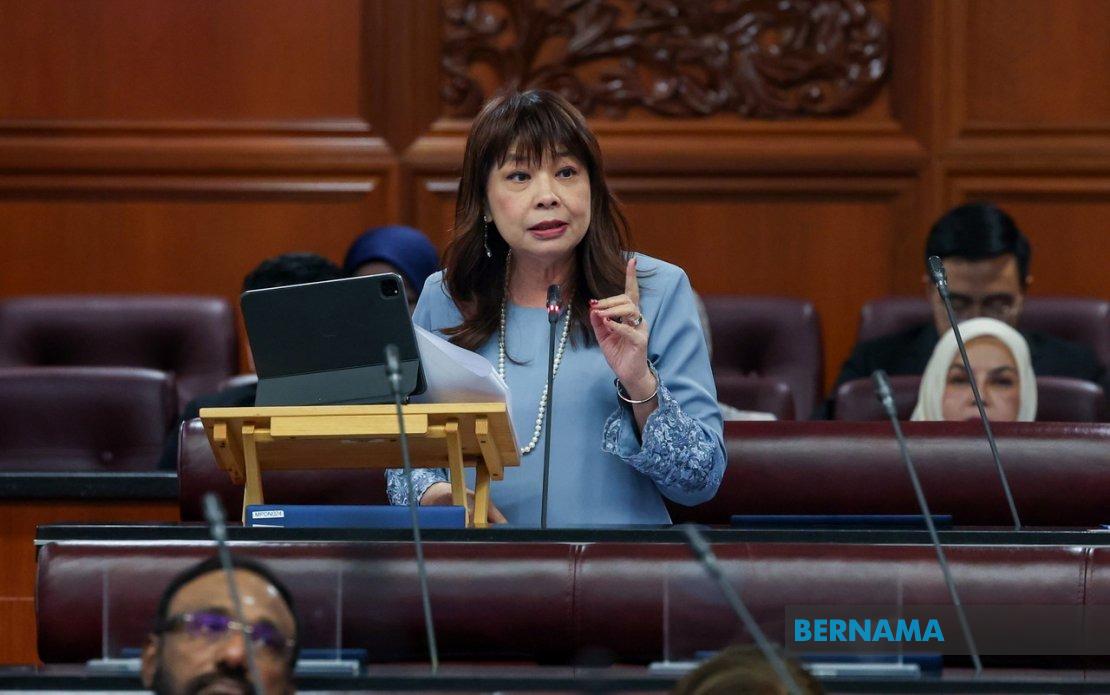
Malaysia's dedicated domestic violence hotline, Talian Kasih 15999, has processed 9,327 calls concerning domestic abuse over the past three years, according to Deputy Minister of Women, Family and Community Development Lim Hui Ying. Speaking during parliamentary question time on June 30, she disclosed that these calls formed part of a significantly larger volume—127,000 total welfare and social complaints received through the same channel between 2022 and May 2025. The data reveals both the scale of family violence affecting Malaysian households and the critical infrastructure now in place to respond to victims seeking immediate assistance.
The breakdown of recent figures provides insight into current operational capacity. During the first five months of 2025 alone, the hotline fielded 470 domestic violence inquiries, with 406 of these successfully concluded and 64 remaining under active investigation. Lim's statement to Parliament came in response to questioning from Datuk Muslimin Yahaya of PN-Sungai Besar, who pressed the government on whether the hotline was genuinely effective and whether follow-up interventions were reaching victims. The deputy minister's response suggested a systematic approach, though the existence of 64 unresolved cases from a recent five-month period raises questions about resource allocation and processing timelines.
Beyond tallying incoming complaints, authorities emphasize the range of protective measures deployed following hotline contact. Victims are assisted in obtaining Emergency Protection Orders (EPO), a legal instrument providing immediate safeguards, or Interim Protection Orders (IPO) for longer-term judicial oversight. Additionally, the ministry coordinates shelter placements for those in acute danger, working alongside civil society organizations that operate safe houses across the country. These interventions represent a graduated response system designed to move callers from crisis mode to stabilized circumstances, though gaps in shelter capacity and legal processing remain persistent challenges in Malaysian domestic violence responses.
A significant dimension of the government's narrative centers on shifting demographics within the abuse landscape. Lim highlighted that domestic violence is no longer predominantly a women's issue, noting that male victims are increasingly utilizing support services. While acknowledging that men represent a smaller proportion of overall cases, she stressed that this emerging trend warrants attention and resource allocation. This reframing aligns with international research suggesting that men experience abuse at lower frequencies but often encounter greater stigma and fewer culturally-accepted avenues for reporting. For Malaysia, integrating male victims into the protective framework requires sensitivity training for hotline operators, dedicated shelter spaces, and messaging that destigmatizes male vulnerability.
The ministry's articulation that it serves "all races and genders without prejudice" signals an attempt to position domestic violence protection as a universal entitlement rather than a particularistic benefit. In Malaysia's multicultural context, such language carries weight, as domestic violence intersects with questions of religious jurisdiction, cultural norms around privacy and family honor, and varying legal pathways depending on whether perpetrators and victims fall under civil or Syariah law. The challenge of implementing gender-neutral, culturally-sensitive services across a religiously plural society remains substantial, and the deputy minister's statement appears designed to reassure different communities that the hotline serves everyone regardless of background.
The 9,327 cases logged since 2022 must be contextualized within broader patterns of family violence in Southeast Asia. Malaysia's figure reflects both genuine prevalence and improved reporting mechanisms; the availability of a free, confidential hotline almost certainly drives higher call volumes than would exist without such infrastructure. Neighboring countries often lack equivalent systems, making direct international comparisons difficult. Domestically, however, the trend suggests rising awareness among victims and advocates that institutional support exists, a cultural shift that took decades to establish and requires sustained investment to maintain.
The statement that all domestic violence cases from 2022 through May 2025 have been "fully resolved" requires careful parsing. Resolution in this context likely means that the initial complaint was processed, appropriate interventions offered, and the case formally closed—not necessarily that the underlying family conflict ended, the perpetrator was prosecuted, or the victim achieved permanent safety. Criminal prosecution rates for domestic violence in Malaysia remain comparatively low, with many cases resolved through civil protection orders and counseling rather than criminal conviction. Understanding what "resolved" signifies operationally is essential for evaluating whether the hotline achieves genuine victim protection or primarily provides a reporting mechanism.
The parliamentary exchange also illuminates bureaucratic accountability mechanisms. By bringing hotline statistics to Parliament and responding directly to opposition queries, the government creates a record of its performance in this sensitive area. Such accountability, while incomplete, pressures the ministry to maintain or expand services and to address gaps that might otherwise escape public scrutiny. For Malaysian civil society organizations focused on domestic violence, parliamentary questions like Muslimin Yahaya's provide leverage to extract commitments and resources, even if budgetary constraints ultimately limit expansion.
Looking forward, the helpline's performance raises questions about prevention and upstream intervention. While the Talian Kasih system excels at crisis response and victim support, Malaysia has invested comparatively less in prevention programming—school-based education on healthy relationships, workplace training for managers to recognize signs of abuse, and community-level initiatives to shift norms around violence. The volume of calls itself, while managed efficiently, represents thousands of families in acute distress. Reducing the number of people who need the hotline would require complementary investments in prevention that extend beyond the Women, Family and Community Development Ministry's traditional scope.
For Malaysian readers, the data underscores both progress and limitation. The existence of Talian Kasih 15999 and its demonstrated capacity to handle over 127,000 calls annually represents meaningful institutional development compared to Malaysia's situation a generation ago. The growing recognition that men can be victims signals evolving, more inclusive understanding of family violence. Yet the absolute numbers—9,327 domestic violence cases in three years, likely representing only a fraction of actual abuse—remind us that family violence remains endemic. The helpline provides a crucial lifeline, but Malaysian society still requires deeper cultural change, stronger criminal justice responses, and expanded prevention efforts to meaningfully reduce the prevalence of domestic abuse.

