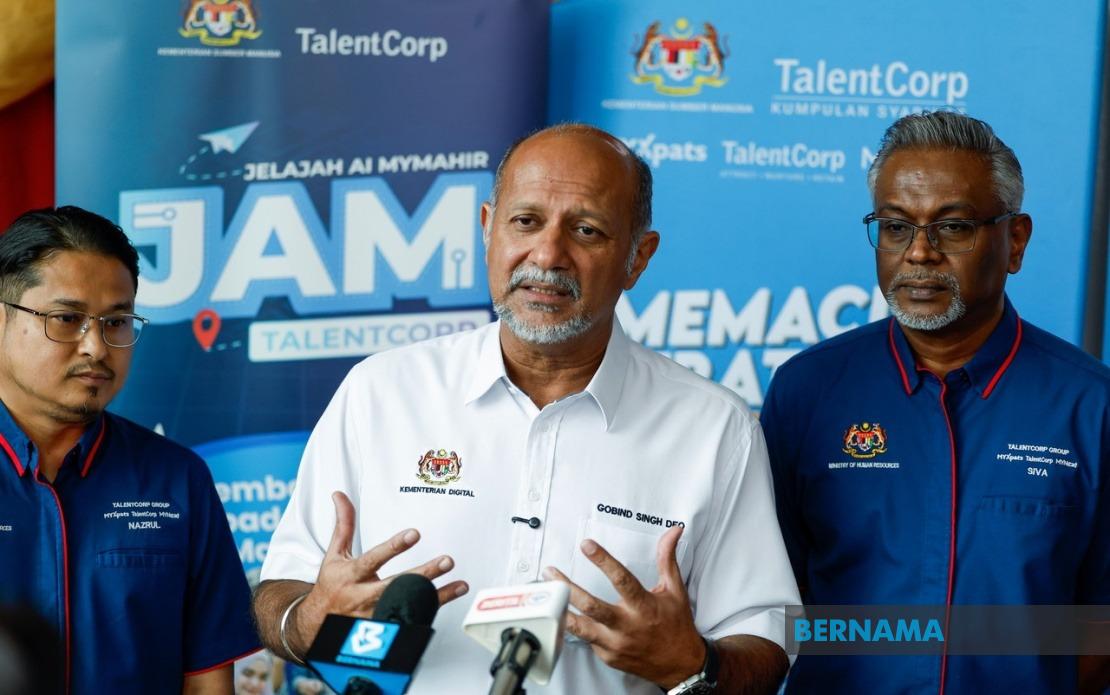
Malaysia's digital creative industry has emerged as a significant economic driver, generating over RM92.5 billion in revenue whilst establishing itself as a growing employment engine with more than 11,000 high-value positions created across animation, gaming, and digital content sectors. The industry's commercial footprint extends internationally through RM12.1 billion in exports, underscoring the sector's capacity to generate foreign exchange earnings and establish Malaysia as a competitive player in global digital markets. These figures were unveiled by Digital Minister Gobind Singh Deo during his address at the inaugural Borneo Animation and Games Festival 2026 in Kuching, signalling the government's commitment to positioning the nation's creative output as both artistically significant and commercially viable.
The minister's remarks reflected a broader strategic shift within Malaysian policymaking, one that recognises creative industries not merely as cultural pursuits but as legitimate engines of economic expansion comparable to traditional manufacturing or services sectors. Drawing attention to homegrown successes like the animated series Upin & Ipin, Ejen Ali, and the gaming property Mechamato, Gobind illustrated how distinctly Malaysian intellectual properties have transcended domestic boundaries to capture regional and international audiences. These franchises demonstrate the capacity of local creative talent to compete globally whilst maintaining cultural authenticity, a combination that attracts both commercial investors and audiences seeking fresh, culturally-rooted content.
The government's economic projections reveal ambitious long-term targets for digital sector expansion. By 2030, policymakers expect digital economy contributions to account for 30 percent of Malaysia's total Gross Domestic Product, a substantial increase from current proportions that would require sustained investment, workforce development, and market access expansion. Complementing this GDP target, authorities anticipate the creation of approximately 500,000 high-value digital employment positions over the subsequent four-year period, suggesting the sector will play a critical role in Malaysia's transition toward a knowledge-based, high-skill economy capable of competing with developed nations.
The RM85.7 billion in accumulated investments indicates growing confidence amongst venture capital firms, established media companies, and technology investors in Malaysia's creative sector viability. This capital inflow has facilitated infrastructure development, talent retention, and the establishment of production facilities capable of handling projects of international calibre. Investment patterns suggest investors perceive Malaysia's combination of technical expertise, cost competitiveness relative to Western markets, and access to Asian talent pools as strategically attractive, particularly as global entertainment and gaming companies seek to diversify production locations beyond traditional Western hubs.
Sarawak occupies a particularly important position within this national digital growth narrative, according to Gobind's remarks. The state's distinctive cultural heritage, diverse indigenous communities, and emerging digital ecosystem position it as a potential regional nucleus for animation and gaming development. Sarawak's storytelling traditions offer rich source material for content creators seeking narratives and visual aesthetics differentiated from mainstream Western or East Asian productions. The government has signalled willingness to channel resources and policy support toward Sarawak's creative infrastructure, viewing the state not as peripheral to digital expansion but as central to Malaysia's positioning as a diverse, multicultural creative powerhouse.
Federal-state collaboration emerges as a cornerstone of the government's digital development strategy. Rather than concentrating creative industry growth within Kuala Lumpur and the Klang Valley, authorities propose strengthening Sarawak's digital capabilities whilst facilitating connections between the state's creative practitioners and opportunities spanning Malaysia, Southeast Asia, and beyond. This distributed development approach acknowledges regional comparative advantages whilst preventing excessive concentration of resources and talent within peninsular Malaysia, potentially contributing to more equitable economic growth across the federation.
The Borneo Animation and Games Festival 2026 itself represents a tangible manifestation of this collaborative vision. Positioned as the inaugural international animation and games festival of comparable scale held on Borneo island, BAGFest 2026 serves multiple functions: it provides a showcase platform for Malaysian and regional creators, facilitates networking amongst industry professionals and investors, and signals to global entertainment markets that Sarawak and Malaysia possess both the creative talent and institutional infrastructure to host events of international standing. The festival's thematic focus on forging Sarawak's position as a regional animation and games hub crystallises the government's ambitions for the state's creative economy transformation.
For Malaysia's broader economic development, the digital creative sector's expansion addresses several policy imperatives simultaneously. As manufacturing competitiveness erodes relative to lower-cost regional competitors and commodity prices fluctuate, creative industries offer Malaysia a comparative advantage grounded in human capital, cultural diversity, and technological sophistication rather than labour cost arbitrage. This transition aligns with government rhetoric concerning knowledge economy development and high-income nation aspirations, positioning creative sectors as strategically essential rather than marginal or luxury-oriented.
The sector's employment generation capacity carries particular significance given Malaysia's demographic transitions and automation pressures across traditional industries. High-value digital jobs typically command superior remuneration, require advanced skill development, and offer career progression pathways attractive to tertiary-educated workers. By cultivating creative industry employment, Malaysia can potentially retain skilled talent that might otherwise migrate internationally, whilst simultaneously positioning itself as a destination for regional creative professionals seeking collaborative opportunities and market access to Asian audiences.
Regional context amplifies the importance of Malaysia's creative industry positioning. Southeast Asia's rapidly expanding middle-class consumer base and increasing digital consumption patterns create substantial market opportunities for locally-produced animation, games, and digital content. Malaysian creators with regional cultural understanding and production capabilities occupy advantageous positions relative to Western content producers attempting to serve Asian audiences. Governments across ASEAN increasingly recognise creative industries' strategic importance, suggesting Malaysia's early investments in this sector could yield competitive advantages as regional demand continues expanding throughout the decade.
The government's coordination between industrial policy, infrastructure investment, and international market positioning reflects sophisticated sectoral development thinking. Rather than relying upon spontaneous market emergence, authorities actively cultivate conditions enabling creative industries to flourish through policy frameworks, capital allocation, and institutional support. This interventionist approach acknowledges that creative sector development requires not merely individual talent but ecosystem development encompassing production facilities, talent training programmes, intellectual property protection frameworks, and market access channels. Malaysia's demonstrated willingness to invest across these dimensions suggests policymakers view creative industries as strategically comparable to previously-prioritised manufacturing or technology sectors.
Looking forward, the sector's continued expansion depends upon sustained policy commitment, adequate capital flows, talent development investments, and international market access facilitation. The government's explicit integration of Sarawak into national digital development strategies signals recognition that Malaysia's competitive advantages in creative content derive partly from regional cultural diversity and distinctive storytelling traditions. As entertainment consumption patterns globalise and audiences seek culturally-authentic, locally-rooted content, Malaysia's multicultural creative base and government support structures position the nation to capture expanding market opportunities throughout Asia and beyond.

