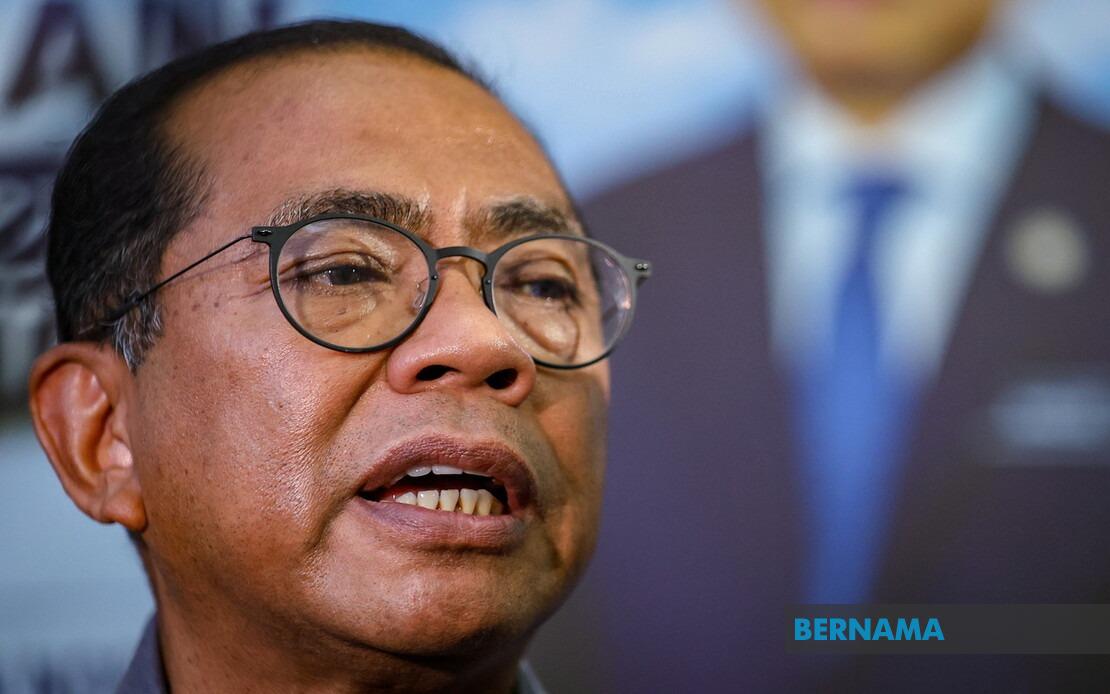
Defence Minister Datuk Seri Mohamed Khaled Nordin has commenced a two-day official visit to Vietnam, marking his inaugural trip to the Southeast Asian nation in his ministerial capacity. His arrival at Noi Bai International Airport in Hanoi signals Malaysia's commitment to reinvigorating defence partnerships across the region at a critical time when security cooperation has become increasingly vital to maintaining stability in one of the world's most strategically important waterways.
The visit represents a deliberate diplomatic effort to elevate bilateral defence relations beyond their current framework. During his stay, Mohamed Khaled is scheduled to engage with Vietnam's top echelon, including Prime Minister Le Minh Hung and Deputy Prime Minister and Minister of National Defence General Phan Van Giang. These high-level meetings underscore the significance Malaysia places on its military and strategic relationship with Hanoi, positioning defence ties as a cornerstone of the broader bilateral relationship.
The foundation for this enhanced cooperation was laid through the renewal of the Memorandum of Understanding on defence cooperation in December 2023, a development that both nations have embraced as evidence of their mutual resolve to deepen institutional defence frameworks. This agreement goes beyond symbolic gestures, establishing formal channels through which the two countries can coordinate on security matters, joint training exercises, and intelligence sharing. For Malaysia, such arrangements are particularly important given the region's evolving security landscape, where non-traditional threats ranging from maritime piracy to transnational terrorism require coordinated responses.
Historically, Malaysia and Vietnam have maintained cordial diplomatic relations, but defence cooperation between the nations has often remained undershadowed by their respective strategic partnerships with larger powers. The current momentum suggests a deliberate pivot toward strengthening the direct bilateral defence relationship, independent of third-party mediation. This approach aligns with broader Southeast Asian trends toward deepening intra-regional security cooperation and reducing strategic dependence on external actors.
For Malaysian policymakers, Vietnam presents both an important security partner and a fellow Association of Southeast Asian Nations member navigating complex geopolitical pressures. The two nations share concerns about maintaining freedom of navigation in contested waters and ensuring that regional disputes are resolved through peaceful, rules-based mechanisms. By strengthening defence ties with Vietnam, Malaysia reinforces its commitment to a multipolar, inclusive security architecture in Southeast Asia rather than one dominated by great power competition.
The timing of this visit also reflects Malaysia's broader strategic recalibration. As the nation continues to modernise its armed forces and address evolving security challenges, building relationships with experienced regional military powers becomes strategically prudent. Vietnam's military experience, derived from decades of regional engagement and modernisation efforts, offers valuable lessons and potential collaboration opportunities in areas ranging from naval operations to defence technology development.
Beyond the bilateral dimension, Mohamed Khaled's visit carries implications for regional stability more broadly. Malaysia's proactive engagement with Vietnam sends a signal that Southeast Asian nations are taking ownership of their security environment rather than passively waiting for external powers to shape outcomes. This assertiveness is particularly important in an era where great power rivalry threatens to destabilise the region's carefully maintained balance.
The meetings scheduled during the visit will likely explore concrete areas of defence cooperation, potentially including joint military exercises, personnel exchanges, training programmes, and possibly defence industry collaboration. These practical arrangements transform the renewed memorandum from a symbolic document into a functioning operational framework that benefits the defence establishments of both nations.
For Malaysian readers, this diplomatic engagement demonstrates how the country continues to assert its interests through multilateral and bilateral channels simultaneously. Rather than relying solely on larger security partners, Malaysia is methodically building a network of defence relationships across Southeast Asia, creating redundancy and strategic flexibility in its security architecture. This approach acknowledges that regional stability ultimately depends on the collective commitment of Southeast Asian nations to maintain peaceful coexistence and cooperative security arrangements.
The visit also carries implications for how Malaysia positions itself within competing visions for the region's future. By strengthening ties with Vietnam, Malaysia reinforces its commitment to an inclusive regional order where all nations, regardless of their historical backgrounds or current geopolitical alignments, can cooperate on matters of mutual security concern. This inclusive approach has long been central to Malaysia's foreign policy philosophy and continues to guide its defence diplomacy.
As Mohamed Khaled engages with Vietnamese counterparts over the coming days, both nations will likely identify specific projects and initiatives that can be launched or expanded in the coming months and years. These could range from educational exchanges for military personnel to coordinated maritime security operations in shared waters. The substantive outcomes of these discussions will ultimately determine whether this visit represents a genuine inflection point in Malaysia-Vietnam defence relations or simply another iteration of routine diplomatic engagement.

