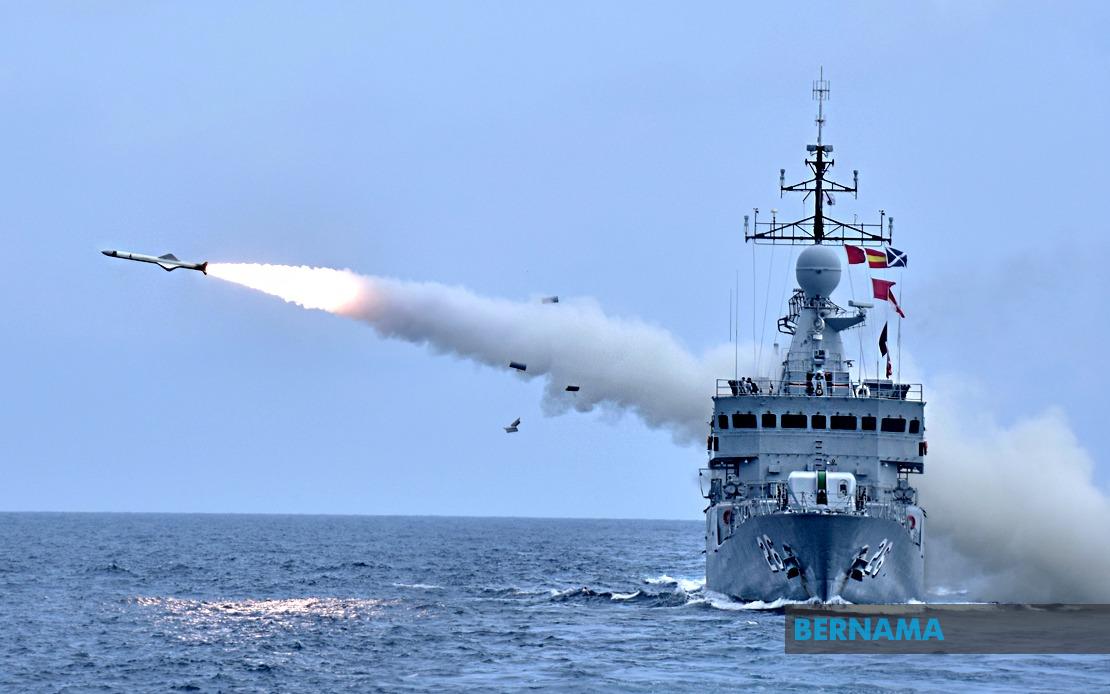
Malaysia's accelerating defence spending reflects a broadening security calculus that extends well beyond the traditional regional power dynamics that have long dominated Southeast Asian strategic thinking. Defence Minister Datuk Seri Mohamed Khaled Nordin outlined this multifaceted approach in recent remarks, explaining that the government's approach to military expenditure encompasses a constellation of threats that have fundamentally reshaped how officials assess national security requirements. The shift represents a departure from conventional assessments that focused primarily on immediate territorial concerns and interstate relations within the region.
Non-traditional security challenges have emerged as significant drivers of policy recalibration. Cyber attacks and electromagnetic warfare represent new frontiers in military conflict that previous generations of defence planning did not adequately anticipate. Equally concerning are mass misinformation campaigns that blur the line between military and information warfare, creating vulnerabilities in civilian populations and state institutions alike. These threats operate across borders instantaneously and require defence capabilities that did not exist a decade ago. The Malaysian government's recognition of these dimensions signals a maturation in threat assessment methodology, though it also reflects the genuine complexity that modern defence establishments must navigate.
The geopolitical environment has undergone substantial transformation, with intensified strategic competition among major powers creating knock-on effects throughout Southeast Asia. Datuk Seri Mohamed Khaled observed that increased military activity and presence in regional waters and airspace have become more pronounced as global superpowers position themselves for future competition. This phenomenon is not unique to Malaysia—it affects all smaller nations attempting to maintain strategic autonomy amid great power contestation. The Defence Minister was careful to frame Malaysia's position as reactive rather than provocative, emphasizing that the country has not singled out any particular nation as a threat. Instead, Malaysia confronts a fundamentally altered security landscape where the presence of multiple military actors operating in confined geographical spaces naturally elevates risks of unintended escalation.
The mechanics of deterrence have become more precarious in this environment. When one major power augments its military capabilities or presence, others respond in kind, creating a self-reinforcing cycle that Malaysia must navigate carefully. The potential for miscalculation has correspondingly increased. A minor incident in crowded waters or contested airspace could rapidly spiral into something far more serious when numerous military assets operate in proximity to one another. This structural reality justifies elevated defence preparedness, independent of any bilateral dispute between Malaysia and its neighbours. The government's concern is not anchored in paranoia but in rational assessment of probabilistic risk.
Developments in the southern Philippines, particularly in areas proximate to Sabah, exemplify how regional incidents can trigger wider security implications. The Defence Minister acknowledged that even incidents not directly involving Malaysia could necessitate Malaysian response if escalation threatened broader regional stability and South China Sea security. This perspective reflects an understanding that stability is indivisible—localized conflicts generate ripple effects across maritime domains that affect commerce, resource management, and strategic freedom of navigation. Malaysia's recognition of the Philippines' sovereign right to determine its own defence arrangements and partnerships demonstrates diplomatic maturity, even while the country monitors developments that could affect Malaysian interests.
Maintaining constructive bilateral relations with the Philippines remains essential to managing regional security. The Defence Minister emphasized the importance of open communication channels and mutual understanding between neighbouring countries. Malaysia does not view developments in Philippine defence policy or strategic alignments through a zero-sum lens. However, the capacity for miscommunication and misunderstanding requires constant diplomatic vigilance. Both nations share maritime boundaries and have overlapping concerns regarding security challenges, making continued dialogue a strategic imperative rather than merely a courtesy.
A critical aspect of Malaysia's strategic messaging is the explicit disavowal of alignment with any major power. The government faces pressure to choose sides amid Sino-American competition, yet it maintains that its defence modernization serves national interests rather than serving as a proxy for any external actor. This balancing act becomes increasingly difficult as strategic competition intensifies, but Malaysia's commitment to ASEAN centrality and non-alignment principles remains a cornerstone of its foreign policy. The Defence Minister's assertion that force development is not directed against China, the United States, the Philippines or any other nation reflects an effort to prevent misinterpretation of legitimate defence spending.
The modernization of the Malaysian Armed Forces has been an ongoing endeavour spanning decades, though the pace and scope of enhancement will accelerate. The government has articulated an intention to increase defence spending to 1.5 per cent of Gross Domestic Product by 2030, a gradual escalation that reflects long-term planning rather than panic-driven reaction. Prime Minister Datuk Seri Anwar Ibrahim indicated that substantial additional resources—potentially ranging from hundreds of millions to billions of ringgit—may be necessary to acquire the platforms and systems Malaysia requires for contemporary security challenges. This magnitude of investment requires careful budgetary management and demonstrates the seriousness with which the government views evolving threats.
Specific focus on strategic locations such as Pulau Layang-Layang underscores Malaysia's commitment to reinforcing its territorial presence and defence infrastructure. The Defence Minister characterized these efforts as expressions of national sovereignty and resource protection rather than provocative assertions against particular neighbours. Control of maritime territory and the ability to project presence across territorial waters represent fundamental requirements for any maritime nation. Malaysia's efforts to strengthen its position in these areas reflect standard behaviour by coastal states seeking to ensure their interests are protected and their voice is heard in regional discourse.
The South China Sea remains a critical arena requiring multilateral restraint and commitment to peaceful resolution mechanisms. Malaysia emphasizes the importance of the Code of Conduct negotiations, which aim to establish predictable rules of engagement and reduce the probability of escalatory incidents. The country has anchored its approach in support for ASEAN centrality, believing that the association's collective voice provides the most effective mechanism for maintaining regional peace. Malaysia's advocacy for dialogue and diplomatic solutions, even amid territorial disagreements and overlapping maritime claims, reflects a pragmatic understanding that military solutions produce no winners in a region as economically interdependent as Southeast Asia.
The government pursues a dual-track strategy that balances strength with restraint. Building sufficient defence capabilities protects national sovereignty and reassures the population that the state can respond to security challenges. Simultaneously, Malaysia advocates vigorously for stability, dialogue, and diplomatic solutions that reduce zero-sum thinking among regional powers. This approach requires sophisticated statecraft and political will, as it demands investment in military capabilities while paradoxically arguing that military competition should not drive regional outcomes. For Malaysian policymakers, the challenge lies in credibly demonstrating commitment to both dimensions of this strategy without appearing inconsistent or weak.
The implications for Malaysia's defence planning extend beyond immediate military concerns to encompass the broader health of Southeast Asian regionalism. The ASEAN framework has historically provided smaller states with a mechanism to constrain great power competition and preserve policy autonomy. Malaysia's defence spending decisions must be calibrated to support this framework rather than undermine it through competitive arms buildups that might trigger security dilemmas among member states. The country's emphasis on maintaining open lines of communication with neighbours and sustaining ASEAN-centred dialogue mechanisms reflects understanding that military preparedness divorced from diplomatic engagement could prove counterproductive.
Looking forward, Malaysia faces the difficult task of maintaining defence readiness in an increasingly complex security environment while avoiding either strategic paralysis or escalatory dynamics that could prove destabilizing. The Defence Minister's recent statements suggest that the government has consciously thought through these tensions and attempted to articulate a position that acknowledges legitimate security concerns while reaffirming commitment to peaceful resolution and regional stability. Whether this balancing act can be sustained as geopolitical competition intensifies will depend on continued restraint from all parties and the success of multilateral mechanisms like the ASEAN-centred dialogue processes that have historically provided stability in the region.

