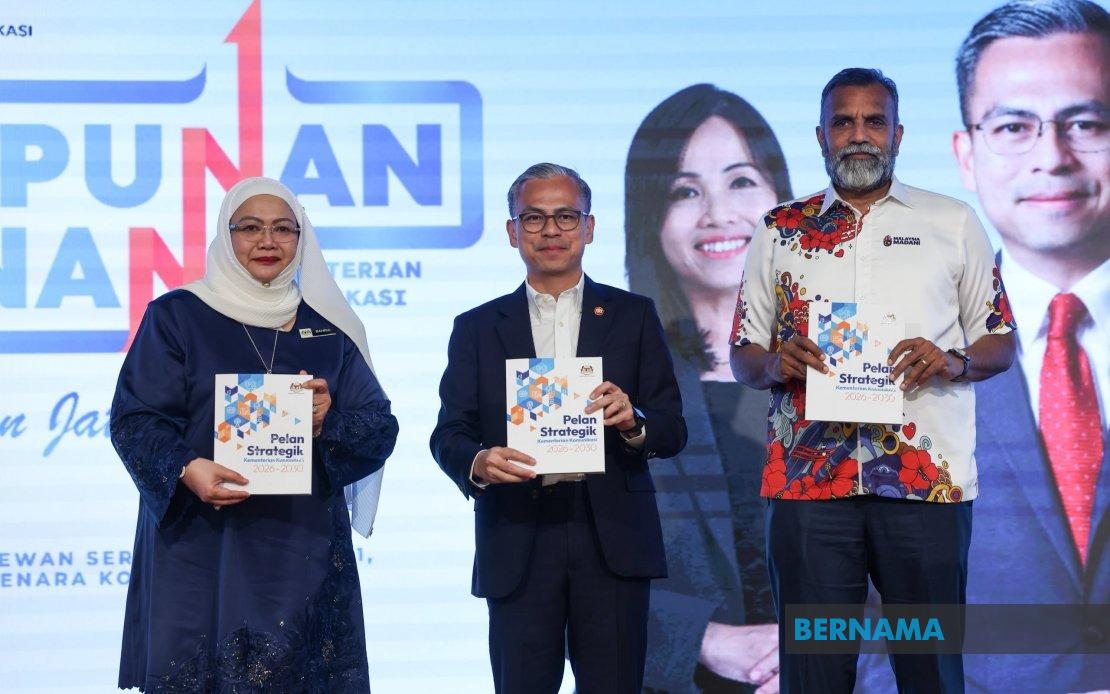
Communications Minister Datuk Seri Fahmi Fadzil has unveiled an ambitious five-year strategic roadmap designed to reshape Malaysia's digital landscape and information ecosystem. The Communications Ministry Strategic Plan (PSKK) 2026-2030, launched in Putrajaya on July 20, establishes a comprehensive framework for implementing policies and programmes that directly support the 13th Malaysia Plan and the broader Malaysia MADANI transformation agenda. The plan will govern not only the ministry's own initiatives but also coordinate efforts across all subordinate agencies and departments, creating a unified approach to tackling the nation's communications challenges.
At its core, the strategic plan identifies three interconnected priorities that Fahmi characterises as fundamental to Malaysia's digital competitiveness. Improving internet accessibility and quality represents the first pillar, acknowledging that digital connectivity remains unequal across urban and rural regions. The second priority focuses on nurturing Malaysia's creative industries by supporting the production of distinctive, high-quality content that can compete on regional and global stages. The third emphasises strengthening information integrity, a critical concern in an era when misinformation spreads rapidly through digital channels. These three pillars directly address recurring complaints and concerns that the ministry regularly encounters from businesses, content creators, and citizens.
The overarching vision articulated in the PSKK 2026-2030—'A Connected, Informed and Creative Malaysia'—reflects an understanding that digital development requires simultaneous progress across infrastructure, culture, and governance. Rather than pursuing these objectives independently, the ministry's framework integrates them as mutually reinforcing elements of a coherent national strategy. This holistic approach acknowledges that connectivity without reliable information and cultural content remains incomplete, while creative industries cannot flourish without robust digital infrastructure and media literacy.
To operationalise this vision, the ministry has established four strategic thrusts that each targets a specific dimension of the communications ecosystem. The first thrust concentrates on strengthening the national communications infrastructure to ensure that all Malaysians—regardless of geography or economic circumstances—can access reliable, secure, and high-quality connectivity. This addresses a persistent digital divide that has limited opportunities for rural communities and smaller enterprises. The second thrust specifically targets the film and music industries, recognising that Malaysia possesses untapped creative potential that could generate significant economic value and cultural influence if properly supported and developed.
The third strategic thrust addresses information systems and governance, proposing an integrated approach to how government communicates with citizens and how reliable information circulates through society. This responds to growing concerns about disinformation, polarisation, and the fragmentation of shared factual frameworks. By promoting coordinated, transparent, and inclusive information delivery, the ministry aims to rebuild public trust in institutions and create space for constructive dialogue. The fourth thrust emphasises modernising service delivery within the ministry itself, ensuring that government communications functions become more responsive, efficient, and genuinely oriented toward serving public needs rather than purely advancing bureaucratic interests.
The plan encompasses 94 specific strategic programmes distributed across these four thrusts, providing granular detail for implementation. This ambitious scope reflects the recognition that meaningful progress on communications infrastructure, content creation, and information integrity requires sustained, multi-faceted effort across numerous initiatives. Each programme has presumably been assessed for feasibility, resource requirements, and potential impact, though the communications released so far do not specify individual programme details or timelines.
For Malaysia's technology and creative sectors, this roadmap carries significant implications. The explicit commitment to developing a sustainable and competitive creative industry ecosystem suggests that policymakers view cultural content creation not merely as artistic expression but as an economic engine comparable to manufacturing or services. By establishing dedicated strategic attention to film and music industries, the ministry signals that these sectors deserve investment, regulatory support, and market development comparable to traditional priority areas. This positioning could attract both foreign and domestic capital into Malaysian creative ventures.
The plan's emphasis on communication connectivity aligns with Malaysia's broader economic ambitions during a period when digital transformation has become inseparable from competitiveness. As regional peers accelerate their digital infrastructure development and create regulatory frameworks favourable to emerging technologies, Malaysia's systematic approach to planning and coordination could prove advantageous. However, successful execution depends on sustained funding, political commitment across changing governments, and effective coordination among multiple agencies that may have competing priorities.
The reference to addressing issues 'most frequently raised with the Communications Ministry' suggests that this plan emerged partly from accumulated feedback and complaints. Citizens, businesses, and media professionals have persistently raised concerns about internet speeds and reliability in non-urban areas, the challenges facing local creators in reaching audiences and monetising their work, and the proliferation of unverified information online. By integrating these persistent concerns into a formal strategic framework, the ministry acknowledges their legitimacy while committing to systematic responses rather than ad-hoc interventions.
Implementation of the PSKK 2026-2030 will occur within Malaysia's complex federal structure, where communications policy intersects with state government responsibilities for certain infrastructure matters. The plan's success may ultimately depend on whether the ministry can effectively coordinate with state-level authorities, persuade them to align their own initiatives with the national framework, and secure consistent budget allocations across electoral cycles. The explicit alignment with Malaysia MADANI suggests high-level political endorsement, though sustained implementation requires converting that political support into sustained resource allocation and bureaucratic capacity.
Regionally, Malaysia's strategic communications plan arrives as Southeast Asian nations grapple with similar challenges around digital equity, content competitiveness, and information governance. The approach outlined in the PSKK 2026-2030 may offer insights or models that other ASEAN members find instructive as they develop their own frameworks. Conversely, regional developments in digital regulation, content creation platforms, and cross-border information flows will inevitably shape the environment within which Malaysia's plan operates, potentially requiring periodic adjustments to remain aligned with evolving technological and geopolitical realities.

