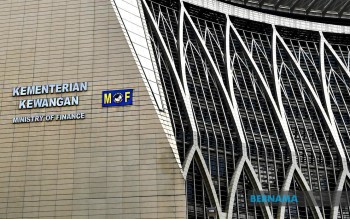
Malaysia's Buy Now, Pay Later market has demonstrated robust growth, with active account holders climbing to eight million in the first quarter of 2026, according to figures released by the Ministry of Finance. The expansion underscores the deepening penetration of flexible payment solutions across Malaysian consumers, reflecting a significant shift in how households manage short-term credit needs. This surge in adoption places the BNPL segment among the fastest-growing financial services in the country, even as traditional retail credit channels remain stable.
The outstanding balance tied to BNPL transactions totalled RM5.3 billion during the same period, presenting a snapshot of the sector's financial footprint within the broader Malaysian economy. This represents the accumulated amount owed by consumers across all active BNPL arrangements, spanning everything from retail purchases to service payments. The Ministry of Finance's disclosure of these figures offers transparency into a market segment that has evolved rapidly over recent years, transitioning from niche fintech offering to mainstream consumer finance mechanism.
While the sector's growth appears striking in absolute terms, the delinquency profile reveals relatively healthy credit quality. Total overdue amounts stood at RM181 million, representing 3.4 per cent of the total outstanding BNPL balance. This default rate sits comfortably below levels typically observed in traditional consumer lending, suggesting that BNPL users maintain stronger repayment discipline than some credit segments. The low impairment ratio may reflect both the shorter repayment cycles characteristic of BNPL products and the demographic composition of users, who tend to skew younger and more digitally engaged.
Contextualising BNPL within the nation's household debt ecosystem reveals its modest but growing presence. As of the end of 2025, BNPL obligations accounted for approximately 0.3 per cent of total household debt in Malaysia, a measurement that illustrates how the sector, despite rapid expansion, remains a relatively small component of consumers' overall credit obligations. This compartmentalisation suggests that households have not yet substituted BNPL for traditional credit sources at scale, but rather have added it as a supplementary payment method for specific transaction types. The continued stability of household debt ratios, even as BNPL usage proliferates, indicates that consumers are deploying these services judiciously rather than overextending through alternative credit channels.
Regulatory oversight of the BNPL sector has entered a new phase with the Consumer Credit Commission's rollout of comprehensive licensing and conduct standards. These frameworks establish baseline requirements encompassing regulatory compliance, governance structures, and consumer protection mechanisms that all BNPL operators must satisfy to maintain or obtain authorisation. The introduction of such standards marks a maturation in the regulatory approach toward fintech-driven consumer finance, moving from light-touch oversight toward more formalised supervision. The SKP's proactive stance reflects growing recognition that rapid innovation in credit distribution requires parallel advancement in consumer safeguards.
The licensing application window commenced on June 1, 2026, setting in motion a critical transition period for the BNPL industry. Existing providers face a November 30, 2026 deadline to lodge applications demonstrating compliance with the newly articulated standards. This compressed timeline—a six-month window—suggests that regulators are balancing the need for swift implementation against the practical constraints of provider preparation. For established BNPL operators, the deadline creates both urgency and opportunity, as compliance-ready firms gain competitive advantage while those unprepared may face operational restrictions or exit requirements.
The Consumer Credit Commission is actively engaging with BNPL providers throughout this transitional period, functioning as both regulator and facilitator. This collaborative approach acknowledges the complexity of translating abstract regulatory standards into practical operational compliance, particularly for companies whose technology platforms, data governance, and customer service processes may require substantial restructuring. The SKP's intensive engagement signals that regulators view provider cooperation as integral to successful implementation, rather than viewing licensing primarily as an enforcement mechanism for non-compliant operators.
For Malaysian consumers, the regulatory formalisation of BNPL markets carries both visible and latent implications. Enhanced standards around data protection, dispute resolution, and transparent fee disclosure should strengthen the consumer experience, particularly for less-sophisticated users who may lack understanding of BNPL mechanics. The licensing framework also creates barriers to market entry, which while potentially reducing consumer choice in the short term, should elevate the overall quality and trustworthiness of available providers. Consumers can reasonably expect that licensed BNPL operators have demonstrated minimum competency in areas such as credit assessment, fraud prevention, and complaint handling.
The regulatory evolution also intersects with broader financial inclusion objectives within Southeast Asia. BNPL services have proven particularly effective at extending credit access to underbanked populations, including younger consumers, informal sector workers, and those lacking traditional credit history. By formalising this channel through licensing rather than banning or restricting it, Malaysia has chosen a path that seeks to harness BNPL's inclusion benefits while mitigating associated risks. This approach differs from some regional counterparts that have imposed stricter constraints, offering a model that may prove instructive for other Southeast Asian regulators grappling with similar fintech challenges.
Looking forward, the licensing implementation will likely reshape competitive dynamics within Malaysia's BNPL landscape. Smaller or undercapitalised providers may struggle to meet regulatory requirements, potentially consolidating the sector around larger, better-resourced operators. This consolidation could enhance systemic stability and consumer protection while potentially reducing market competition. The Ministry of Finance and Consumer Credit Commission face the ongoing challenge of calibrating regulatory intensity to prevent excessive market concentration whilst ensuring that only genuinely compliant providers remain operational. The coming months will prove revealing in terms of how many existing BNPL operators successfully navigate the licensing process and whether the framework achieves its intended balance between innovation and protection.

