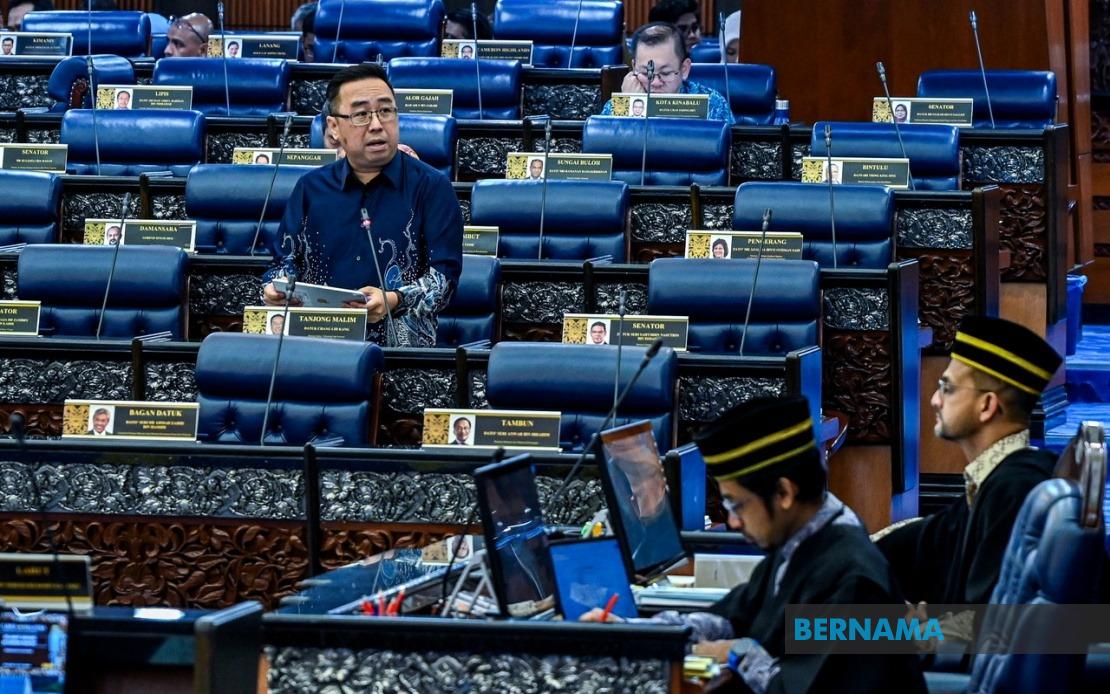
Malaysia is plotting an ambitious trajectory to bring homegrown advanced semiconductor packaging technology to market within a two-year window, marking a significant pivot toward higher-value manufacturing in the country's chipmaking sector. Science, Technology and Innovation Minister Datuk Chang Lih Kang told Parliament that the government's Malaysia Science Endowment (MSE) initiative will channel RM185 million into a consortium of five domestic firms and state institutions, designed to transform research achievements into commercially viable products that can compete globally.
The financial backing represents a deliberate move to address a critical vulnerability in Malaysia's semiconductor ecosystem. While the country has long been a hub for chip assembly and testing, the packaging stage—where completed wafers are sealed and prepared for distribution—remains dominated by international players. By developing indigenous expertise and technology in advanced packaging, Malaysia seeks to capture greater value from its position in the regional and global semiconductor supply chain, reducing dependence on foreign partners for this crucial manufacturing phase.
At the heart of this strategy lies a carefully calibrated methodology centred on technology readiness levels. The RM185 million allocation is structured as grants specifically designed to elevate the consortium's Technology Readiness Level (TRL) from its current standing at TRL 5—where the technology functions in a controlled research environment—to TRL 9, the stage at which products are deemed ready for full commercial deployment. This progression reflects international best practices in bringing innovations from laboratory benches to factory floors, ensuring adequate testing and refinement before exposing nascent technologies to market pressures.
The two-year capacity-building phase serves multiple interconnected objectives beyond merely polishing a technology. During this critical window, participating local companies will receive structured support to develop the operational competencies required for advanced packaging activities. This includes training workforces in sophisticated manufacturing processes, establishing quality control procedures aligned with international standards, and building organisational cultures capable of sustaining innovation. The consortium model itself encourages knowledge sharing among members while enabling individual firms to develop competitive differentiation, creating a healthy ecosystem rather than dependency on a single technology vendor.
Minister Chang's emphasis on transitioning toward industry autonomy after the two-year period reflects sophisticated thinking about sustainable industrial development. By explicitly planning to withdraw government support and require consortium members to secure their own customers and financing, the initiative avoids creating zombie companies sustained indefinitely by public funds. This "tough love" approach acknowledges that true commercialisation demands market discipline and entrepreneurial initiative that subsidies can inadvertently erode. The handover strategy forces companies to build genuine commercial viability rather than merely surviving on government patronage.
The advanced packaging technology emerging from this programme carries implications far beyond Malaysia's borders. Next-generation semiconductor applications including artificial intelligence, data centre infrastructure, high-performance computing systems, autonomous vehicles, 5G telecommunications networks, and quantum computing all depend on sophisticated packaging solutions. As these sectors expand globally, Malaysia positions itself to capture market share in a bottleneck stage of production. The strategic timing is particularly acute given escalating geopolitical competition over semiconductor supply chain resilience and the push by developed economies to diversify away from concentration in Taiwan and other single-jurisdiction dependencies.
The initiative also carries broader significance for Malaysia's technological independence and intellectual property development. Successfully commercialising locally-developed packaging technology would represent a watershed moment in the country's evolution from a contract manufacturer to an innovator and technology creator. Intellectual property generated through this programme could yield licensing revenues, establish Malaysian companies as technology suppliers to international peers, and attract further investment into the nation's semiconductor ecosystem. This shift from assembly-and-test work toward design and innovation-driven manufacturing represents the kind of structural economic upgrading that policymakers have long pursued.
Locating this programme within the Malaysia Science Endowment framework provides institutional scaffolding specifically designed for technology commercialisation missions. Unlike traditional government research funding that often ends when papers are published, the MSE explicitly targets applications and market deployment. This institutional design helps explain how the RM185 million grant is structured to meet distinct phases of development rather than being allocated as a single lump sum, ensuring resources align with actual progress toward commercialisation milestones.
The consortium approach warrants particular attention as a governance mechanism. By bringing together multiple private companies alongside government research institutions, the partnership structure creates both competitive pressure and knowledge circulation. Smaller or younger companies gain access to technology and capabilities they might struggle to develop independently, while established players contribute manufacturing expertise and market connections. Government institutions provide research depth and intellectual resources without becoming bottlenecks to commercial decision-making.
For Malaysia's broader economic strategy, this initiative represents a deliberate effort to deepen participation in semiconductor value chains. The country has historically concentrated on lower-margin assembly work; shifting upstream toward advanced packaging and eventually toward design represents a natural industrial progression that could substantially improve export revenues and job quality. Success here could trigger similar initiatives in related high-technology sectors where Malaysia possesses foundational capabilities but lacks world-leading specialisation.
The success of this programme will ultimately depend on whether the RM185 million investment succeeds in bridging the notorious "valley of death" where promising laboratory technologies fail to achieve commercial traction. While the technology readiness framework and capacity-building timeline provide a credible roadmap, execution challenges remain substantial. The consortium must maintain coherent focus across diverse stakeholder interests, attract and retain sophisticated talent in competitive regional labour markets, and ultimately convince customers to adopt their packaging solutions against entrenched incumbents with decades of operational experience and vast economies of scale.

