Dataran Putrajaya transformed into a sea of national colours and patriotic sentiment on August 31 as Malaysia marked its 69th year of independence. The sprawling plaza in the administrative capital hosted tens of thousands of citizens spanning all age groups and ethnic backgrounds, their collective presence underscoring the enduring resonance of Merdeka Day celebrations across the Malaysian society. The gathering demonstrated sustained public enthusiasm for the annual occasion, with attendees lining the parade route to witness the official ceremonies and festivities organised under the unifying theme of "Malaysia MADANI: Kesejahteraan Dinikmati", emphasising prosperity shared across the nation.
Putrajaya's selection as the venue represented a continuation of the capital's prominent role in hosting national-level independence commemorations. The Federal Administrative Centre has functioned as the primary stage for these celebrations on multiple occasions throughout the past two decades, most recently in 2025, with previous hosting duties spanning 2003, 2005, and several consecutive years from 2018 onwards. This pattern reflects both the symbolic significance attributed to Putrajaya's purpose-built institutional architecture and the logistical advantages the city offers for orchestrating large-scale national events accessible to participants from across the country.
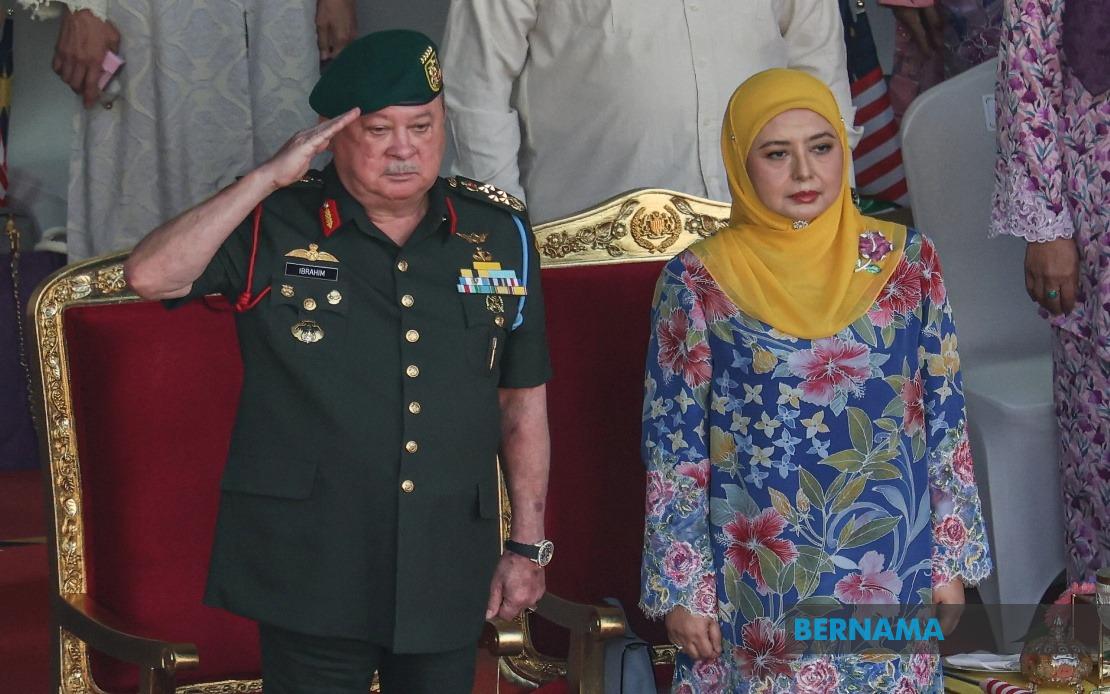
The ceremonial proceedings commenced with the arrival of Prime Minister Datuk Seri Anwar Ibrahim and his wife, Datuk Seri Dr Wan Azizah Wan Ismail, who took their positions at the royal stage shortly before 8 am, their entrance accompanied by the traditional "Hormat Perdana" composition. The formalities intensified when Their Majesties Sultan Ibrahim and Raja Zarith Sofiah ascended the stage to preside over the national celebration, a moment marked by a dramatic display of aerial nationalism as five military helicopters carrying the Jalur Gemilang executed a coordinated flypast. Simultaneously, the national anthem Negaraku and the royal honour march "Hormat Diraja" resonated across the venue, establishing the ceremonial tone for the day's proceedings.
The gathering assembled a cross-section of Malaysia's political and diplomatic establishment. Deputy Prime Minister Datuk Seri Dr Ahmad Zahid Hamidi stood alongside various Cabinet portfolios, with Communications Minister Datuk Seri Fahmi Fadzil holding the additional responsibility of chairing the organising committee for both the 2026 National Day and concurrent Malaysia Day festivities (HKHM). International representation through diplomats and foreign delegates added a cosmopolitan dimension to the domestic celebration, reinforcing Malaysia's positioning as an open, inclusive nation proud of its multicultural identity and international standing.
The official ceremony unfolded through a sequence of traditional rituals imbued with constitutional and patriotic significance. Following the collective rendering of Negaraku, the Jalur Gemilang ascended the flag pole to a ceremonial 14-gun salute, each volley symbolising one of Malaysia's constituent states. The 41st Battery of the Royal Artillery Regiment (Ceremonial), commanded by Major Hafizan Mat Ghani, executed this symbolic honoring of the federation's territorial composition with precision, connecting the physical act of flag-raising to the geographic and political foundations of the Malaysian state.
The Rukun Negara recitation emerged as a focal point for emphasising national unity and shared principles. Malaysian Fire and Rescue Department Deputy Commissioner Datuk Abdul Razak Muda led this collective affirmation of the nation's foundational pillars, joined by 69 personnel from JBPM and sign language interpreter Nur Alyanatasha. The symbolic decision to involve 69 uniformed service members reflected numerical intentionality, linking the human participants directly to the anniversary milestone being commemorated. The inclusion of professional sign language interpretation demonstrated an increasingly conscious effort to ensure inclusive participation across citizens with varying accessibility requirements, expanding the symbolic community gathered around national principles.
The emotional zenith arrived with the sevenfold proclamation of "Merdeka" that reverberated across Dataran Putrajaya following the Rukun Negara recitation. This moment catalysed visible expressions of patriotic sentiment as spectators throughout the plaza hoisted their personal and portable Jalur Gemilang flags in unison, creating a visual manifestation of collective national identification and pride. The invocation of independence constituted far more than ceremonial recitation; it represented a renewal of the compact between citizens and state, a periodic affirmation of the liberation achieved more than six decades prior and the ongoing commitment to sustaining and advancing the nation's development and prosperity.
For Malaysian audiences and regional observers, National Day celebrations serve multiple contemporary functions beyond historical commemoration. These gatherings provide platforms for assessing national cohesion during periods of domestic political complexity or economic adjustment, offer opportunities for government communication of policy priorities and national direction, and reinforce cultural and civic identity across increasingly diverse and digitally fragmented populations. The "Malaysia MADANI" thematic framing positioned the 2026 celebration within the broader government development agenda emphasising shared prosperity and inclusive growth, connecting ceremonial patriotism to substantive policy commitments regarding economic distribution and social welfare.
The logistics and scale of hosting tens of thousands of participants at Dataran Putrajaya reflect the institutional capacity and planning expertise accumulated through repeated iterations of these celebrations. The coordination required across security, traffic management, ceremonial protocols, accessibility provisions, and public health considerations demonstrates sophisticated event administration capabilities within Malaysia's governance structures. Such proficiency carries particular relevance for a Southeast Asian nation frequently positioning itself as a regional hub capable of managing major international and domestic gatherings.
The participation patterns visible across Merdeka Day celebrations offer potential indicators of public sentiment and civic engagement trends within Malaysian society. The sustained and enthusiastic attendance across multiple age groups and ethnic communities suggests that independence commemoration retains meaningful cultural resonance nearly seven decades after national formation, though evolving generational perspectives and demographic changes may gradually reshape the specific symbolic valences and participatory motivations driving attendance at such events. Contemporary National Day celebrations must navigate the tension between preserving traditional ceremonial forms and remaining culturally relevant to younger cohorts engaging with nationalism through increasingly diverse and digital frameworks.
Looking forward, the selection of Putrajaya as the recurring venue for national-level National Day celebrations reflects confidence in the capital's symbolic and practical suitability for this role. The concentration of federal government institutions within the planned administrative centre creates coherent spatial relationships between the physical location of national commemoration and the institutional apparatus of governance. However, periodic rotation of venues or incorporation of regional celebrations throughout Malaysia might distribute the symbolic capital of independence commemoration more broadly and enhance engagement among populations in peripheral or underserved areas, particularly as Malaysia continues navigating questions of regional balance and inclusive national narrative formation.

