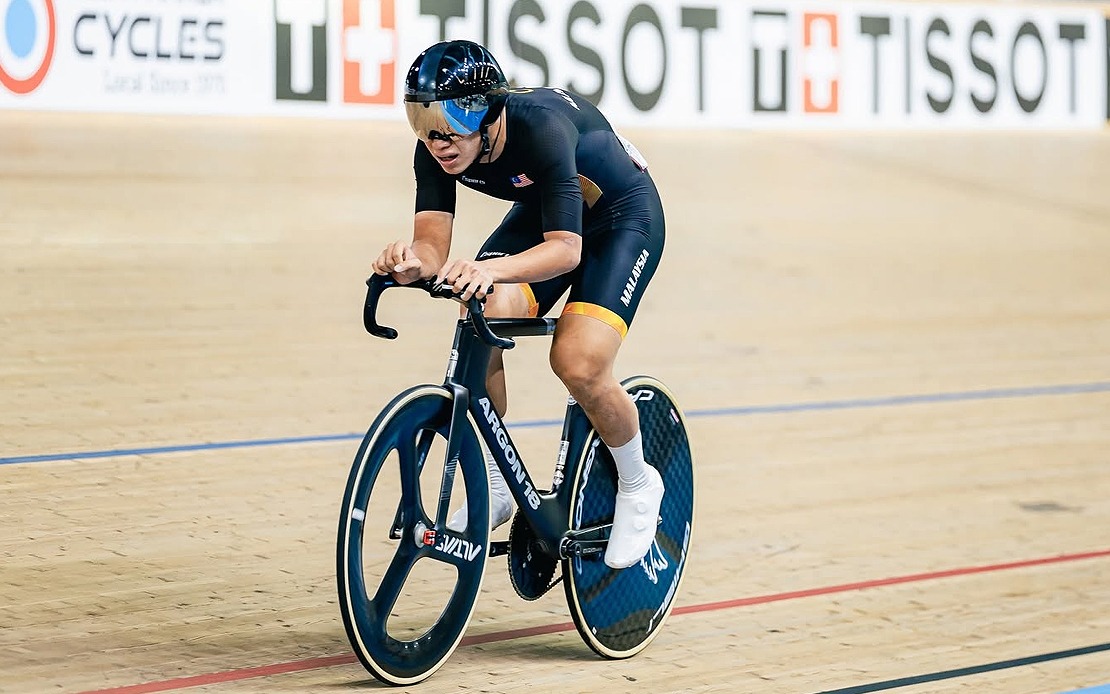
Malaysian track cyclist Lau New Joe is in stable condition and has received medical clearance to return home following a multi-rider collision that marred his debut appearance at the 2026 Glasgow Commonwealth Games. The incident occurred during the men's 10-kilometre scratch race final at the Sir Chris Hoy Velodrome on Saturday, when nine riders were involved in a crash mere moments before the final lap commenced, just as the field was accelerating towards the finish line.
Dr Kamarul Hashimy Hussein, the Malaysian contingent's chief medical officer, provided a detailed account of the athlete's medical assessment and treatment. New Joe was immediately transported to the Queen Elizabeth University Hospital's emergency department, where he underwent comprehensive diagnostic imaging including a computed tomography scan and full-body X-rays. The good news came when initial CT imaging ruled out any internal bleeding within the cranial cavity, a critical concern in head trauma cases of this nature.
However, the collision did result in structural damage to New Joe's facial skeleton. The imaging revealed minor fractures to the facial bones, and emergency room physicians deemed the injuries significant enough to warrant specialist intervention. Maxillofacial specialists were consulted and two dental maxillofacial surgeons attended to the cyclist that evening, providing immediate treatment that extended from approximately 9 pm until 1 am. This swift specialist care demonstrates the medical protocols in place at major sporting events to manage trauma cases effectively.
Beyond the skeletal injuries, New Joe also suffered dental trauma that will require an extended treatment pathway. His fractured teeth necessitate multiple sessions of restorative and reconstructive work with maxillofacial specialists, representing a recovery process that will extend well beyond his initial return to Malaysia. The dental injuries, while not immediately life-threatening, could impact his return to competition timeline, as pain management and dental rehabilitation are typically prioritised before athletes resume intensive physical training.
Following his hospital discharge, New Joe was transferred back to the Malaysian team hotel to continue his recovery in a more comfortable environment. The National Sports Institute has assumed responsibility for orchestrating his ongoing medical care once he arrives back in Malaysia, ensuring continuity of treatment and preventing any gaps in his rehabilitation protocol. This coordinated approach reflects Malaysia's growing investment in comprehensive athlete support systems at major international competitions.
Psychological readiness represents an equally important component of New Joe's recovery trajectory, as medical teams recognise that traumatic incidents can leave lasting emotional impacts on athletes. Dr Kamarul emphasised that the cyclist possesses a formidable mental fortitude and a competitive drive that has remained undamped despite the accident. The NSI plans to provide psychological support services to help him process the incident and rebuild his confidence for future competition. His eagerness to return to racing, even while still recovering, underscores the mental resilience required at elite levels of track cycling.
The NSI's rehabilitation framework will encompass comprehensive physical assessments, with particular attention to monitoring his stamina and muscular endurance. These metrics are critical in track cycling, where explosive power output and sustained aerobic capacity directly determine performance outcomes. Only once medical clearance confirms he has regained peak conditioning will New Joe be permitted to resume competitive activity, a cautious but necessary approach given the severity of his injuries.
New Joe's medical team has expressed cautious optimism about his prospects for competing at the upcoming Asian Games, scheduled to commence on September 19 and conclude on October 4. The recovery window between now and that competition provides roughly six weeks for rehabilitation, physiotherapy, and gradual return to training. While this timeline presents both opportunities and constraints, it reflects the aspirational mindset that characterises Malaysia's medal-focused athletics programmes across major regional competitions.
The crash that claimed New Joe represents a sobering reminder of the inherent dangers in track cycling, particularly during scratch races where tactical intensity peaks as athletes jockey for position in the closing stages. His unconsciousness immediately following the impact necessitated emergency medical intervention, though he ultimately avoided the catastrophic injuries that multi-rider collisions at velodrome speeds can sometimes inflict. His discharge and clearance to fly represent successful outcomes from emergency medical protocols designed precisely for such scenarios.
Malaysia's track cycling programme has been gradually building momentum in recent Commonwealth and Asian Games cycles, and New Joe's participation represented part of that broader investment. Making his Commonwealth Games debut at Glasgow 2026, despite the unfortunate timing of his crash, places him among a cohort of Malaysian cyclists competing at sport's highest regional levels. His recovery and potential return to competition will be closely monitored by sports administrators and medical professionals as part of Malaysia's ongoing cycle sport development initiatives.

