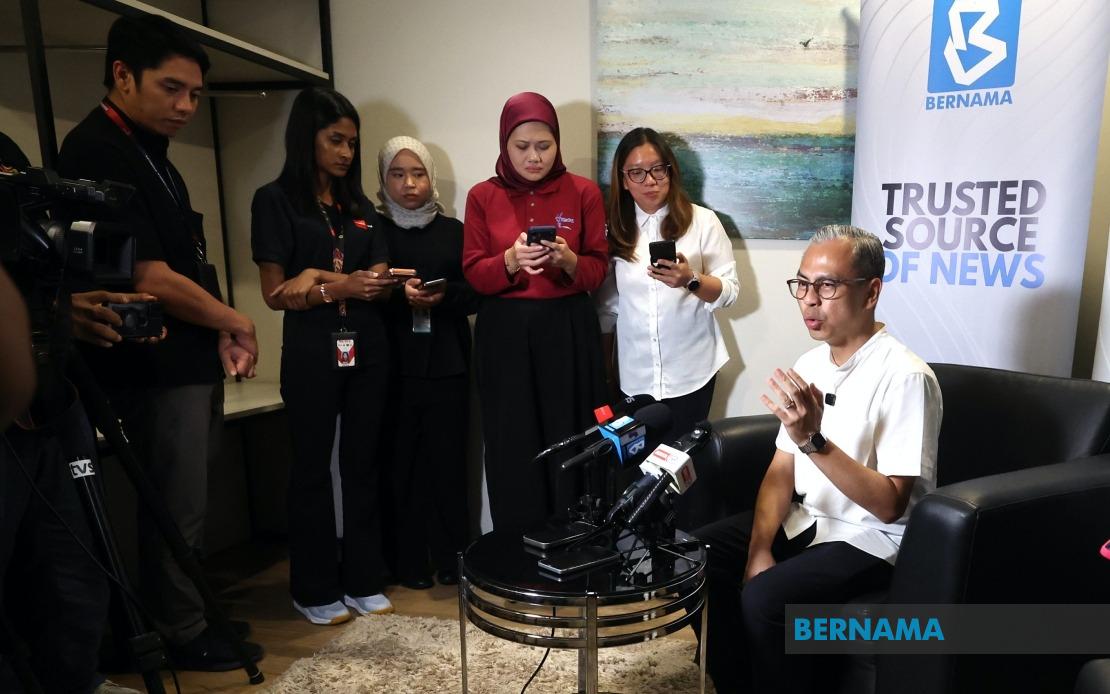
The Malaysian Media Council requires sustained development as an industry self-regulatory institution to maintain ethical standards across the country's evolving media landscape, Communications Minister Datuk Fahmi Fadzil said during a visit to the Malaysian National News Agency's operations centre in Johor Bahru. The initiative reflects growing recognition that media oversight in Malaysia must adapt to contemporary challenges, particularly the rise of digital platforms that operate beyond traditional journalistic frameworks.
Fahmi outlined government commitments to accelerate the council's establishment and expansion, noting that targeted assistance would be provided during the critical foundational period. This backing signals official recognition that self-regulatory bodies require institutional support to function effectively, particularly when competing with established media structures and global digital platforms operating in the Malaysian market. The minister emphasized that broadening the council's membership across traditional and digital media sectors would strengthen its capacity to address industry-wide challenges through independent mechanisms rather than relying solely on regulatory intervention.
Prime Minister Datuk Seri Anwar Ibrahim previously announced a procedural reform wherein complaints against journalists from recognised media organisations would be initially referred to the Malaysian Media Council rather than triggering automatic government action. This mechanism represents a philosophical shift toward allowing the industry to address concerns transparently and fairly before external intervention occurs. The arrangement aims to protect press freedom while establishing accountability through peer review, reducing scenarios where journalists face prosecution or investigation without proper industry scrutiny.
The government's push for expanded council membership carries particular significance for social media platforms, which currently operate under their own corporate guidelines often developed without specific consideration for Malaysia's cultural, religious, and social context. Fahmi highlighted the disconnect between international platform policies and local sensitivities, noting that content policies designed for global audiences frequently fail to account for Malaysian concerns. This gap creates challenges where sensitive information—such as details from active police investigations or identifiable information about minors—circulates widely across digital networks without local ethical constraints.
A recent incident in Banting illustrated these risks when a teenager stabbed a student and photographs of the victim alongside investigative details were rapidly shared across social media platforms. Such cases demonstrate how digital platforms' content moderation policies, while comprehensive in some areas, may inadequately address local privacy concerns, victim protection obligations, and investigative sensitivities that Malaysian journalists and regulatory bodies consider fundamental. Fahmi's reference to this case underscores the practical impact of having global platform policies applied uniformly across diverse jurisdictions with distinct legal and ethical frameworks.
The voluntary nature of the Malaysian Media Council's membership model distinguishes it from more prescriptive regulatory approaches common in some jurisdictions. By positioning self-regulation as an industry-led initiative rather than government-imposed mandate, the framework attempts to preserve editorial independence while establishing ethical guardrails. This approach appeals to traditional media organisations that have historically adhered to professional journalism standards, though persuading global technology companies to adopt locally-sensitive content policies remains substantially more challenging.
Social media platforms' potential integration into the council framework could facilitate dialogue between technology companies and Malaysian media stakeholders regarding content policies, misinformation detection, and vulnerable user protection. Such engagement might encourage platforms to develop region-specific guidelines acknowledging Malaysian legal requirements, religious considerations, and cultural values while maintaining their broader operational principles. For Malaysia specifically, this could improve the country's standing in international media freedom assessments, which increasingly evaluate how digital platforms engage with local media ecosystems and respect journalistic standards.
The strengthening of the Malaysian Media Council also addresses broader Southeast Asian trends whereby governments seek to enhance media industry autonomy while maintaining ethical standards. Self-regulatory mechanisms have proven effective in countries where robust industry participation exists, though they require sufficient independence from political pressure and adequate resources to investigate complaints fairly. Malaysia's approach reflects learning from experiences across the region where purely government-controlled media oversight has generated concerns about editorial interference, while entirely unregulated environments have produced misinformation and harm.
Fahmi's emphasis on the council's role in managing media-related issues independently reflects recognition that industry credibility depends on demonstrable autonomy from political influence. When self-regulatory bodies successfully adjudicate disputes between media practitioners and external parties, they strengthen both press freedom arguments and public confidence in media accountability. Conversely, councils perceived as captured by either government interests or powerful media organisations lose effectiveness and public trust, ultimately undermining the voluntary participation essential to self-regulation's success.
The participation of organisations present during Fahmi's Johor visit—including Bernama's leadership and the Malaysian Communications and Multimedia Commission—suggests coordinated stakeholder engagement in developing the council's operational framework. This multi-agency involvement indicates government recognition that effective media self-regulation requires input from news agencies, communications regulators, and information departments alongside independent media representatives. Such collaborative development can help establish credible procedures that address public concerns while protecting editorial discretion.
Moving forward, the council's ability to attract major social media platforms will likely depend on demonstrating that participation enhances rather than constrains these companies' operations in Malaysia. Platforms prioritize consistency across jurisdictions and resist localised policy divergence that creates operational complexity. However, reputational considerations and regulatory pressure may encourage participation, particularly if the council establishes streamlined complaint processes and provides platforms with clear guidance on local expectations regarding content moderation and user protection.

