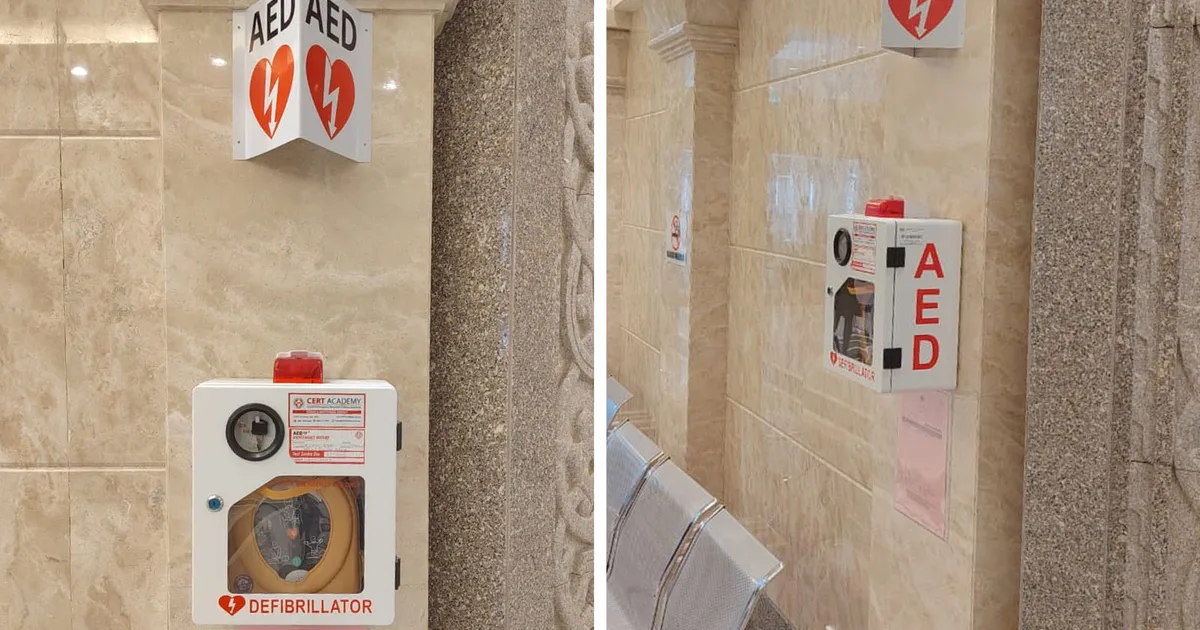
The Malaysian legal fraternity has intensified pressure on judicial authorities to equip all major court complexes with automated external defibrillators (AEDs), following the death of a litigant who experienced sudden cardiac arrest while present in a courtroom at the KL High Court. The incident has galvanised the profession to advocate for emergency medical preparedness across the nation's court infrastructure, raising broader questions about public safety in judicial venues that handle thousands of visitors daily.
The fatal cardiac episode underscores a critical vulnerability in Malaysia's court system. While courthouses function as bustling civic spaces hosting lawyers, litigants, witnesses, and members of the public for extended periods, many lack basic emergency medical equipment that has become standard in hospitals, airports, and shopping centres. The availability of an AED can dramatically improve survival rates during sudden cardiac events, with studies showing that prompt defibrillation within the first few minutes significantly enhances recovery prospects. The absence of such devices in court premises thus represents a measurable gap in emergency response capability.
Lawyers have framed this advocacy as both a practical safety measure and an ethical imperative rooted in duty of care. Court complexes are not merely administrative buildings but spaces where vulnerable individuals—the elderly, those with pre-existing health conditions, and those under psychological stress during litigation—congregate regularly. The judiciary's responsibility extends beyond adjudication to encompassing the physical welfare of all persons within court precincts. Installation of AEDs would constitute a proportionate and evidence-based response to a documented risk.
The proposal gains particular resonance in Malaysia given the rising prevalence of cardiovascular disease, which accounts for a substantial proportion of mortality across the region. Public health data consistently identifies cardiac events as a leading cause of sudden death in adults, often occurring without warning in individuals who may not have known they were at risk. Court premises, which attract citizens of all ages and health statuses, naturally encounter this risk profile. By contrast, many developed jurisdictions have mandated AED placement in public buildings as standard practice, viewing sudden cardiac arrest as a public health challenge requiring systemic preparedness.
The administrative challenge of implementing such a directive, however, warrants consideration. Malaysia operates a complex court hierarchy spanning multiple jurisdictional levels and geographic locations, from federal courts in Putrajaya to subordinate courts in every district. Installing AEDs would require coordinated effort across federal and state-level authorities responsible for different court tiers. Beyond procurement costs, effective implementation demands staff training in AED operation, regular device maintenance, and clear signage ensuring accessibility during emergencies. The federal judiciary would need to establish standardised protocols applicable across all venues.
Current gaps in judicial infrastructure preparedness extend beyond defibrillators. Many court buildings, particularly older facilities, lack adequate emergency medical support systems, trained first responders, or clear evacuation procedures. Some premises operate without regular access to medical personnel during business hours. A comprehensive response to the incident would ideally encompass broader emergency preparedness initiatives, including staff first aid certification, coordination with nearby medical facilities, and establishment of rapid emergency protocols that extend beyond equipment provision alone.
The lawyers' advocacy also reflects growing awareness within Malaysian civil society regarding public health infrastructure. Courts represent high-traffic public spaces where systemic improvements can yield substantial benefits. The momentum generated by this specific incident provides an opportune moment for judicial administrators to undertake broader safety audits and implement upgrades that address multiple vulnerabilities simultaneously. Such action would position Malaysia's judiciary as responsive to evidence-based public health imperatives.
Financially, the burden of AED installation and maintenance remains modest relative to overall court budgetary allocations. Modern AEDs are increasingly affordable and require minimal ongoing expenses beyond periodic battery and pad replacements. The cost-benefit calculation heavily favours implementation when weighed against the incalculable value of preventing even a single preventable death. This economic argument provides judicial administrators with straightforward justification for capital investment.
International comparative experience offers instructive precedent. Singapore, Hong Kong, and Australia have implemented comprehensive AED placement programmes across public buildings including courthouses, complemented by public awareness campaigns. These jurisdictions treat cardiac preparedness as integral to modern court administration rather than supplementary. Such regional examples could inform Malaysian policy development, providing tested models for implementation and demonstrating feasibility within comparable socioeconomic contexts.
The broader implication of this movement extends to institutional accountability and judicial responsiveness to public safety concerns. Courts derive legitimacy partly from public confidence in their operations and facilities. Demonstrating tangible commitment to visitor safety through infrastructure improvements reinforces this legitimacy while fulfilling basic pastoral obligations to all persons within judicial spaces. The profession's advocacy signals that legal practitioners recognise courts as civic institutions with responsibilities transcending pure adjudicatory functions.
Moving forward, the judiciary faces a clear pathway toward addressing this concern. Immediate steps could include commissioning a comprehensive safety audit of major court complexes, establishing timelines for AED installation, implementing staff training programmes, and developing emergency protocols. Such action would convert institutional tragedy into systemic improvement, exemplifying how adverse incidents can catalyse protective governance measures benefiting the broader public.

