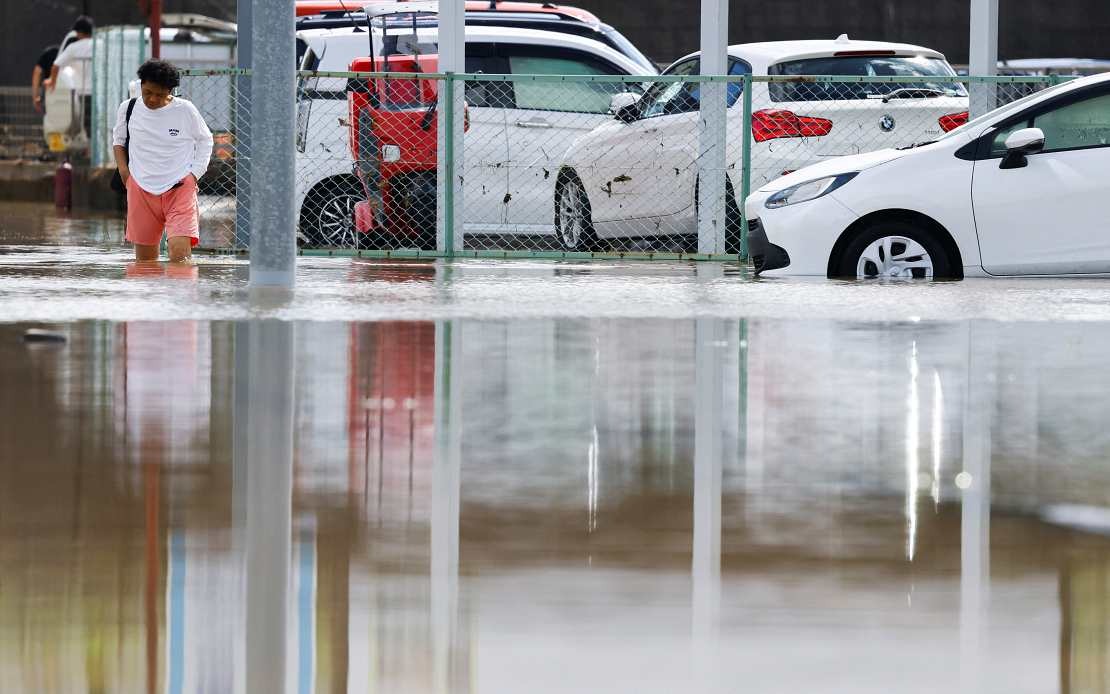
The Malaysian Embassy in Tokyo has issued a formal advisory urging all Malaysian nationals residing in or visiting Japan to curtail non-essential travel and exercise heightened caution as the Kanto region, particularly Chiba Prefecture, grapples with a unprecedented flooding disaster triggered by torrential rainfall. The guidance reflects growing concern about the scale of disruption and danger posed by weather conditions that have overwhelmed local infrastructure and emergency response systems across eastern Japan.
The impact on transportation networks has been catastrophic. Major road and rail connections serving the region have sustained extensive damage, effectively severing key supply lines and passenger routes that connect the broader metropolitan area to outlying communities. The disruption has proven particularly acute at Narita International Airport, where approximately 7,000 travellers found themselves unable to proceed with their journeys after flooding rendered access roads and rail connections impassable. Many passengers spent overnight periods in terminal facilities waiting for conditions to stabilize sufficiently to enable flights or ground transportation to resume.
The death toll underscores the severity of the meteorological event unfolding across eastern Japan. According to Kyodo News, at least eight fatalities have been confirmed in connection with the storms, though authorities have cautioned that the final count may rise as recovery and search operations continue in affected localities. The Japan Meteorological Agency has responded by issuing its highest-level alert—a Level 5 rain warning—across more than one-third of the municipalities in Chiba Prefecture located near Tokyo, signalling conditions of extreme danger requiring immediate protective action from residents and authorities.
Governmental response mechanisms have mobilized extensively in response to the scale of the emergency. Local authorities implemented evacuation orders affecting more than 400,000 residents at the height of the crisis, reflecting assessments that populations in low-lying and flood-prone areas faced acute risk from rising water levels and overflowing waterways. These orders represented precautionary measures designed to move vulnerable populations to higher ground and away from zones where flash flooding and landslides pose the greatest threat.
For Malaysian nationals contemplating travel within Japan during this period, the Embassy's advisory carries particular weight given the unpredictable nature of weather conditions and the cascading effects of transportation disruptions on inter-regional movement. The guidance specifically recommends that Malaysians remain distant from areas susceptible to flooding, including river valleys, coastal zones, and topographically depressed areas where water accumulation tends to occur. The emphasis on vigilance and continuous monitoring reflects the reality that conditions in affected zones may deteriorate with minimal warning as additional rainfall continues.
The Malaysian Embassy has directed nationals to remain alert to official pronouncements from Japanese authorities and to track updates from the Japan Meteorological Agency, which provides real-time information regarding weather warnings, precipitation forecasts, and changes in alert levels. The agency's English-language website (www.jma.go.jp/jma/indexe.html) offers accessible information for foreign residents unfamiliar with Japanese-language advisory systems. This guidance helps ensure that Malaysians can receive timely notice of conditions requiring shelter-in-place measures, evacuation protocols, or the reopening of previously closed transportation corridors.
The Embassy has established multiple channels through which Malaysian nationals can seek assistance or report emergencies during the crisis period. Standard consular inquiries may be directed to the Tokyo embassy during conventional business hours via the telephone number +81-3-3476-3840. For situations requiring immediate intervention outside office hours, Malaysian nationals may contact the dedicated emergency hotline at +81-70-1471-9756, which operates continuously to handle urgent consular matters. Electronic communication options remain available through the consular email address [email protected] or the general mission email [email protected].
The flooding crisis in Chiba Prefecture carries broader implications for Malaysian expatriates and business interests throughout Japan. The Kanto region, which encompasses Tokyo and surrounding prefectures, remains home to a substantial Malaysian community engaged in business, education, and professional sectors. Supply chain disruptions emanating from the transportation paralysis may affect Malaysian companies operating in Japan or importing goods through the country's logistics networks. The prolonged nature of recovery operations suggests that normalcy in the affected areas will return gradually rather than precipitously.
Regional weather patterns during Japan's late summer and early autumn seasons frequently produce intense precipitation events as tropical air masses collide with continental systems, creating conditions conducive to record-breaking rainfall. The current event, characterized by meteorologists as unprecedented in its intensity for the season, suggests that climate variability may be intensifying extreme weather occurrences across East Asia. Malaysian readers with family members or business operations in Japan should factor such weather risks into their risk management and contingency planning frameworks.
For the broader Malaysian diaspora in Northeast Asia, this incident serves as a timely reminder of the importance of maintaining updated contact information with diplomatic missions and registering with embassy systems that facilitate emergency communication. Natural disasters of this magnitude can rapidly overwhelm local emergency services, placing particular value on coordinated consular assistance and early warning systems that prioritize evacuation and relocation of foreign nationals. The Embassy's proactive advisory demonstrates the institutional commitment to safeguarding Malaysian interests during unforeseen crises while respecting the jurisdictional primacy of Japanese authorities in managing domestic emergencies.

