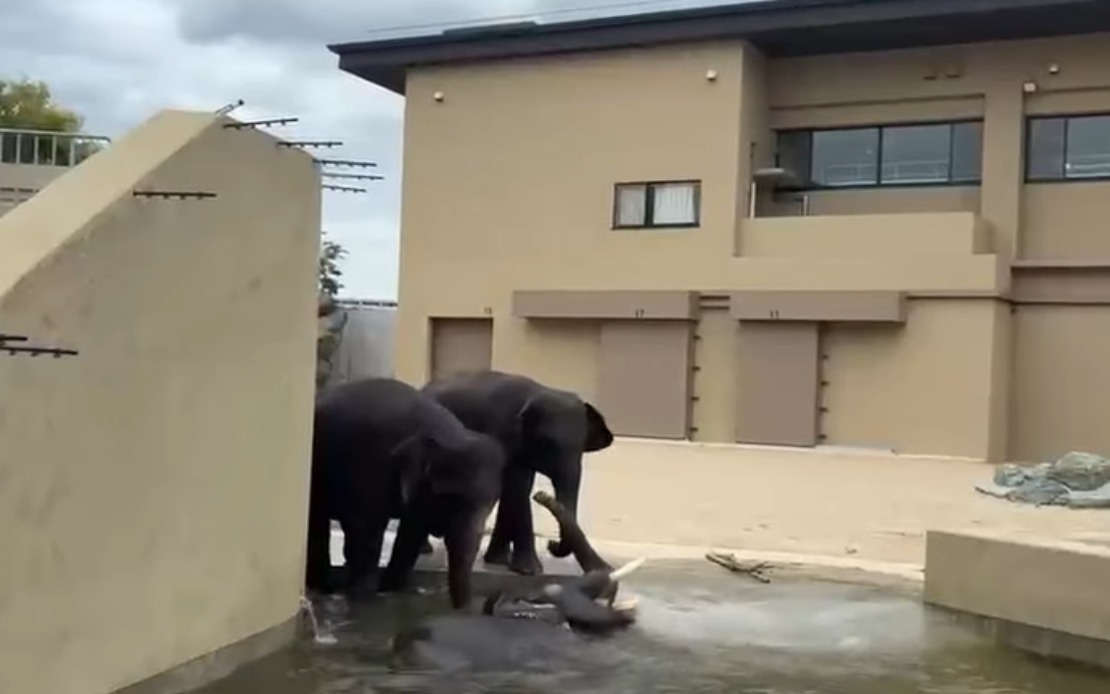
Three female Malaysian elephants stationed at Tennoji Zoo in Japan are demonstrating sustained improvement in their physical condition and overall wellbeing, according to the latest assessments from the facility. Dara, Amoi and Kelat—collectively referred to as DAK—have each recorded meaningful gains in body weight during their residence at the zoo, with Kelat achieving the most substantial increase of 260 kilogrammes while her two companions gained 35 and 30 kilogrammes respectively compared to their previous measurements. These animals remain active and healthy under the zoo's supervision, suggesting the current management protocols are meeting their biological and physiological needs.
Taiping Municipal Council president Mohamed Akmal Dahalan released a formal statement detailing the elephants' condition and the nutritional framework supporting their care. The council, which shares operational responsibility for the animals through Zoo Taiping & Night Safari, has received comprehensive reports from Tennoji Zoo documenting the elephants' progress and the specific measures taken to maintain their health. Mohamed Akmal emphasised that the weight gains do not occur in isolation but reflect a holistic approach to animal husbandry that extends across multiple operational domains.
The dietary programme underpinning the elephants' wellbeing comprises carefully selected natural foodstuffs and specialised formulations designed to address the unique nutritional demands of elephants in captive settings. The animals consume substantial quantities of different hay varieties, which form their primary source of dietary fibre, supplemented by bamboo shoots, fresh grass and cabbage to provide variety and essential micronutrients. Complementing these natural feed sources, the care team administers specially formulated elephant pellets that have been scientifically developed to ensure comprehensive nutritional balance. This multi-component dietary approach remains under continuous supervision by veterinary professionals who monitor both consumption patterns and the animals' responses to the feed regimen.
The Taiping Municipal Council has committed to sustained collaborative oversight of the elephants' welfare through ongoing partnership with the Department of Wildlife and National Parks Peninsular Malaysia, known locally as Perhilitan. This institutional collaboration ensures that management standards conform to both Malaysian wildlife protection protocols and international best practices for elephants in human care. The dual-governance structure reflects recognition that elephant welfare transcends institutional boundaries and demands expertise drawn from both domestic conservation frameworks and global expertise networks.
Mohammad Akmal's statement explicitly addressed the council's commitment to operational transparency and accountability, positioning the MPT as willing to engage with relevant authorities regarding any reviews, investigations or information requests pertaining to the elephant care programme. This openness represents an attempt to preempt criticism by demonstrating proactive engagement with oversight mechanisms. The council's framing suggests awareness that international animal transfers, particularly involving species of conservation significance, attract scrutiny from advocacy organisations and the general public.
The statement notably acknowledged public concern regarding the elephants' welfare while simultaneously establishing parameters for how such concerns should be framed. Mohamed Akmal urged that any criticisms or allegations concerning the animals' treatment must be grounded in factual evidence, verified information and professional assessment rather than conjecture or emotionally-driven claims. This distinction reflects broader tensions between emotive public engagement with conservation issues and the evidence-based frameworks preferred by government agencies.
The institutional arrangement governing the elephants' placement originated from a formal international cooperation agreement executed between Tennoji Zoo and Zoo Taiping & Night Safari, with the initial accord signed on May 19, 2022 and supplemented by a subsequent agreement on October 6, 2022. This 25-year bilateral arrangement establishes a lengthy commitment to the animals' presence in Japan while maintaining Malaysian institutional involvement in their stewardship. The extended timeframe suggests both parties anticipated a stable, sustained relationship rather than a temporary exchange.
The placement of these elephants within a Japanese zoological institution reflects broader patterns of international wildlife cooperation that have become increasingly common throughout Southeast Asia. Such arrangements typically balance conservation objectives, genetic management of captive populations, and the educational and cultural benefits that major zoos provide to their visitor constituencies. Malaysia's participation in this programme positions the country as an active participant in transnational wildlife management networks while maintaining nominal governance claims over animals of national origin.
For Malaysian readers, the elephant placement carries particular significance given the species' cultural and ecological importance within the national context. Asian elephants feature prominently in Malaysian heritage narratives and remain iconic symbols of the country's natural patrimony. The decision to station these animals internationally, combined with the sustained monitoring mechanisms described by MPT leadership, reflects attempts to balance domestic conservation interests with pragmatic recognition that some animals' needs may be better addressed within larger, better-resourced zoological systems than domestic facilities can provide.

