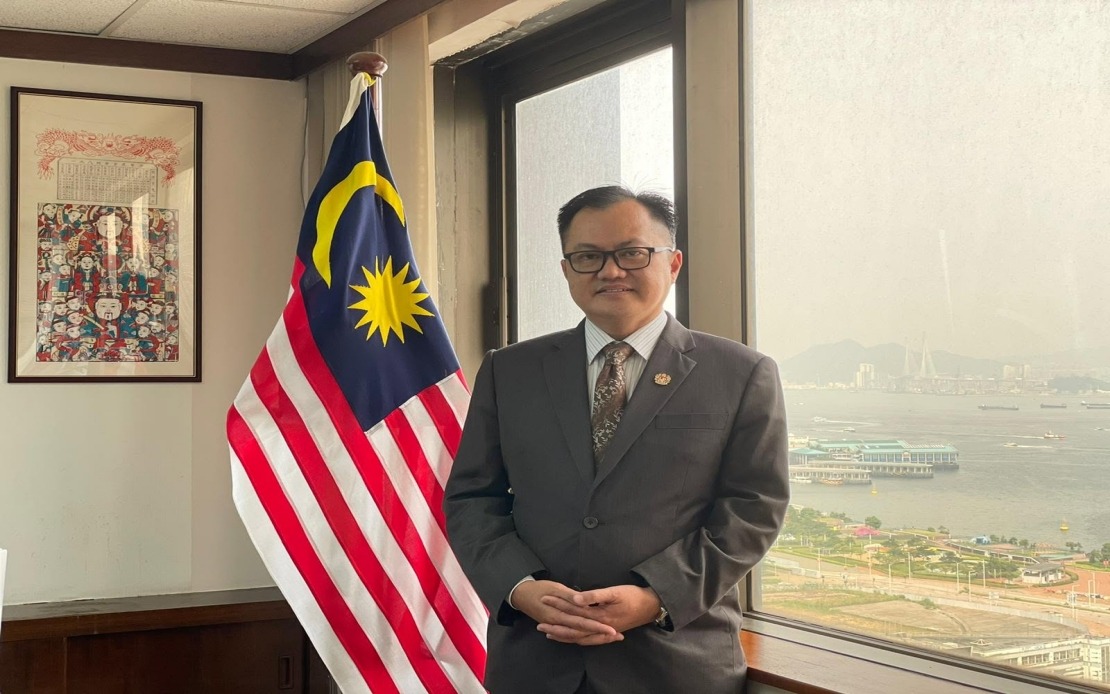
The Malaysian Consulate General in Hong Kong has responded firmly to suggestions that overseas postal voters faced obstacles due to inadequate information about the recent Johor state election, asserting instead that it conducted a comprehensive and coordinated public engagement effort throughout the electoral period. Consul General Muzambli Markam disputed the characterization of voter awareness challenges in a statement addressing a South China Morning Post article published earlier this month, defending the mission's role in ensuring Malaysian expatriates understood their voting rights and procedures.
The consulate's rebuttal centres on the scope of its outreach initiatives, which Muzambli emphasized extended beyond basic notification to encompass multiple communication channels and partnerships. He outlined how the mission had systematically distributed advisories and instructional materials via its official digital platforms, ensuring that information reached Malaysians in Hong Kong through their preferred channels. This layered approach, he suggested, demonstrated genuine institutional commitment rather than passive reliance on applicants to seek information independently.
Crucially, the consulate highlighted its collaboration with the Malaysian Association of Hong Kong, a community organization representing ethnic Malaysians and those with family ties to the country. This partnership proved significant because MAHK commands direct access to networks of Malaysian nationals who may not actively monitor official government communications. By channelling election updates through both diplomatic and grassroots channels simultaneously, the mission attempted to bridge the awareness gap that critics had identified, creating redundancy in information dissemination.
Muzambli took particular exception to the SCMP article's headline, which suggested that overseas Malaysian voters faced effective exclusion from state elections due to compressed registration timelines. The consul general contended that this framing fundamentally misrepresented the Malaysian government's modernization efforts and the Election Commission's commitment to facilitating diaspora participation. He argued that the headline's inflammatory language obscured the genuine infrastructure improvements that had made voting more accessible for Malaysians abroad, rather than less so.
A significant point of contention involved the consulate's possession of local voter statistics. The SCMP article apparently suggested that the mission's lack of comprehensive data about Hong Kong-based Malaysian voters indicated administrative inadequacy. Muzambli reframed this absence not as a failing but as a deliberate operational choice reflecting contemporary best practices in electoral administration. He explained that Malaysia's Election Commission had modernized its overseas voter registration system to enable direct digital submission, allowing Malaysians abroad to complete their applications through the centralized MySPR online portal without requiring intermediation by diplomatic missions.
This shift to a direct-to-system registration model represents a broader trend in digital governance, where centralized systems replace distributed intermediaries to reduce friction and enhance security. By design, the consulate does not serve as a bottleneck in the electoral pipeline, nor does it aggregate voter data locally. Muzambli characterized this architectural choice as inherently superior to older models where embassies and consulates functioned as information gatekeepers and data repositories. The digital system empowers voters to maintain direct relationships with their home country's election authority, bypassing diplomatic channels that might introduce delays or administrative complexity.
The broader significance of this exchange lies in how different stakeholders interpret electoral accessibility and government responsiveness. A news organization focused on individual stories of voter difficulty may legitimately highlight instances where Malaysians missed registration deadlines or felt uninformed, even if systemic awareness campaigns existed. Yet from the government's perspective, proactive digital infrastructure and information dissemination represent meaningful progress, particularly for a country managing electoral participation across dozens of diaspora communities in different time zones with varying levels of civic engagement.
For Malaysian expatriates contemplating participation in future elections, the consulate's statement underscores the availability of multiple information pathways. Individuals interested in voting rights need not depend solely on diplomatic missions or community associations; the MySPR portal provides direct access to registration and procedural information. This democratization of electoral information arguably reduces the power asymmetries that historically disadvantaged diaspora voters who lacked reliable local contacts within government structures.
The incident also illustrates the challenges facing media organizations reporting on overseas Malaysian communities. Foreign journalists covering Malaysia often rely on anecdotal accounts from individual expatriates rather than comprehensive data about registration rates or awareness levels. When individual stories conflict with government claims of extensive outreach, determining accuracy requires examining both qualitative experiences and quantitative infrastructure. The consulate's emphasis on the robustness of digital systems complements rather than excludes the possibility that particular individuals experienced genuine difficulty accessing information.
Moving forward, Malaysia's approach to overseas electoral participation appears oriented toward technological solutions—streamlined digital registration, online advisories, and decentralized information dissemination—rather than expansion of diplomatic infrastructure for electoral support. This reflects resource constraints facing most countries with large diaspora populations but also represents a genuine philosophical shift toward treating diaspora voters as digitally connected citizens rather than isolated expatriates requiring special institutional accommodation.
The Malaysian government's commitment to facilitating democratic participation among overseas nationals remains evident in resource allocation toward digital modernization and partnership with community organizations. Whether current awareness levels satisfy different stakeholder expectations likely depends on definitions of adequate information access and baseline expectations for civic participation. What seems clear is that the consulate's dispute with the SCMP narrative hinges not on fundamental disagreement about voter experience but on competing frameworks for evaluating government performance in supporting electoral rights.

