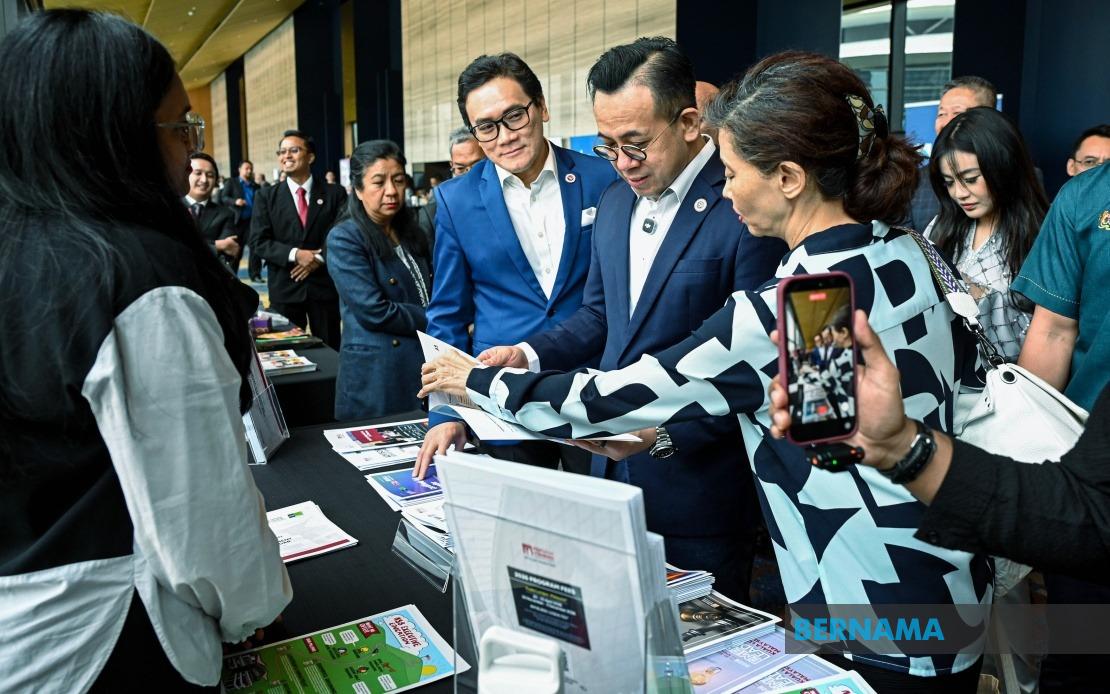
Malaysia's government is pushing local enterprises to fundamentally reimagine their role in global commerce, moving beyond contract manufacturing towards indigenous product creation and design. Speaking at the BrandQuest 2026 programme and National Mark of Malaysian Brand Appreciation Ceremony in Kuala Lumpur on August 17, Entrepreneur and Cooperatives Development Minister Steven Sim outlined a strategic pivot that reflects growing recognition among policymakers that the nation's economic future depends on building internationally recognised Malaysian brands rather than remaining a production hub for foreign companies.
The distinction between "Made in Malaysia" and "Made by Malaysia" represents more than semantic wordplay—it encapsulates a fundamental shift in how the government envisions the country's manufacturing and commercial sectors. Under the older model, Malaysian factories served primarily as contract manufacturers, producing goods designed elsewhere under foreign intellectual property. This arrangement, while providing employment and foreign exchange, limited the value capture and innovation capacity of local businesses. The new framework encourages entrepreneurs to invest in research and development, design capabilities, and brand building, positioning Malaysia as a source of original products rather than merely a production location.
Sim emphasised that competing effectively in increasingly saturated global markets requires Malaysian companies to differentiate themselves through quality, safety standards, and genuine innovation rather than competing on price alone. This strategic reorientation acknowledges that lower-cost manufacturing bases have proliferated across Southeast Asia and beyond, making price competition an unsustainable long-term strategy for Malaysian producers. By contrast, brands built on reputation for quality and reliability—whether in food production, industrial applications, or consumer goods—command premium positioning and enjoy greater pricing power and customer loyalty.
The government has channelled concrete financial support to facilitate this transition. The Ministry allocated RM230,000 from SME Corp to assist approximately 40 micro, small and medium enterprises in securing the National Mark of Malaysian Brand certification during 2025 and 2026. This certification programme serves as both a seal of quality assurance and a marketing tool, helping local producers signal their commitment to established standards to both domestic and international buyers. Sim indicated that the government would regularly evaluate whether to expand these allocations, signalling that funding support for brand development remains an evolving priority.
Parallel initiatives demonstrate the breadth of governmental commitment to entrepreneurial development. The Power Up 10K programme has channelled RM9 billion in financing to 250,000 entrepreneurs nationwide as of July, advancing toward a RM15 billion target for the year. This substantial capital mobilisation reflects recognition that innovative product development and brand building require adequate working capital, equipment investment, and operational resources. By ensuring that Malaysian entrepreneurs have access to financing on competitive terms, the government aims to level the playing field against established international competitors.
The Malaysian Brand Heritage Award ceremony highlighted companies already exemplifying the desired model. Recipients including Seasonings Specialties Sdn Bhd, Passive Fire Protection Sdn Bhd, Goodnite Sdn Bhd, Halagel (M) Sdn Bhd, and Sydney Cake House Sdn Bhd represent diverse sectors—from food production and industrial safety to consumer goods—yet share a common characteristic: sustained commitment to quality maintenance and competitive positioning. Their recognition signals to other enterprises the kinds of business models and operational standards the government wishes to encourage and replicate across the economy.
For Malaysian consumers, this strategic reorientation carries practical significance. Greater emphasis on quality, safety, and health standards means locally produced goods should increasingly meet or exceed international benchmarks, reducing the perception that imported alternatives necessarily represent superior choices. This gradual upgrading of product standards strengthens consumer confidence in domestic brands and potentially redirects purchasing power toward local enterprises, creating virtuous cycles of reinvestment and further innovation.
The shift also addresses a persistent perception problem that has constrained Malaysian brands internationally. Despite the nation's manufacturing prowess and technical capabilities, many consumers globally remain unaware of Malaysian-origin products or associate them with cost leadership rather than quality or innovation. By developing and promoting brands explicitly identified as Malaysian rather than merely manufactured in Malaysia, the government seeks to build consumer recognition and preference for products associated with Malaysian values of quality, reliability, and increasingly, technological sophistication.
Regionally, Malaysia's strategic repositioning carries competitive implications. Other Southeast Asian nations have similarly pursued value-addition and brand development strategies, with Thailand, Vietnam, and Indonesia making considerable strides in establishing recognised product brands. Malaysian companies must accelerate their innovation and branding efforts to maintain regional competitiveness and prevent market share erosion to rivals that more aggressively pursue international market positioning. The government's policy emphasis on this transition reflects awareness that demographic and labour cost pressures necessitate movement toward higher-value activities.
Implementing this strategic shift presents substantial challenges beyond capital allocation. Developing design and innovation capabilities requires investment in human capital, research facilities, and technical education systems. Building internationally recognised brands demands sophisticated marketing, supply chain management, and regulatory compliance expertise. Many small and medium enterprises lack these capabilities and may require technical assistance and mentoring beyond what financing alone can provide. Success therefore depends on complementary investments in skills development, business advisory services, and technology transfer mechanisms.
Sim's emphasis on making "Malaysian businesses great" reflects broader aspirational framing that positions the policy initiative within nationalist economic development narratives. By connecting brand development to national pride and identity, the government seeks to mobilise not merely economic incentives but also cultural motivations supporting local enterprise. This framing resonates particularly in contexts where consumers express preferences for supporting local businesses and national economic sovereignty.
The timeline for transitioning from production-focused to innovation-focused enterprise models remains ambitious. Complete transformation of Malaysia's industrial structure would require years or decades of sustained effort, investment, and cultural shifts within business communities. However, the articulation of this strategic direction and mobilisation of governmental support mechanisms signal serious policy commitment. Companies demonstrating early success in brand building and innovation may enjoy first-mover advantages in establishing Malaysian products in premium international market segments, potentially generating models that other enterprises can replicate and adapt.
Ultimately, Malaysia's development trajectory increasingly depends on whether local enterprises can successfully execute this transition from manufacturing-for-hire to branded product innovation and marketing. Government policy support, while necessary, proves insufficient without corresponding business innovation, quality discipline, and strategic vision from entrepreneurs themselves. The next phase of Malaysian economic development will likely be shaped substantially by how effectively the private sector responds to governmental encouragement and financing support, and whether emerging Malaysian brands can establish sustainable competitive positions in discerning global markets.

