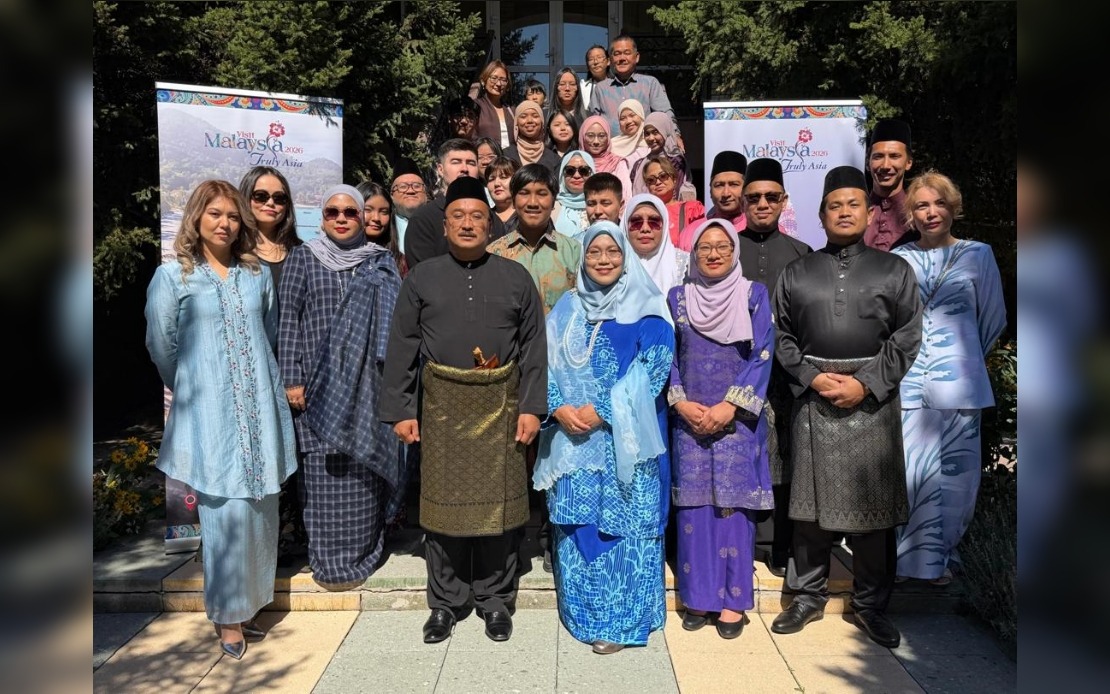
Malaysians residing in Kazakhstan demonstrated their attachment to home by gathering at Malaysia House in Astana on Saturday for a formal observance of the nation's 69th National Day. The event, coordinated by the Embassy of Malaysia in Astana, combined ceremonial elements with community engagement, reflecting how diaspora communities maintain cultural identity and national pride across geographical distances. The proceedings opened with the traditional hoisting of the Jalur Gemilang, accompanied by the singing of Negaraku and the collective recitation of Rukun Negara—rituals that anchor Malaysian identity regardless of location.
Mohd Adli Abdullah, Malaysia's Ambassador to Kazakhstan, used the occasion to articulate a deeper message about national development through the lens of the 2026 National Day theme, Malaysia MADANI: Prosperity Enjoyed. His remarks reframed how Malaysians should conceptualise progress, moving beyond conventional metrics of economic indicators and infrastructure expansion. The ambassador emphasised that genuine national advancement requires equitable distribution of development's fruits across all demographic groups and geographic regions, a perspective particularly relevant in Malaysia's context of bridging urban-rural divides and ensuring inclusive growth.
The Malaysia MADANI framework, which Abdullah encouraged the overseas community to embody, reflects contemporary thinking within Malaysia's governance about prosperity that extends beyond GDP figures. This philosophy recognises that sustainable development demands attention to social cohesion, environmental stewardship, and citizen wellbeing—dimensions often sidelined in purely quantitative assessments. For Malaysian expats, adopting these values becomes a means of engaging with their homeland's evolving priorities, even while physically absent.
Beyond ceremonial observances, the ambassador articulated an expectation that Malaysians abroad function as informal diplomatic representatives, consciously cultivating Malaysia's international reputation through their individual conduct and contributions. This framing positions expatriate communities not as distant nationals but as active participants in Malaysia's soft power strategy. By maintaining integrity, discipline, and mutual cooperation—virtues embedded in Rukun Negara—diaspora members contribute to perceptions of Malaysia globally. Abdullah's call represents a softer form of national engagement, one that transcends voting or formal political participation but remains consequential.
The Astana gathering benefited from diverse attendance encompassing embassy personnel, Malaysian students, alumni of technical cooperation initiatives, and other Kazakhstan-based associates. This cross-section underscores how Malaysia's presence in Central Asia extends beyond formal diplomatic channels into educational and professional networks. Students pursuing higher education abroad represent future cadres of Malaysian professionals and decision-makers, whilst alumni of capacity-building programmes serve as vectors of Malaysia-Kazakhstan goodwill.
Particularly significant was the integration of the Malaysia Technical Cooperation Programme (MTCP) Alumni Get-Together 2026 with the National Day celebration. Established in 1980, the MTCP exemplifies Malaysia's commitment to South-South cooperation and technical assistance for developing nations. By 2025, Kazakhstan had sent 196 officials through various MTCP capacity-building and training initiatives, establishing professional relationships and knowledge-sharing networks that often persist across careers and administrations. These alumni represent tangible outcomes of Malaysia's development cooperation agenda and serve as institutionalised bridges between the two governments.
The MTCP's emphasis on human capital development and professional expertise-sharing reflects a particular Malaysian foreign policy approach distinct from traditional aid frameworks. Rather than unidirectional resource transfers, the programme facilitates mutual learning and network-building, positioning Malaysia as a peer partner in development challenges faced by countries across Asia, Africa, and the Middle East. For Kazakhstan specifically, this cooperation supports institutional strengthening and professional advancement within government and public sectors.
Malaysia-Kazakhstan relations, whilst not dominating regional headlines, represent a meaningful bilateral partnership grounded in genuine engagement mechanisms. Unlike relationships anchored primarily in trade or security cooperation, the Malaysia-Kazakhstan connection encompasses educational exchange, technical assistance, and people-to-people interactions. The Saturday gathering exemplified this multifaceted approach, bringing together diplomatic formality with grassroots community participation.
For Malaysian readers, the Astana event carries wider significance regarding how the nation projects itself internationally and sustains diaspora engagement. The emphasis on Malaysia MADANI values resonates with domestic policy conversations about equitable development, whilst the celebration overseas reinforces national identity narratives. Furthermore, the presence of students and young professionals abroad signals Malaysia's continuing investment in developing human capital for future leadership roles, a strategic imperative as the nation navigates technological and economic transitions.
The event also highlights Central Asia as an emerging frontier for Malaysian engagement. Kazakhstan's growing geopolitical importance as a bridge between Europe and Asia, combined with its energy resources and economic potential, justifies sustained Malaysian diplomatic attention. The embassy's proactive approach to community organising and alumni engagement demonstrates how diplomatic missions can transcend traditional state-to-state interactions to cultivate multifaceted relationships.
Looking forward, the embassy's commitment to strengthening Malaysia-Kazakhstan relations through comprehensive cooperation—spanning governmental strategy, interpersonal connections, and expertise-sharing—suggests deepening engagement. The regular hosting of alumni gatherings and national celebrations serves practical purposes beyond ceremonial satisfaction, maintaining networks that facilitate official interactions and informal problem-solving when bilateral issues arise.
For Malaysian expats in Kazakhstan, such events provide opportunities for cultural affirmation and community connection, mitigating the isolation that often accompanies extended overseas residency. These gatherings reinforce belonging to a Malaysian diaspora whilst simultaneously deepening integration into host societies, as participants return to their daily lives with renewed appreciation for national values and international ambassadorial responsibilities.
Ultimately, the Astana National Day celebration exemplifies how Malaysia maintains national cohesion across borders through ceremonial observance coupled with substantive engagement mechanisms. By connecting patriotic expression with policy themes like Malaysia MADANI and institutional initiatives like the MTCP, the embassy transforms a commemorative event into a vehicle for articulating national priorities and reinforcing bilateral relationships. Such approaches ensure that geographic distance does not translate into weakened national identity or diminished diplomatic relevance.

