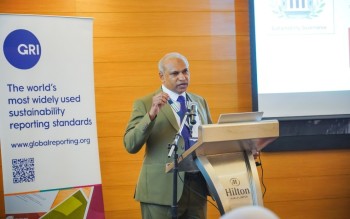
The Malaysian financial sector is fundamentally reshaping its lending criteria, with banks and other lenders now routinely demanding that loan applicants demonstrate their environmental, social and governance credentials before extending credit. This shift represents a watershed moment for corporate Malaysia, where sustainability performance is evolving from a nice-to-have compliance checkbox into a hard requirement for accessing capital and maintaining market position.
According to Prathab V, principal consultant at Malaysian consulting firm ESGright Sdn Bhd, the banking sector's pivot toward sustainability-linked lending reflects a broader global realignment of investment priorities. Financial institutions worldwide are recalibrating risk assessments to factor in environmental and social exposure, meaning companies that cannot articulate their sustainability strategies face meaningful disadvantages in securing funding. This systemic shift carries profound implications for Malaysian enterprises competing in an increasingly sustainability-conscious global economy.
While Bursa Malaysia currently mandates sustainability statements only for listed companies, the informal market pressure originating from the banking system is effectively extending these requirements to the unlisted sector as well. Firms seeking expansion capital, refinancing, or project-specific loans now encounter lenders who scrutinise ESG reports with the same rigour traditionally applied to financial statements. This de facto universalisation of sustainability reporting requirements means that even privately-held companies and small-to-medium enterprises lacking formal sustainability frameworks may face higher borrowing costs or reduced credit availability.
The competitive implications are stark. Companies that develop robust sustainability reporting frameworks gain preferential access to what financial institutions term "smart capital"—investment from sophisticated, long-term oriented sources that recognise the correlation between strong ESG practices and reduced business risk. Conversely, firms that neglect sustainability reporting gradually lose competitive ground, not merely through higher financing costs but through restricted market access and supply chain opportunities. This creates a virtuous cycle for sustainability leaders and a vicious cycle for laggards.
Government policy in Malaysia has actively encouraged this market-driven transition, with regulators and industry bodies promoting sustainability guidelines and best practices across sectors. The rationale is straightforward: companies that embed sustainability into their operations and reporting secure easier market access domestically and internationally, generate better investor relations, and typically demonstrate superior risk management. From a policy perspective, Malaysia's commitment to this agenda is evidenced by the country's ranking as one of ASEAN's leaders in certifying Global Reporting Initiative professionals—a metric reflecting institutional capacity and corporate uptake.
For smaller enterprises, the sustainability reporting transition presents distinct challenges. Unlike multinational corporations with dedicated compliance teams, SMEs typically operate with constrained resources and competing operational priorities. Robin Hodess, chief executive officer of the Global Reporting Initiative, has advocated for a pragmatic approach: rather than imposing identical reporting burdens on all firm sizes, a calibrated framework matched to business scale and resource capacity would enable SMEs to demonstrate sustainability commitment without overwhelming administrative overhead. This principle recognises that meaningful incremental progress from an SME often matters more than marginal improvements from already-advanced large firms.
Supply chain dynamics amplify the pressure on SMEs to adopt sustainability practices. Large Malaysian corporations increasingly incorporate ESG criteria into supplier selection, meaning SMEs serving as vendors or component providers must now meet sustainability benchmarks to retain contracts. This supply chain transmission of ESG requirements means that even family businesses operating in secondary or tertiary industries find themselves compelled to demonstrate environmental responsibility and governance standards. The spillover effect is particularly pronounced in manufacturing, where international customers and parent companies demand documentary proof of sustainable practices.
Malaysia's emerging ecosystem of sustainability expertise positions the country advantageously within ASEAN. ESGright's elevation to the third-largest trainer of GRI professionals in the Asia-Pacific region, coupled with its recent designation as an approved education partner for the International Financial Reporting Standards Foundation, reflects both corporate demand and institutional confidence. These developments suggest that Malaysian companies increasingly recognise sustainability reporting not as a regulatory imposition but as a competitive necessity in a capital-efficient world.
The complexity of navigating multiple reporting frameworks and disclosure standards presents an under-appreciated challenge for corporate management. As various international bodies—including the International Sustainability Standards Board—develop or refine standards, companies face the burden of determining which frameworks apply, which metrics matter most, and how to avoid redundant or contradictory disclosures. This "compliance fatigue" risks diverting managerial attention and resources from substantive sustainability improvements toward box-ticking exercises that satisfy formal requirements without meaningfully advancing environmental or social outcomes.
Prathab advocates a focused strategy: rather than attempting comprehensive excellence across all sustainability dimensions, companies should identify areas where they can make outsized contributions—whether environmental stewardship, biodiversity protection, or social impact—and concentrate their efforts there. This approach creates authentic rather than performative sustainability credentials, builds investor credibility, and often proves more cost-effective than diffuse compliance efforts. For Malaysian firms still developing sustainability maturity, this guidance offers practical pathway forward.
The financial sector's embrace of ESG requirements ultimately reflects a sophisticated assessment of long-term business risk. Companies that deplete environmental resources, ignore community concerns, or maintain weak governance typically encounter external shocks—regulatory intervention, supply disruptions, reputational damage, or stakeholder disputes—that undermine profitability. Conversely, firms that proactively address sustainability risks demonstrate the foresight and management quality that correlate with financial resilience. From a lender's perspective, ESG reporting is simply rigorous risk assessment adapted to 21st-century realities.
As Malaysia progresses within the regional and global economy, the banking sector's insistence on sustainability credentials will likely intensify rather than moderate. Companies that regard this as temporary compliance burden risk strategic miscalculation. Those that view sustainability reporting as integral to business strategy—embedding environmental responsibility, social accountability, and governance discipline into operational decisions—position themselves for advantage in accessing capital, retaining talent, serving international customers, and maintaining license to operate in an increasingly sustainability-conscious world.

