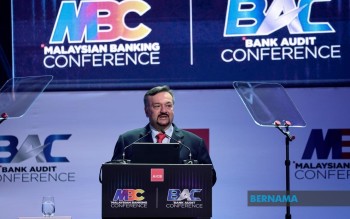
The Asian Institute of Chartered Bankers (AICB) has sounded a clarion call for Malaysia's banking sector to transcend superficial technology adoption and embrace AI implementation underpinned by genuine trust, rigorous governance standards, and organisational resilience. Speaking at the 4th Malaysian Banking Conference and 2nd Bank Audit Conference held from July 7-8, 2026, at the Kuala Lumpur Convention Centre, industry leaders underscored that the financial sector's transformation must be anchored in accountability rather than mere technological deployment.
The dual conference platforms, organised jointly by AICB's Chief Internal Auditors Networking Group, the Association of Banks in Malaysia, and the Asian Banking School, brought together over 1,000 banking, audit, and regulatory professionals to navigate the complex interplay between innovation and institutional trust. The gathering occurred at a critical juncture for Malaysia's banking sector, which is simultaneously advancing its digital transformation under the Financial Sector Blueprint while contending with mounting cybersecurity threats, climate transition pressures, and geopolitical volatility. These converging challenges have made governance of emerging technologies not merely a technical consideration but a strategic imperative.
Finance Minister II Datuk Seri Amir Hamzah Azizan and Bank Negara Malaysia Governor Datuk Seri Abdul Rasheed Ghaffour jointly launched the conferences, signalling the importance placed by the government and the central bank on establishing clear industry standards for responsible AI deployment. Amir Hamzah's ministerial address particularly emphasised the philosophy that the banking industry itself, rather than regulatory bodies imposing top-down mandates, should drive the development of AI governance standards. This approach reflects a deliberate strategy to build institutional trust through industry-led leadership rather than external enforcement, recognising that credibility ultimately flows from within the system's own commitment to responsible practices.
A centrepiece of the conference was the unveiling of the AICB-Ecosystm AI in Practice report, compiled from responses by close to 90 senior leaders across commercial banks, digital banks, and development financial institutions. This benchmarking study provides an invaluable snapshot of how Malaysia's banking sector is currently navigating AI integration, revealing both the progress achieved and the significant gaps that remain. The research examined organisational readiness, adoption patterns, and governance maturity across the domestic banking landscape, offering policymakers and institutional leaders concrete data to inform strategic decisions.
While Malaysian banks have already begun deploying AI across several operational domains—including Know Your Customer onboarding processes, fraud detection systems, Anti-Money Laundering and Counter Financing of Terrorism compliance programmes, and employee productivity enhancements—the findings revealed a profound trust deficit that demands immediate attention. Only 25 per cent of surveyed respondents indicated sufficient confidence in AI-generated outputs to base key business decisions upon them. This stark statistic underscores a critical challenge confronting the sector: the technical capacity to deploy AI exists, but the institutional confidence required to deploy it at scale for strategic decision-making remains underdeveloped.
The report's conclusions signal an inflection point for Malaysia's banking industry, transitioning from experimental pilots toward responsible scaling of AI systems. This pivot requires deliberate investment in three foundational elements: trust in the reliability and fairness of algorithmic outputs; governance structures that ensure accountability and control; and assurance mechanisms that provide ongoing monitoring and validation. Without these pillars, accelerated AI adoption risks creating systemic vulnerabilities rather than enhancing financial system resilience. The research participants emphasised that trust cannot be assumed but must be actively built through transparency, testing, and continuous oversight.
Bank Negara Malaysia's governor framed innovation not as technological acquisition alone but as a leadership challenge requiring robust governance frameworks to maintain the stability and societal orientation of Malaysia's financial system. His remarks positioned AI governance as fundamentally inseparable from questions of financial stability, consumer protection, and public interest. This perspective is particularly relevant for Southeast Asian regulators navigating similar pressures, as the central bank's stance suggests that innovation governance should be conceived as strengthening rather than constraining financial system resilience.
AICB Chairman Tan Sri Azman Hashim highlighted the critical role of human capital development in ensuring that the banking sector can effectively govern and benefit from advanced technologies. He pointed out that technological capabilities must be matched by corresponding professional capabilities among banking staff and leaders, emphasising that institutional excellence requires continuous investment in talent development, professional standards, and knowledge deepening. This observation reflects a broader recognition that AI implementation failures typically stem not from technological limitations but from gaps in organisational capability and leadership readiness.
To address these workforce challenges, AICB has developed and promoted the Future Skills Framework and FSF Xcel initiatives, created in collaboration with industry participants to identify the critical competencies and capabilities essential for future-oriented banking professionals. These frameworks reflect an understanding that Malaysia's competitive advantage in financial services increasingly depends not on technology acquisition—which is globally accessible—but on the quality and sophistication of the talent pool managing that technology. For Malaysian banks competing regionally and globally, cultivating professional excellence and future readiness has become a strategic differentiator.
The conferences also served a broader regional function by catalysing cross-industry dialogue on questions affecting Southeast Asian financial systems more broadly. Malaysian banks confront the same governance questions, cybersecurity vulnerabilities, climate risks, and talent readiness challenges affecting banking sectors throughout the region. AICB's convening role enabled the exchange of insights, best practices, and forward-looking perspectives that strengthen the collective capacity of regional banking sectors to respond to shared challenges. This collaborative approach recognises that professional standards, once established in a major financial hub like Malaysia, tend to influence practices across the region.
The AICB's articulation of an industry-led governance approach carries significant implications for how emerging economies in Southeast Asia approach technology regulation. Rather than regulatory intervention preceding innovation, the Malaysian model demonstrates that financial sector associations and professional bodies can establish governance standards that simultaneously enable innovation and protect stability. This approach may offer a template for other regional authorities seeking to balance liberalisation with prudent oversight, particularly as central banks and financial regulators across Asia grapple with how to govern emerging technologies responsibly.
The conferences underscored that Malaysia's pathway toward a trustworthy, AI-enabled financial sector depends on the banking industry's collective commitment to developing the governance structures, assurance mechanisms, and talent capabilities required for responsible scaling. The publication of the AICB-Ecosystm research report, combined with the articulation of industry-led governance frameworks and commitment to professional excellence initiatives, suggests that the sector recognises both the competitive imperative and the institutional obligation to establish these foundations. Success will be measured not by the speed of AI adoption but by the sustainability and trustworthiness of implementation.

