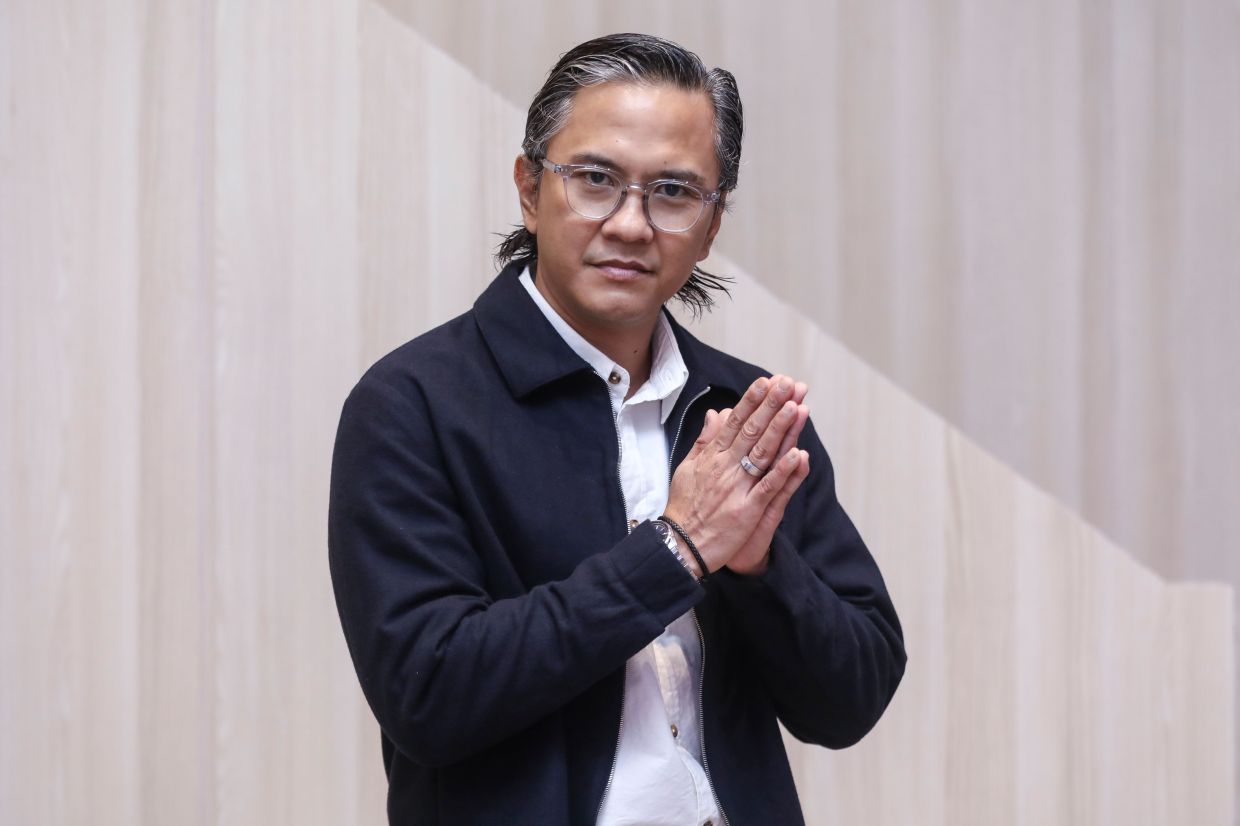
At 46, Beto Kusyairy has reached a career inflection point where professional choices are driven by creative substance rather than commercial calculation. The Malaysia Film Festival Best Actor winner has deliberately stepped away from the pursuit of fame, instead gravitating toward productions that offer both artistic challenge and personal meaning. This philosophy extends across all storytelling formats—he moves fluidly between television, cinema and radio drama, with the underlying principle that quality of execution matters more than the medium itself.
His recent involvement with Astro Originals' eight-episode thriller series exemplifies this approach. In the production, Kusyairy portrays a father whose young son vanishes and is subsequently discovered dead, setting the stage for a psychological mystery where circumstantial evidence and memory gaps position the character as a police suspect. Yet beneath the crime narrative lies a more complex examination of childhood trauma, sexual abuse and child exploitation—themes that have historically remained peripheral to mainstream Malaysian entertainment.
The series has demonstrated remarkable audience traction since its release. Across social media platforms, it generated more than 58 million video views while reaching 9.5 million users, translating into sustained cultural conversation. Its international reach extended to Netflix, where the title maintained a position on the platform's Top 10 chart for six consecutive weeks. These metrics reveal not merely entertainment consumption but active engagement with narratives that probe uncomfortable societal realities.
Kusyairy has been struck by the evolution of audience participation throughout the series' run. Early viewer interactions took the form of speculative detective work, with audiences theorising about plot developments and character culpability. While this represented traditional entertainment engagement, the discourse shifted markedly as episodes progressed. Viewers began sharing personal testimonies through Instagram and direct messaging, disclosing their own encounters with trauma, abuse and harassment. The fictional narrative became a catalyst for conversations that individuals had previously kept private or felt unable to articulate.
This transformation carries profound implications for both creators and society. The actor views audience willingness to discuss sensitive matters as validation that storytelling can serve functions beyond entertainment—it can provide permission structures for dialogue about subjects traditionally shrouded in silence. Malaysian society, he observes, has undergone measurable shifts in its relationship with such conversations. Where previous generations prioritised family honour and reputational protection above disclosure, contemporary audiences demonstrate greater courage in confronting difficult truths publicly and seeking appropriate redress.
The production team's original intent was simply to narrate events with integrity, hoping the authenticity would resonate and build awareness. However, the extent to which viewers engaged with the deeper themes exceeded initial expectations. Kusyairy emphasises that drama functions most effectively when handling sensitive material with narrative subtlety rather than didactic heaviness. Malaysian audiences, he argues, possess the sophistication to engage meaningfully with complex ethical scenarios when they are woven into compelling storytelling rather than presented as moral instruction.
This distinction—between entertainment that educates through narrative sophistication versus content that instructs directly—reflects a maturation of local viewership. The receptiveness demonstrated suggests that Malaysian audiences no longer require sanitised versions of reality. They are prepared to encounter stories that acknowledge trauma, examine systemic failures and explore the psychological dimensions of victimisation. This readiness carries implications for future content development across the industry.
Beyond the immediate success of this particular series, Kusyairy sees broader significance for Malaysian film and television production. The regional industry has undergone tangible advancement in production values, narrative ambition and generic diversity. Where locally-produced content once gravitated toward narrow categories, contemporary offerings encompass action sequences, comedic narratives, crime thrillers and horror—each executed with increasing technical proficiency. This expanded range reflects both production capability improvements and audience appetite for varied storytelling.
Kusyairy's hope extends toward inspiring peers across the creative industries to embrace bolder narrative choices and greater thematic complexity. The success of series that tackle taboo subjects demonstrates market viability for stories that challenge audiences intellectually and emotionally. Filmmakers and writers, he suggests, should interpret this receptiveness as license to move beyond conventional constraints and explore territories previously deemed commercially risky. The trajectory demonstrated by recent productions indicates that audiences will reward substantive storytelling with engagement and cultural amplification.
Reflecting on his own role within this evolving landscape, Kusyairy draws upon author Eugene Bell Jr's concept of aspiring to inspire. His career decisions—prioritising meaningful projects over fame accumulation—embody a philosophy that ripples outward. When established performers commit to challenging material, they signal to emerging creators that artistic integrity remains a viable career path. This psychological permission carries weight in an industry often constrained by risk-aversion and commercial conservatism.
The implications for Malaysian cultural production extend beyond immediate industry dynamics. Audiences willing to engage with stories about childhood trauma and sexual abuse create space for broader social conversations about protection systems, institutional accountability and survivor support. Entertainment becomes one lever among many that gradually shifts collective consciousness and normalises discourse around matters that shame and secrecy have traditionally silenced. This process unfolds gradually, but the engagement Kusyairy has witnessed suggests momentum is accumulating.
As local creators contemplate their next projects, the evidence from this series offers both validation and challenge. Validation that audiences possess the sophistication and emotional capacity to engage with complex narratives. Challenge to move beyond formulaic approaches and invest creative energy in stories that illuminate human experience across its full spectrum. Kusyairy's career trajectory—from fame-seeking early years toward purpose-driven selections—parallels a similar maturation he perceives in Malaysian audiences. Both represent a society increasingly willing to acknowledge complexity, confront difficult realities and engage authentically with stories that reflect the full texture of human existence.

