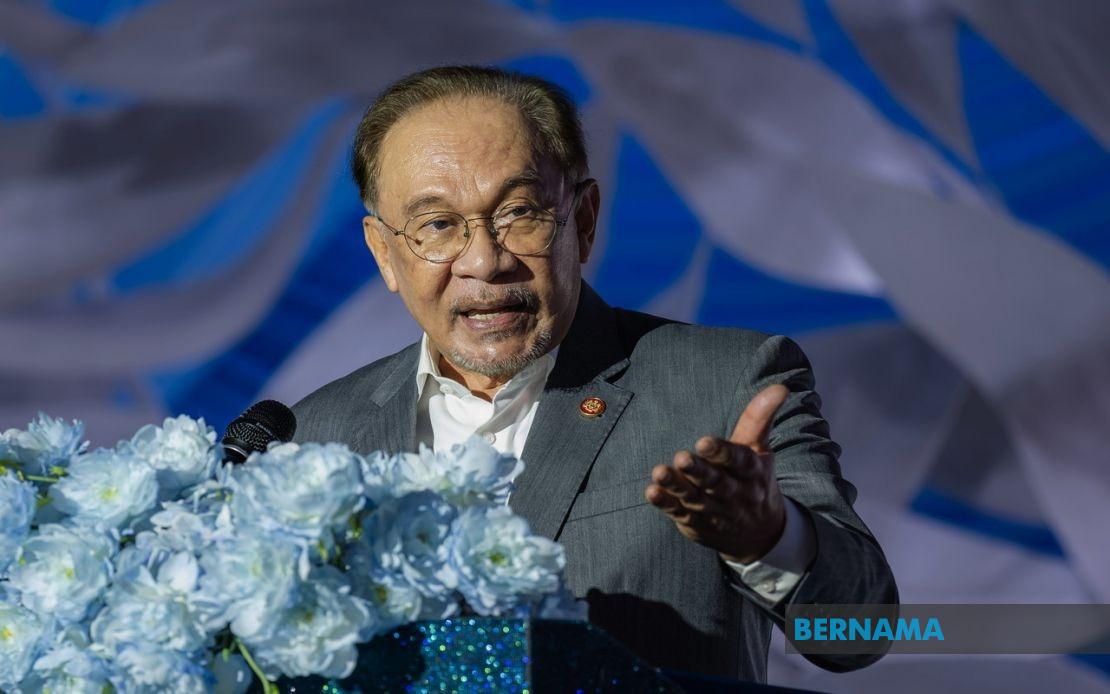
Malaysia's government has reaffirmed its commitment to a strict deportation policy targeting Israeli nationals, with Prime Minister Datuk Seri Anwar Ibrahim declaring on July 15 that no individuals holding Israeli citizenship will be permitted to remain within the country's borders. The statement represents a firm reinforcement of Malaysia's established diplomatic position, which has consistently refused to recognise the State of Israel since the nation's independence.
Anwar's declaration came in response to social media allegations claiming that foreign nationals possessing Israeli passports alongside dual citizenship documents had either attempted entry into Malaysia or were already present in the country. These reports prompted urgent action from government authorities, with security agencies launching comprehensive investigations into the matter. The Prime Minister's uncompromising stance signals that his administration will tolerate no ambiguity on this policy matter, regardless of whether individuals attempt to circumvent entry restrictions through alternative documentation.
The specific trigger for this latest public statement involved reports emanating from Johor, where allegations surfaced regarding Israeli nationals potentially operating within the state. These individuals were reportedly utilising passports from other countries to gain entry, attempting to obscure their Israeli identity during immigration procedures. The Johor state government, led by Menteri Besar Datuk Onn Hafiz Ghazi, took the initiative to formally request investigations by the Home Ministry and related agencies into operations at the Network School located in Forest City, citing public concerns about the alleged presence of such individuals.
Anwar emphasised that all relevant security and investigative bodies were actively pursuing leads and gathering intelligence on the matter. He expressed confidence in the capability of the government apparatus to handle the investigation thoroughly and appropriately. The Prime Minister specifically referenced Higher Education Minister Datuk Seri Dr Zambry Abdul Kadir, indicating that the ministry would provide additional explanations and details regarding the findings. This multi-agency approach underscores the government's determination to address the issue systematically across all relevant departments.
The non-recognition of Israel remains one of Malaysia's most consistent foreign policy positions, rooted in the nation's historical commitment to Palestinian causes and regional geopolitical considerations. This stance has shaped Malaysia's immigration procedures and security protocols for decades. For Malaysian policymakers, maintaining strict enforcement of this position serves multiple objectives: it demonstrates solidarity with Palestinian interests, maintains consistency with domestic political expectations, and reinforces Malaysia's position within broader Muslim-majority regional coalitions that similarly refuse Israeli recognition.
The incident raises important questions about security vulnerabilities in Malaysia's immigration system, particularly the potential exploitation of dual citizenship documents to circumvent entry controls. Border security agencies now face the challenge of identifying sophisticated attempts to enter the country through alternative documentation routes. This concern extends beyond the immediate Israeli national issue, as it highlights broader vulnerabilities in verifying the true nationality of individuals possessing multiple passports. The case may prompt a review of immigration screening procedures to better identify and flag individuals attempting deception at entry points.
For Malaysian business and educational institutions operating international programmes, the incident carries cautionary implications. Organisations hosting foreign nationals or international programmes must ensure comprehensive vetting of participants and maintain meticulous records of personnel involvement. The focus on the Network School in Forest City suggests that scrutiny will extend to private educational and commercial ventures operating in special economic zones or developing areas like Forest City. This heightened attention may affect how such institutions recruit and verify international staff and programme participants going forward.
The timing of these allegations and the government's swift response reflect ongoing sensitivities surrounding Malaysia's foreign policy commitments. While the country maintains significant economic and trade relationships with numerous nations, its position on Palestinian matters and Israeli recognition remains non-negotiable across different political administrations and competing domestic coalitions. This consistency, though politically significant domestically, occasionally creates practical complications for Malaysian institutions seeking to engage with international partners in fields like technology, education, and commerce.
International observers of Malaysian policy note that enforcement of such politically-charged immigration positions requires careful diplomatic navigation. Malaysia must balance its principled stance with practical considerations including tourism, business relationships, and humanitarian concerns. The government's handling of this particular case will signal to international audiences how consistently and comprehensively such policies are implemented. Anwar's unequivocal statements suggest that the administration intends to demonstrate strict adherence to established principles rather than pragmatic flexibility.
The investigation initiated by Johor authorities and the Higher Education Ministry will likely establish precedents for how future similar cases are handled. Should the allegations prove substantiated, the deportations would provide concrete evidence of enforcement. Conversely, if investigations reveal that the social media reports were exaggerated or inaccurate, the government faces the delicate task of managing public expectations without appearing to have capitulated on principles. Either outcome will carry implications for Malaysia's immigration administration and its credibility in enforcing stated policies.
For Southeast Asian observers and Malaysian citizens, this episode illustrates the enduring salience of Palestinian-Israeli issues within Malaysian political discourse and policy frameworks. Unlike some regional neighbours that have normalised relations with Israel or maintained quieter diplomatic channels, Malaysia continues to treat this as a matter of categorical principle rather than pragmatic accommodation. This consistency, while politically significant, means that Malaysian institutions, businesses, and individuals must remain mindful of these restrictions when engaging in international activities or hosting foreign nationals.

