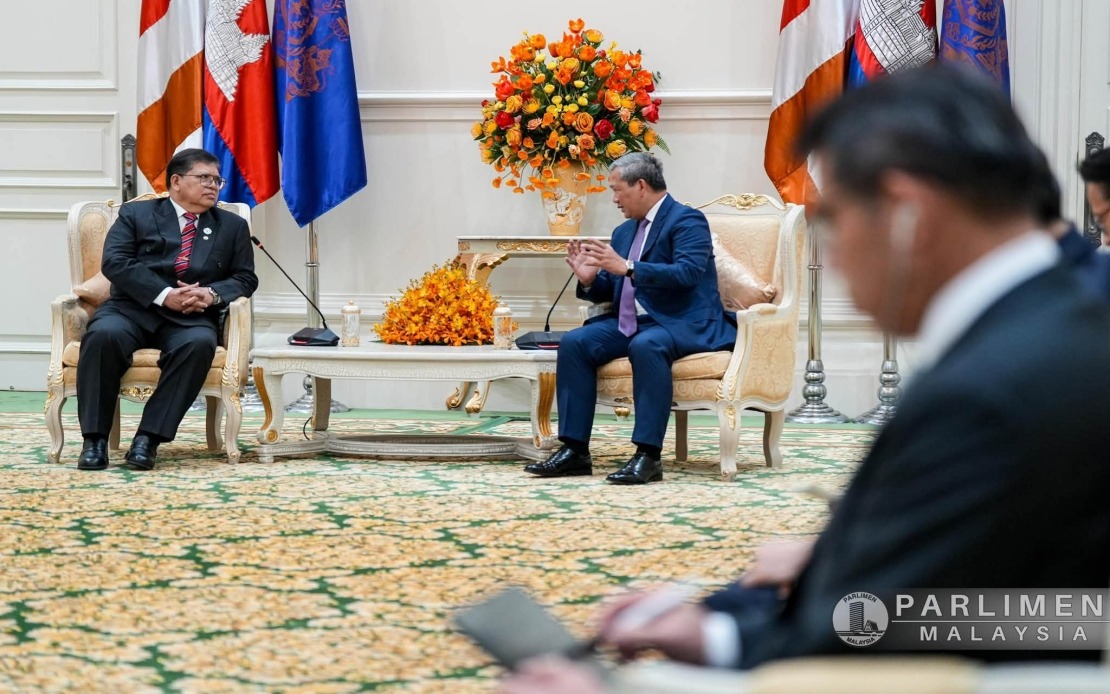
Malaysia has thrown its weight behind diplomatic solutions to the Cambodia-Thailand border dispute, with Dewan Rakyat Speaker Tan Sri Johari Abdul warning that continued tensions threaten the fundamental principles binding Southeast Asia's most important regional bloc. Speaking on the sidelines of an inter-parliamentary conference in Phnom Penh, Johari stressed that dialogue and negotiation must remain the primary mechanisms through which ASEAN member states resolve their differences, particularly disputes affecting civilian populations and cross-border communities.
The Cambodian capital was hosting the Second Inter-Parliamentary Speakers' Conference from August 26 to 28, bringing together legislative leaders from across the region to discuss shared challenges and strengthen institutional ties. It was during this gathering that Johari met with Cambodian Prime Minister Hun Manet to discuss not only the border tensions but also the broader architecture of Malaysia-Cambodia relations. The Malaysian parliament speaker's emphasis on the ASEAN framework reflects Kuala Lumpur's broader strategic concern: bilateral disputes, if left to fester without diplomatic channels, risk fracturing the regional solidarity that has underpinned decades of relative peace and economic interdependence across Southeast Asia.
Johari's intervention carries particular significance given Malaysia's traditional role as a mediator within ASEAN. By publicly endorsing dialogue and diplomacy rather than more confrontational approaches, Malaysia signals to both Cambodia and Thailand that third-party pressure remains available should both nations prove willing to engage. This measured approach acknowledges Cambodia's legitimate grievances regarding the impact of border instability on its citizens while simultaneously maintaining diplomatic pressure for restraint and negotiation. The speaker's comments suggest that Kuala Lumpur views the situation as delicate but recoverable through sustained engagement at multiple levels.
The border tensions between Cambodia and Thailand represent a longstanding flashpoint within the region, periodically erupting into armed skirmishes that claim lives and displace communities. The current situation, as Johari noted, has particular resonance for residents living along the contested areas who face disrupted livelihoods, restricted movement, and the constant threat of violence. Malaysian recognition of these humanitarian dimensions demonstrates that regional diplomacy must extend beyond purely strategic calculations to encompass the welfare of affected populations. By acknowledging Cambodia's concerns while advocating for dialogue, Malaysia positions itself as a partner committed to both national interests and genuine regional welfare.
Beyond the immediate border crisis, Johari's visit underscored Malaysia's commitment to deepening bilateral relations with Cambodia across multiple domains. The two countries discussed expanding parliamentary cooperation, a significant indicator of institutional commitment to sustained engagement. Such connections between legislatures often prove more resilient than executive-level relationships, creating continuity in diplomatic channels even during periods of tension. By investing in parliamentary exchanges and formal legislative dialogue, Malaysia and Cambodia are building redundancy into their relationship, ensuring that communication pathways remain open regardless of fluctuations in broader political dynamics.
Economic cooperation featured prominently in discussions, with Johari expressing appreciation for Cambodia's supportive environment for Malaysian business investment. This economic interdependence serves as a practical stabilising force in bilateral relations, creating mutual incentives for peaceful resolution of disputes and maintaining predictable governance frameworks. The Malaysian business community's presence in Cambodia represents not merely commercial interests but also soft power, as Malaysian companies and their employees become embedded within Cambodian society and develop relationships transcending formal diplomatic channels. Such economic ties, when cultivated thoughtfully, complement government-to-government diplomacy by creating multiple constituencies invested in regional stability.
Technical and vocational education emerged as another key area for expanded cooperation, with both countries recognising the mutual benefits of skills development and workforce training programmes. Education initiatives particularly targeting youth represent long-term investments in regional understanding, as young people exposed to peers from neighbouring countries develop interpersonal connections that humanise foreign populations and build empathy across borders. The emphasis on youth exchange programmes and inter-parliamentary youth engagement reflects a sophisticated understanding that today's parliamentary and business leaders will shape tomorrow's policy decisions, making investment in generational relationships crucial for sustained peace.
The human capital development dimension carries particular relevance for Southeast Asia, where demographic dividends remain largely untapped and skills gaps continue constraining economic growth. By facilitating training exchanges and institutional cooperation in TVET sectors, Malaysia and Cambodia are addressing practical development challenges while simultaneously building relationship infrastructure. Workers trained through collaborative programmes become informal ambassadors for bilateral cooperation, carrying positive experiences and relationships back to their home communities and workplaces. Such people-to-people connections often prove more durable than official pronouncements in sustaining goodwill and regional cohesion.
Malaysia's approach to the Cambodia-Thailand situation reflects a broader ASEAN philosophy emphasising dialogue, non-interference in internal affairs, and the principle that regional conflicts serve no party's interests. By consistently advocating for diplomatic resolution while avoiding public criticism of either party, Kuala Lumpur maintains its credibility as an honest broker within the regional community. This positioning allows Malaysia to counsel both Cambodia and Thailand without appearing partisan, a delicate diplomatic balance essential for effective mediation. Should negotiations stall or tensions escalate, Malaysia's established goodwill with both capitals positions it to play a more active facilitative role.
The conference platform itself demonstrates the value of regular inter-parliamentary engagement for addressing regional challenges. By bringing together legislative leaders in structured forums, ASEAN creates space for candid discussions that might prove difficult in more formal governmental settings. Parliaments, as representative bodies closer to their populations, often possess legitimacy and understanding of local concerns that executive branches may lack. Strengthening parliamentary ties thus complements and potentially enhances formal diplomatic channels by ensuring that legislative perspectives inform regional dialogue and decision-making processes.
Looking forward, Malaysia's emphasis on dialogue and the preservation of ASEAN unity suggests that Kuala Lumpur will continue investing diplomatic capital in preventing escalation of the Cambodia-Thailand dispute. The message to both nations is clear: Malaysia and the broader regional community favour negotiated solutions that address legitimate concerns while maintaining the territorial and political integrity of all parties. For Cambodia specifically, this represents external validation of its position while simultaneously encouraging restraint and engagement. For Thailand, it signals that regional peers expect responsible conduct befitting an ASEAN member state.
The broader implication for Southeast Asia is that despite occasional tensions and historical grievances, the ASEAN framework remains sufficiently robust to accommodate disputes and facilitate their resolution through dialogue rather than conflict. Malaysia's articulate advocacy for this approach, grounded in respect for Cambodia's concerns and commitment to regional stability, exemplifies the diplomatic sophistication increasingly necessary as Southeast Asian nations navigate rising geopolitical pressures from external powers. Regional cohesion, maintained through consistent reaffirmation of ASEAN principles and values, remains the most reliable guarantee of peace and prosperity for all member states.

