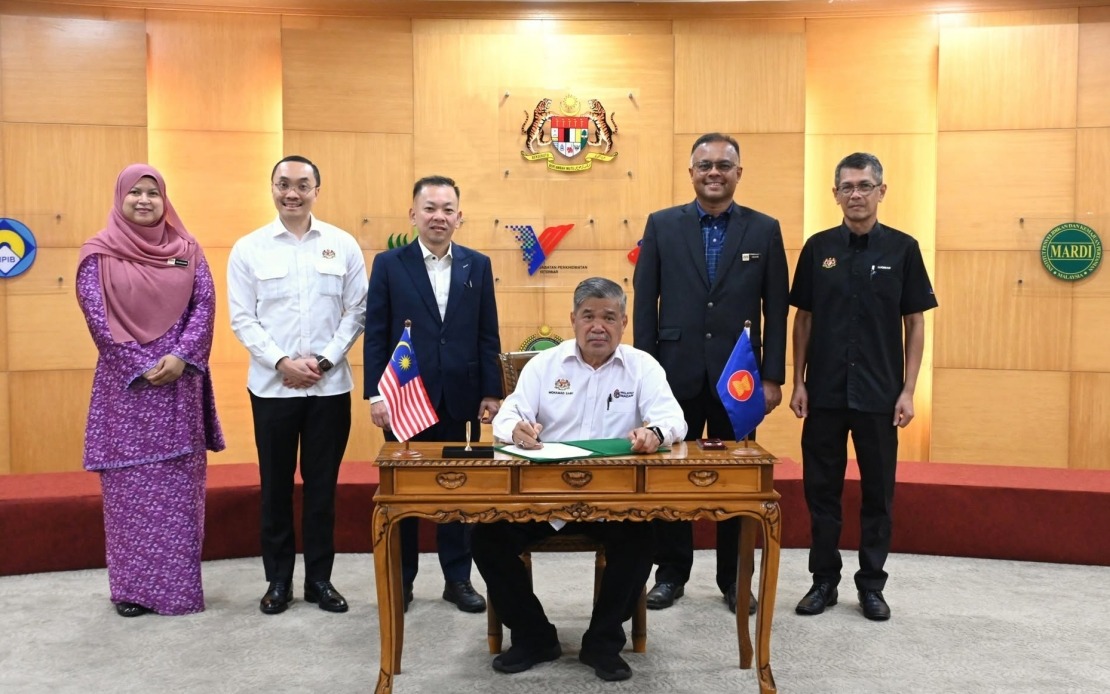
Malaysia has secured two significant Memoranda of Understanding that position the country to substantially widen its agricultural and forestry export footprint across Southeast Asia and beyond. Agriculture and Food Security Minister Datuk Seri Mohamad Sabu inked the agreements during the ASEAN Ministers on Agriculture and Forestry meeting, creating pathways for Malaysia's agri-food sector to penetrate new markets whilst simultaneously adopting climate-resilient farming methodologies.
The first accord, the ASEAN Cooperation in Agriculture and Forest Products Scheme, establishes a coordinated framework encompassing five strategic pillars designed to elevate the region's agricultural standing. These foundational elements address food security enhancement across member nations, streamlined commerce in farm and forest commodities, mobilisation of private-sector investment, conservation of natural resources through sustainable practices, and unified positioning when ASEAN engages with international bodies on agricultural matters. This structural approach reflects the region's recognition that fragmented national policies undermine collective bargaining power in global agricultural markets.
Malaysia has assumed critical leadership roles within this cooperative framework. The Ministry of Plantation and Commodities will spearhead initiatives for palm oil and cocoa, commodities where Malaysia maintains substantial global market share and production expertise. Simultaneously, the Ministry of Agriculture and Food Security will champion agri-food products, encompassing the diverse range of horticultural, livestock, and processed food items that constitute Malaysia's agricultural export portfolio. This dual leadership assignment acknowledges Malaysia's technical capacity and commercial interests across multiple agricultural sectors.
Under this scheme, ASEAN member states gain the capability to execute coordinated promotional campaigns defending palm oil and domestically-produced agri-food products against international criticism and trade barriers. Such collaborative marketing strategies become increasingly vital as global sustainability standards tighten and consumer preferences shift toward certified, traceable products. Beyond palm oil and mainstream agricultural exports, the framework expands market access for industrial crops, livestock derivatives, herbal and medicinal preparations, and forest-derived commodities including wild mushrooms, tree nuts, and natural honey—categories often underexploited due to fragmented regional distribution networks.
The second agreement, negotiated between ASEAN collectively and China, represents a five-year commitment spanning eighteen distinct cooperation domains. This arrangement reflects China's strategic interest in securing reliable agricultural supplies from Southeast Asia whilst simultaneously promoting technological and methodological upgrades within the region. For Malaysia, the accord unlocks access to advanced agricultural technologies, particularly those aligned with low-carbon production paradigms that increasingly influence international trade dynamics and consumer preferences in developed markets.
The ASEAN-China cooperation addresses eighteen substantive areas, with particular emphasis on low-carbon, climate-smart agricultural methodologies that simultaneously enhance productivity and reduce environmental footprint. Sustainable forest management provisions acknowledge the region's pivotal role in global climate regulation and biodiversity conservation. Disaster risk management and agricultural insurance mechanisms reflect the heightened vulnerability Southeast Asian farmers face from intensifying climate-related disruptions—flooding, extended droughts, and unpredictable precipitation patterns that destabilise yields and incomes across the region.
Central to this second accord is structured disease and pest management cooperation, recognising how transnational agricultural challenges transcend administrative borders. The African swine fever outbreaks that periodically devastate regional livestock sectors, or insect infestations that migrate across national boundaries, demonstrate the futility of purely national responses. Cross-border coordination mechanisms within this framework enable more effective early-warning systems and containment protocols. Research collaboration provisions similarly facilitate technology transfer and capability-building, allowing Malaysian agricultural scientists and enterprises to access and absorb advanced methodologies from both ASEAN peers and Chinese institutions.
For Malaysia specifically, these agreements facilitate a transition toward lower-carbon agricultural operations—a transformation increasingly mandatory for market access in discerning consumer jurisdictions. European Union procurement standards, Japanese sustainability requirements, and Australian quality certifications increasingly mandate evidence of environmentally responsible production practices. By institutionalising technology transfer and policy coordination through the ASEAN-China framework, Malaysia accelerates adoption of precision agriculture techniques, renewable-energy integrated farming systems, and sustainable resource management practices that simultaneously improve competitiveness and environmental credentials.
The implications extend beyond immediate commercial advantage. Regional food security—a persistent vulnerability amid climate volatility, supply-chain disruptions, and geopolitical tensions—improves through coordinated production strategies, diversified sourcing arrangements, and resilient supply infrastructure. Malaysia's strategic position as both a significant agricultural producer and substantial food importer creates natural leadership potential in advancing regional food system resilience. Enhanced trade information-sharing mechanisms codified within these MOUs facilitate more efficient market matching between surplus production regions and deficit areas, reducing waste and price volatility.
These agreements also position Malaysian agro-enterprises competitively against global rivals. Indian and Thai competitors have similarly pursued regional and international cooperative frameworks; Malaysia's securing equivalent status within ASEAN ensures parity in accessing emerging markets and technology platforms. The schemes create institutional scaffolding for smaller Malaysian producers and processors to participate in larger regional value chains, previously accessible only to major multinational agricultural corporations.
Implementation success hinges upon commitment from participating governments and enthusiasm from private-sector stakeholders. The Ministry of Agriculture and Food Security and Ministry of Plantation and Commodities must coordinate effectively both domestically and regionally, ensuring that substantive initiatives materialise rather than agreements remaining symbolic statements. Malaysian agricultural enterprises, from large plantation corporations to smallholder farming associations, require clear guidance regarding how to leverage expanded market access and access climate-smart technologies promoted through these frameworks. The dual MOUs ultimately represent investment in Malaysia's agricultural future—one more competitive, climate-resilient, and integrated within a prosperous Southeast Asian agricultural ecosystem.

