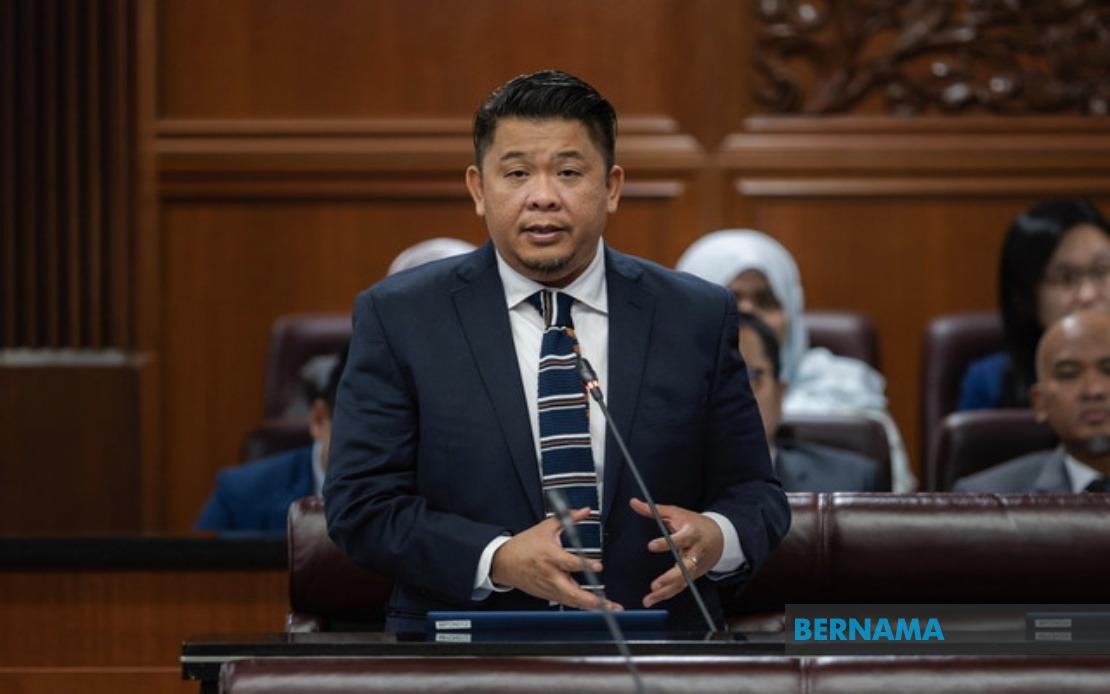
The Malaysian government is maintaining close surveillance of more than 21,000 citizens living and working across 14 conflict-affected countries, with comprehensive evacuation protocols primed to activate should regional security worsen. Deputy Foreign Minister Datuk Lukanisman Awang Sauni disclosed the scale of this monitoring operation during parliamentary questioning at the Dewan Negara, emphasising that the administration has drawn on lessons from managing previous international crises to fortify its emergency response capabilities.
The Foreign Ministry's readiness extends beyond diplomatic channels alone. The contingency framework involves orchestrated coordination with multiple government entities and external stakeholders, spanning the Defence Ministry, state-owned corporations, civil aviation authorities, international carriers capable of providing chartered flights, private sector organisations, and humanitarian groups operating on the ground. This multi-layered approach reflects acknowledgment that evacuation operations of this magnitude demand resources and expertise beyond any single institution's capacity.
Each Malaysian diplomatic mission maintains an updated operational blueprint tailored to its location and risk profile. These plans incorporate precise geographic mapping of Malaysian populations within their respective jurisdictions, established communication networks to reach citizens rapidly, pre-arranged resource channels, and detailed evacuation pathways accounting for prevailing security conditions and transport logistics. Officers implementing these protocols receive clear operational guidance to ensure that assistance delivery and relocation proceed with minimal chaos and maximal efficiency.
The activation threshold for these contingency measures remains calibrated to real-time assessments. Rather than employing a one-size-fits-all trigger, the Foreign Ministry calibrates responses according to the actual risk environment, the number of nationals requiring assistance, and specific security developments on the ground. This flexible framework allows authorities to scale interventions proportionately, avoiding premature large-scale mobilisation while ensuring no response comes too late.
Citizens abroad are encouraged to maintain active communication with Malaysian diplomatic representations through multiple channels including email, telephone contact, and the government's dedicated e-Consular digital system. An additional mobile application, MyWorldAlert, provides registered users with real-time security updates and direct access to emergency assistance networks. This tiered communication infrastructure aims to reach Malaysians regardless of their digital literacy or connectivity circumstances.
Regional developments over recent months have tested these systems. When geopolitical tensions escalated across West Asia earlier in 2024, the Foreign Ministry issued three distinct travel advisories, progressively informing Malaysian travellers and residents of changing risk conditions. The broader aviation sector experienced significant disruption, with most commercial airspace across the region shutting down temporarily as a precautionary measure. However, following the ceasefire announcement on April 8, security conditions gradually stabilised, enabling the systematic reopening of flight corridors and restoration of normal travel patterns.
The situation holds particular resonance for Malaysia given the ongoing religious and commercial ties binding the nation to Middle Eastern states. Beyond formal residents and expatriate workers, the region hosts substantial numbers of Malaysian pilgrims undertaking umrah devotions, tourists, and business travellers whose movements the government must track and facilitate. The inclusion of umrah operators within the contingency planning framework acknowledges this specific population segment and its unique vulnerabilities during periods of regional instability.
Petroliam Nasional Bhd, Malaysia's state energy corporation with significant regional operations, maintains independent evacuation arrangements for its workforce, ensuring that critical infrastructure personnel can be withdrawn according to corporate risk assessments rather than waiting for government-wide directives. This corporate-level preparedness complements rather than duplicates government efforts, creating redundancy in protection mechanisms.
For Malaysian residents abroad without formal employment structures, the onus rests largely on self-registration. The government's emphasis on uptake of the e-Consular system and MyWorldAlert application reflects recognition that voluntary registration remains incomplete. Citizens who fail to register face potential delays in receiving emergency notifications, presenting a persistent challenge for diplomatic missions attempting to account for all nationals during crises.
The Foreign Ministry's public positioning of these arrangements serves multiple purposes simultaneously. It reassures Malaysian citizens and their families that state institutions maintain active protective vigilance over nationals abroad. It signals to international partners Malaysia's capacity for organised crisis response. It also demonstrates parliamentary oversight, with the recent questioning by Senator Musoddak Ahmad enabling public transparency regarding national security preparations.
Looking forward, the relative stabilisation of West Asian airspace following April's ceasefire provides a window for governments to strengthen monitoring and registration systems during periods of reduced acute crisis. Malaysian authorities appear cognisant that future conflicts will demand rapid decision-making predicated on accurate population data, making current peaceful conditions optimal for enhancing registration compliance and updating the geographic intelligence underlying evacuation planning.
The 21,427 figure itself warrants contextualisation within Malaysia's broader diaspora. While representing a significant population requiring active monitoring, this number reflects only those spread across the most volatile zones. Substantially larger Malaysian communities reside in neighbouring Southeast Asian nations, developed economies, and other regions requiring different risk assessments and monitoring protocols, suggesting the Foreign Ministry's surveillance architecture extends considerably beyond these 14 identified conflict-affected countries.

