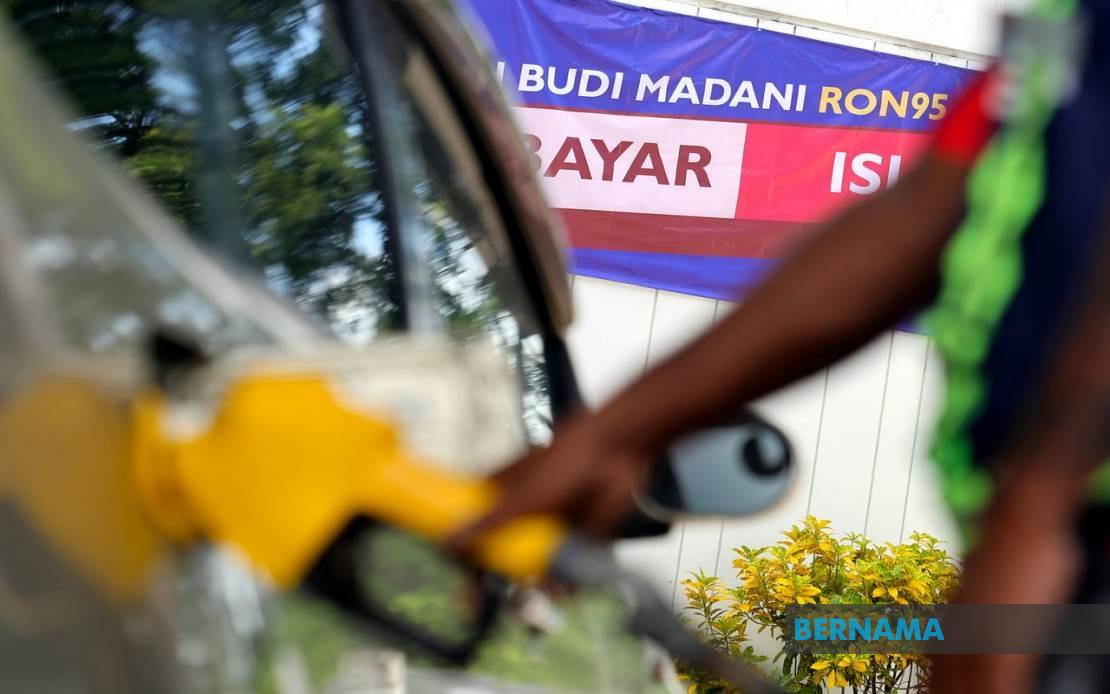
The Malaysian government has resolved to preserve its suite of social assistance programmes despite projections showing the state will shoulder approximately RM40 billion in petroleum product subsidies throughout 2024, driven largely by geopolitical tensions in West Asia. Deputy Finance Minister Liew Chin Tong made this commitment during parliamentary proceedings, signalling that the administration views maintaining household financial relief as a policy priority even as global oil price volatility threatens the national budget.
When questioned whether the government might curtail other subsidy schemes—including the Sumbangan Tunai Rahmah cash transfers and Sumbangan Asas Rahmah basic assistance—to offset petroleum costs, Liew clarified that no such reductions are under consideration. The government's position reflects a conscious decision to shield ordinary Malaysians from external economic shocks while simultaneously ensuring domestic fuel supply remains stable. This dual commitment represents a substantial fiscal undertaking, particularly as the region experiences heightened geopolitical instability that has repeatedly pushed international crude prices beyond typical trading ranges.
Central to the government's strategy for managing this balancing act is the BUDI MADANI RON95 programme, which commenced in September of the previous year. This initiative establishes a fixed petrol price ceiling while rationing supply through a quota system, effectively insulating consumers from the full impact of global market fluctuations. During the peak crisis period in March and April, when international crude prices surged to approximately RM5 per litre, Malaysian motorists continued purchasing fuel at RM1.99 per litre, a substantial differential that demonstrates how the subsidy mechanism protects household purchasing power.
Liew emphasised that this price stability mechanism carries particular significance for a developing economy where transportation costs directly influence inflation rates and business competitiveness. By decoupling domestic fuel prices from volatile international markets, the government maintains predictable operating costs for commercial enterprises, public transport operators, and logistics providers—sectors that form the backbone of Southeast Asia's largest economy. The psychological benefit of price certainty should not be underestimated, as consumer confidence improves when essential commodity costs remain transparent and manageable.
The petroleum subsidy burden reflects Malaysia's unique position as an oil-producing nation whose domestic pricing policy no longer tracks global markets. This structural protection represents a hidden transfer from the state treasury to every consumer, though the RM40 billion annual cost indicates the scale of this wealth redistribution. For context, this expenditure rivals entire government budgets for some Southeast Asian neighbours, underscoring the fiscal weight of maintaining domestic energy affordability during periods of international price stress.
Beyond fuel subsidies, the government's commitment to preserving the Sumbangan Tunai Rahmah and Sumbangan Asas Rahmah programmes signals recognition that households require multi-faceted support mechanisms. These cash assistance schemes address food security, education costs, and basic living expenses—vulnerabilities that become acute during inflationary periods. By maintaining both fuel price protection and direct income supplements, the government attempts to construct a comprehensive household safety net rather than relying on a single intervention channel.
The parliamentary exchange occurred against a backdrop of sustained global uncertainty. West Asian tensions continue exerting upward pressure on crude oil futures, creating an environment where price spikes could recur suddenly. Malaysia's experience in March and April—when prices briefly approached RM5 per litre internationally—served as a vivid reminder of how quickly energy markets can destabilise. The government's resolve to maintain subsidies thus reflects pragmatic acknowledgement that geopolitical risks remain elevated and consumer vulnerability persists.
Liew highlighted a distinctive advantage of Malaysia's approach: the BUDI95 system ensures both price stability and reliable supply. Unlike some regional neighbours that have experienced fuel shortages during periods of price controls, Malaysia has maintained consistent petrol availability through coordinated quota management. This supply assurance prevents the parallel market distortions and queuing problems that plague poorly designed subsidy regimes, allowing consumers to refuel without facing either astronomical prices or chronic unavailability.
The government's willingness to absorb RM40 billion in annual petroleum subsidies reflects policy choices rooted in social contract considerations. Political leaders evidently calculate that preserving household fuel affordability and income support generates sufficient political economy benefits to justify the fiscal cost. This approach differs markedly from some Organisation for Economic Co-operation and Development economies that have progressively dismantled energy subsidies, and from certain developing nations that have adopted subsidy reforms to address fiscal sustainability concerns.
For Malaysian businesses and consumers, the policy framework creates a relatively insulated operating environment compared to regional peers. Transportation and logistics companies can plan operations with confidence in fuel cost stability, while households benefit from predictable energy expenses. This predictability extends to food prices and other transport-dependent goods, potentially moderating inflation rates that might otherwise surge during international oil price spikes. The cumulative effect of these subsidies thus cascades through the broader economy, influencing competitiveness and cost structures across sectors.
Looking forward, the government's determination to maintain these programmes suggests that future fiscal adjustments—should they become necessary—would likely focus on other expenditure categories or revenue enhancement measures rather than subsidy reduction. This political economy reality reflects the domestic political sensitivity surrounding petrol prices, food affordability, and household income support. Policymakers evidently view these assistance mechanisms as essential components of social stability, particularly given demographic trends showing rising poverty risks among certain population segments.

